Croatia for nomads
Updated:
 Sarah KuhlemannCommunity manager
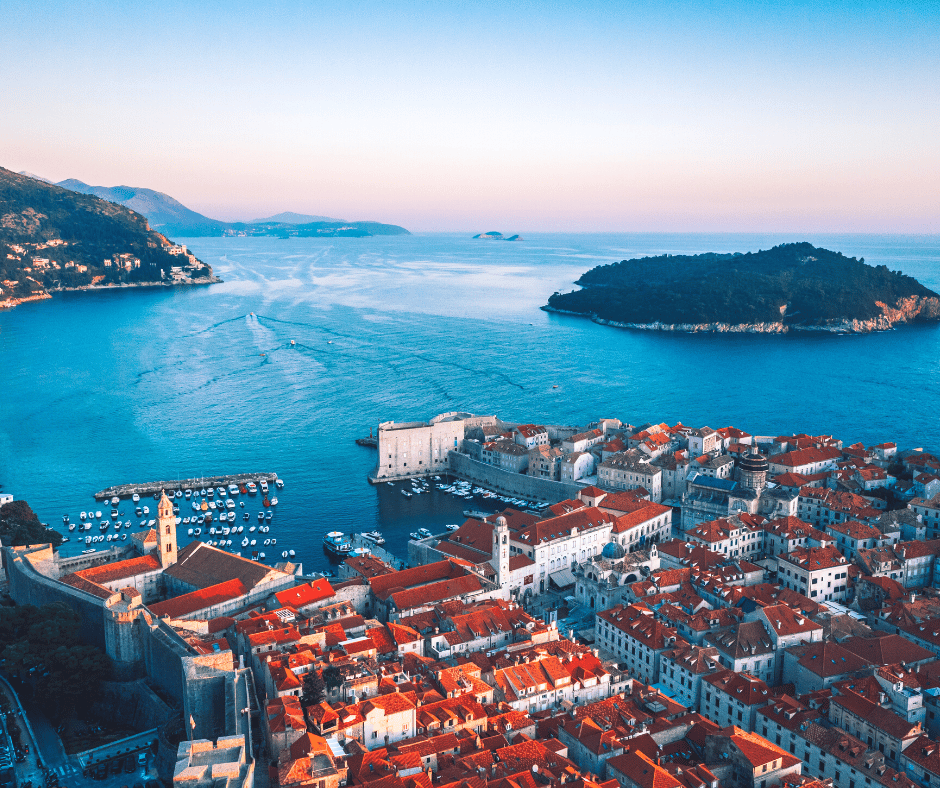
Croatia gives you about 1,800 km of Adriatic coast, more than a thousand islands and one of the few nomad visas in Europe with a clean income tax exemption. Zagreb works as a year-round city base, while Split, Zadar, Rijeka and Istria put you on the sea with a real city behind you.
The trade-offs are just as real. July and August bring crowds and peak rents along the coast, many island businesses close from November to March, and the digital nomad permit stops at 18 months with no renewal. This guide covers both sides, with prices and rules checked in November 2026.
🌱 Health insurance for Croatia
Genki TravelerA travel health insurance with worldwide cover. Monthly payment plans, and easy signup in less than 1 minute.Discover Genki Traveler🎯 Croatia at a glance
| 🛂 Visa | Digital nomad permit for non-EU citizens, with foreign income exempt from Croatian income tax |
| ⏳ Max stay | 90 days in any 180 visa-free (Schengen). Up to 18 months on the nomad permit |
| 💶 Monthly budget | €1,300 to €2,200 for a solo nomad from October to May, a lot more on the coast in July and August |
| 🌤 Best time | May, June, September and October on the coast. Zagreb all year, with Advent as a highlight |
| 🏝 Top areas | Zagreb, Split, Zadar, Rijeka and Opatija, Istria (Pula, Rovinj) |
| 🛜 Internet | Fibre in cities and 5G from Hrvatski Telekom, A1 and Telemach. EU roaming applies |
| 🛡 Safety | Low crime. Pickpockets in summer crowds, and stay on marked paths in former war zones |
🇭🇷 Entry requirements and the digital nomad permit
EU, EEA and Swiss citizens can live and work in Croatia under free movement rules, so the nomad permit isn't for them. If you stay longer than 3 months, you register your residence with the police. Everyone else follows Schengen rules: Croatia joined the Schengen area in January 2023, so visa-free nationals get 90 days in any 180-day period across the whole zone, and days in Croatia count towards the same total as days in Italy or Slovenia.
Since 10 April 2026, the EU's Entry/Exit System (EES) records non-EU travellers' fingerprints, a face image and entry and exit dates at the border instead of passport stamps. ETIAS, the planned travel authorisation for visa-free visitors, was not running and had no confirmed start date in November 2026, so ignore any website that charges for it.
The digital nomad permit
Croatia's "temporary stay of digital nomads" is a residence permit for remote workers. The rules below come from the Ministry of the Interior (MUP), checked in November 2026.
- Who can apply: non-EU citizens who work remotely for a foreign employer, foreign clients or their own company registered outside Croatia. Working for Croatian companies or clients isn't allowed.
- Length: up to 18 months in total. If you're granted less, you can apply for one extension of up to 6 months, at least 60 days before your permit expires. The permit can't be renewed beyond that: you need 6 months outside the permit before you apply again, and it doesn't lead to permanent residence.
- Income: €3,622.50 a month in 2026, which is 2.5 times Croatia's average monthly net salary for the previous year, plus 10% of that salary for each family member. Alternatively, show savings of €43,470 for 12 months or €65,205 for 18 months. The figure is re-indexed every spring, so ignore older amounts such as €3,295.
- Documents: passport valid 3 months beyond your stay, health insurance covering Croatia for the whole stay, proof of remote work, a legalised criminal record certificate and an address in Croatia (a hotel booking works for the first application).
- Fees: about €88 if you apply in Croatia (€46.45 for the permit, €31.85 for the biometric card, €9.29 administrative fee). At an embassy, the permit costs €55.74, plus €93 for a long-stay D visa if your nationality needs a visa.
- Family: spouses, children and partners of more than 3 years can join through family reunification, but only once your permit has been granted.
- How to apply: online at digitalnomadscroatia.mup.hr, at a Croatian embassy or consulate, or (if you don't need a visa) at the police station for your address in Croatia. Once you arrive, register your address within 3 days.
The tax side is the real draw. Income you earn on the permit is exempt from Croatian income tax under the Income Tax Act, even beyond 183 days, and you don't report it in Croatia. Your home country may still tax you, so read how the 183-day rule and its exceptions work before you plan a long stay.
MUP accepts travel or private health insurance, as long as it covers Croatia for the whole permit. Genki Traveler runs for up to 12 months, so for a full 18-month permit Genki Native is the better fit.
 Countries with nomad visasWhich countries offer digital nomad visas, what do they cost, and which one fits your income and plans? Here are the programs worth knowing, with requirements, fees, and insurance rules verified against official sources.
✈️ How to get to Croatia
Zagreb (ZAG) is the main hub and open all year, and Split (SPU) and Dubrovnik (DBV) are the busiest coastal airports. Zadar (ZAD), Pula (PUY) and Rijeka (RJK, on the island of Krk) depend more on seasonal low-cost routes, so check winter schedules before you pick a coastal base.
By train, HŽPP runs daily trains from Ljubljana to Zagreb from €9 and an InterCity between Zagreb and Budapest from €19. From Vienna, change in Ljubljana or Budapest, or take the seasonal night train between Vienna, Graz and Split, which ran from May to September in 2026.
From Italy, Jadrolinija sails Split–Ancona all year, Split–Bari and Dubrovnik–Bari in summer, and launched a summer catamaran between Zadar and Ancona in 2026. Its Split–Ancona ferry was out of service after a technical fault in autumn 2026, so check the current timetable before you plan around it. Popular ferry connections in Southern Europe covers the other routes across the Adriatic.
🗺 Where to base yourself
- Zagreb is the year-round base and the most affordable big city. Donji Grad, the lower town, puts you among cafés, markets and tram lines. Gornji Grad, the historic upper town, is quieter at night. Trešnjevka, west of the centre, has lower rents and its own market. Winters are cold and grey, but Advent and a city that works all year make up for it.
- Split is the best all-round coastal base: a real city of around 160,000 people built around Diocletian's Palace, with ferries to the islands. Varoš has stone lanes between the old town and Marjan hill, Meje is the quiet residential slope on Marjan's south side, and Bačvice is the beach neighbourhood by the port and stations. October to May is calm and liveable, July and August are crowded and expensive.
- Zadar is smaller and slower than Split, with the Sea Organ and sunsets over the islands. The old town peninsula is car-free but mostly holiday rentals, while Borik, north-west of the centre, has pine woods and a seaside promenade. Expect fewer flights in winter.
- Rijeka and Opatija suit you if you want lower rents and a city that doesn't empty in winter. Rijeka is a working port with a lively centre around the Korzo, and Opatija, the Habsburg-era riviera town to the west, has a long seaside promenade. Trains run to Zagreb and Ljubljana.
- Istria sits next to Slovenia and Italy. Pula, Istria's largest city, is built around a Roman arena and has an airport. Rovinj is the postcard Venetian town on a peninsula, lovely and pricey in summer. Inland, hill towns like Motovun and Grožnjan are good weekend trips.
- Dubrovnik is beautiful but expensive and crowded. Rents are the highest in the country and the old town fills with cruise passengers in summer. If you go, stay in Lapad, the residential peninsula west of the old town, and come between November and April.
- The islands (Hvar, Brač, Vis) are seasonal options. They're wonderful in May, June and September, but many restaurants and services close in winter and ferries run less often. Supetar on Brač is a short car ferry from Split, Hvar Town has the nightlife, and Vis, about two hours out, is the calmest.
💶 How much does it cost?
| Per month | Zagreb | Split | Zadar | Rijeka & Istria |
|---|---|---|---|---|
| Furnished 1BR, Oct to May | €700-1,000 | €800-1,200 | €700-1,000 | €650-1,000 |
| Furnished 1BR, Jun to Sep | €900-1,200 | €1,600-2,800 | €1,300-2,200 | €1,100-2,200 |
| Coworking | €200-300 | €270 | On request | €125 (Rijeka) |
| Food | €350-500 | €400-550 | €350-500 | €350-500 |
| Transport | €30-50 | €30-50 | €30-50 | €30-60 |
| Realistic total, Oct to May | €1,300-1,900 | €1,500-2,300 | €1,300-1,900 | €1,200-1,900 |
Rents are estimates for furnished flats rented for 1 to 3 months, checked in November 2026. Longer leases cost less, and summer rates on the coast climb fast because owners can let by the night to tourists. Coworking prices come from the operators' own websites. Dedicated nomad coliving barely exists in Croatia: none of the cities above had a coliving that could be confirmed on its own website, so plan on a rented flat.
Zagreb, Rijeka and Istria come closest to a €1,500 monthly budget outside the summer, while Split, Dubrovnik and the islands sit above it for most short stays. For cheaper bases compared city by city, see Europe under €1,500 a month.
 Europe under €1,500 a month: 10 cities checkedEurope on a budget still exists, just not where it used to. We checked 16 cities against €1,500 a month with 2026 data: here are the 10 that work, from Bansko to Palermo, with the conditions spelled out.
🧑🏻💻 Where to work from
Zagreb
- HUB385: Zagreb's most established coworking, open since 2015 at Petračićeva 6, with four floors of open space, flexible "flyby" desks, offices and a business address service.
- BIZkoshnica: a creative coworking at Ilica 71 on Britanski trg, with a second, quieter site at Jabukovac 37 and 24/7 access. A day costs €30, 10 days a month €200, unlimited flexible desk €250 and a fixed desk €300 (prices from 10 September 2026).
- Impact Hub Zagreb: impact-focused coworking in the upper town at Basaričekova 11. Plans run from €88 for 4 days a month to €269 for unlimited access with your own desk.
Split
- The Works: a 24/7 coworking at Spinčićeva 2b near Firule beach, with gigabit fibre, phone booths and lockers. A day costs €20, a week €90, a floating desk €270 a month and a fixed desk €350, VAT included.
Zadar
- COIN Zadar: Zadar's long-running coworking at Put Murvice 16, with a lounge, kitchen and meeting room. Visits are by appointment, the team answers on weekdays from 8:00 to 15:00, and prices are on request.
Rijeka
- RRA Porin coworking: run by Rijeka's development agency, with 24/7 access, lockable storage and parking. €12.50 a day, €37.50 a week or €125 a month, VAT included.
Istria
- Coworking Rovinj: Istria's first coworking, 18 desks in a renovated 18th-century building at Augusta Ferrija 37A, open 24/7 with a reception on weekday mornings. Day passes start at €15.
- Coworking Pula: a business centre at Marulićeva 5, run by the Istrian Development Agency since 2023 and aimed mainly at local entrepreneurs. Ask about flexible desks before you count on it.
👥 Finding community
- Coworking spaces are the easiest way in: BIZkoshnica and Impact Hub Zagreb both run events, workshops and programmes open to members.
- Saltwater Nomads, a remote-work consultancy on the Dalmatian coast, has organised more than 100 events and programmes such as Dubrovnik's Digital Nomads-in-Residence.
- Croatia's nomad scene is spread out and seasonal, so pair a city base with one of the coliving or event options below.
🛜 Internet and SIM cards
Croatia's three mobile networks are Hrvatski Telekom, A1 and Telemach, and all three have 5G in the main cities. Fibre is standard in coworking spaces and newer rentals, but ask hosts for a speed test before you book, especially on the islands and in thick-walled old town buildings.
With an EU SIM, roaming at home prices applies in Croatia. Otherwise, the simplest way to stay connected is a global eSIM from Pangia: one plan that covers Croatia and whatever country comes next, so you can set it up before you land. For longer stays, prepaid SIMs from the three operators are sold in their shops and at kiosks.
🌤 When to go where
| Region | 🌞 Best time | 🌧 Avoid | Why |
|---|---|---|---|
| Zagreb | Apr-Jun, Sep-Dec | Jan-Feb | Mild spring and autumn, Advent markets from late November, cold and grey midwinter |
| Split & Dalmatia | May-Jun, Sep-Oct | Jul-Aug | Warm sea from June, peak crowds and prices in midsummer, mild but quiet winters |
| Zadar | May-Jun, Sep-Oct | Jul-Aug | Same pattern as Split, with fewer winter flights |
| Rijeka & Opatija | Apr-Jun, Sep-Oct | None | City life all year, but bura wind brings cold, gusty spells in winter |
| Istria | May-Jun, Sep-Oct | Jul-Aug | Truffle season in autumn, the coast goes quiet from November |
| Islands | Jun, Sep | Nov-Mar | Many businesses close in winter and ferries run less often |
| Dubrovnik | Apr-May, Oct-Nov | Jul-Aug | Cruise crowds and the highest prices in summer |
The bura (bora) is a cold north-easterly wind that can cancel catamarans and ferries and close bridges for a day or two, mostly in winter and most often around Kvarner and the Velebit coast. Build some slack into island plans between November and March.
🚌 Getting around Croatia
- Buses are the backbone of travel in Croatia, with frequent connections along the motorway and the coast. Zagreb to Split takes around 5 to 6 hours.
- Trains from HŽPP are useful between Zagreb, Rijeka and Osijek, and for the slow but scenic line to Split. There is no railway south of Split, so Dubrovnik is bus, plane or boat only.
- Ferries and catamarans from Jadrolinija connect the islands, and a new fast line between Split, Hvar, Bol and Vis started in 2026. Buy tickets online and book car ferries ahead in summer.
- Car rental makes sense for Istria's hill towns and the national parks. In cities, you don't need one.
- City transport: ZET trams and buses in Zagreb, Promet in Split, Autotrolej in Rijeka and Libertas in Dubrovnik. Uber and Bolt work in the main cities.
🚧 Safety
Croatia is one of Europe's safer countries. The points below follow the UK government's travel advice, checked in November 2026.
- Petty crime: pickpockets work tourist areas in summer. Some "gentlemen's clubs" have overcharged tourists by thousands of euros, and there have been reports of sexual assaults in taxis, so use licensed taxis or ride-hailing apps.
- Wildfires are common in hot, dry summers and can spread quickly. Take care in forests and call 112 if you see a fire.
- Sea safety: swim at marked beaches, stay inside buoyed areas away from boat traffic and wear water shoes on rocky shores, where sea urchins are common.
- Unexploded mines remain in some areas affected by the 1990s war, away from the tourist centres: Eastern Slavonia, Brod-Posavina and Karlovac counties, areas around Zadar County and remote parts of Plitvice Lakes National Park. Stay on marked paths and never ignore mine warning signs.
- Emergencies: call 112.
🏥 Healthcare
EU and EEA citizens can use the European Health Insurance Card (EHIC) for necessary treatment in public healthcare contracted with HZZO, Croatia's health insurance fund, on the same terms as locals, including co-payments. It doesn't cover private clinics or a flight home, which is why separate travel or health insurance still matters.
Zagreb, Split and Rijeka have private clinics with English-speaking doctors, where you usually pay upfront. On the islands, local health centres handle everyday problems, but serious cases are transferred to hospitals in Split, Zadar, Rijeka or Dubrovnik by boat or helicopter, so check that your insurance covers emergency transport. Tap water is safe to drink in the cities.
🎖 Must see
- Plitvice Lakes: Croatia's oldest national park, with 16 terraced lakes linked by waterfalls. Buy tickets online for a set entrance and time slot: you can't enter early and can be at most an hour late. Adults pay €40 from June to September (€25 after 4 pm in June to August, after 3 pm in September), €23 in April, May and October, and €10 in winter (November 2025 to March 2026 rate).
- Krka National Park: wooden walkways around the Skradinski buk falls, an easy day trip from Split, Zadar or Šibenik. Adult tickets cost €7 from November to March and €40 in peak summer, and from April to October they include the boat from Skradin or the bus from Lozovac (Krka National Park).
- Dubrovnik city walls: the walk around the old town ramparts. The official Dubrovnik Pass includes the walls and costs €40 for one day or €50 for three. Go at opening time or late in the day to avoid the heat and cruise groups.
- Diocletian's Palace: built for a Roman emperor around 300 AD and still Split's lived-in old town. Walking the streets is free, while the cellars and the cathedral charge entry.
- Istria's hill towns: Motovun and Grožnjan sit above vineyards and truffle forests, best in autumn during truffle season.
- The islands: Hvar for its old town and lavender fields, Vis for quiet coves and Brač for Zlatni Rat beach at Bol.
❓ Frequently asked questions
Yes. Non-EU citizens can apply for temporary stay as a digital nomad, a residence permit of up to 18 months. You need €3,622.50 a month in income (2026 figure) or savings of €43,470 for 12 months or €65,205 for 18 months, plus health insurance for the whole stay.
Not on income earned under the digital nomad permit. It's exempt from Croatian income tax, even if you stay more than 183 days. Your home country may still tax that income, so check its rules before you go.
No. The permit runs for up to 18 months in total, including one extension of up to 6 months if you were granted less. After that, you need 6 months outside the permit before you can apply again, and it doesn't lead to permanent residence.
No, and they don't need it. EU, EEA and Swiss citizens can live and work in Croatia under free movement rules and register their residence with the police if they stay longer than 3 months.
It depends on the season. From October to May, a solo nomad can live on roughly €1,300 to €2,200 a month in Zagreb, Split, Zadar, Rijeka or Istria. In July and August, coastal rents can double, and Dubrovnik is expensive all year.
Zagreb is the best year-round base. Split is the best coastal city, ideally outside July and August. Rijeka and Istria are cheaper and calmer, and the islands work best from May to June and in September.
Traveling that area? Check out Croatia's neighborhood.
 Ljubljana and Slovenia for digital nomadsSlovenia has had a digital nomad permit since November 2025, and almost every nomad bases in Ljubljana. Permit rules, real costs, neighborhoods and coworking for 2026.
 Montenegro for nomadsMontenegro sits outside Schengen, uses the euro and costs less than Croatia. Here is how nomads live in Kotor, Tivat, Budva and Podgorica in 2026, with real costs and verified spaces.
 Central Europe by trainPrague, Vienna, Ljubljana and Split by train: three capitals and the Adriatic coast, with every leg, fare and coworking space checked for 2026.
 Hungary for nomads