Germany for nomads
Updated:
 Sarah KuhlemannCommunity manager
Germany is Europe's biggest economy and one of its easiest countries to move around in: fast ICE trains link the big cities, and Berlin, Hamburg, Munich, Köln and Leipzig each have their own startup, creative and coworking scenes. In the cities, English is widely spoken in cafés, coworking spaces and offices.
It is also a country with rules. There is no digital nomad visa, stays of more than three months come with an address registration duty, short-stay furnished flats in Berlin, Munich and Hamburg cost far more than local long-term rents, card payment is not accepted everywhere, and mobile coverage still drops out in parts of the countryside and on trains. This guide covers both sides.
🌱 Health insurance for Germany
Genki TravelerA travel health insurance with worldwide cover. Monthly payment plans, and easy signup in less than 1 minute.Discover Genki Traveler🎯 Germany at a glance
| 🛂 Visa | No digital nomad visa. EU citizens move freely; many non-EU passports get 90 days in any 180 in the Schengen Area |
| ⏳ Max stay | 90 days in any 180 visa-free for non-EU visitors; longer only with a residence permit |
| 💶 Monthly budget | From about €1,100 to €1,650 in Leipzig and €1,400 to €2,400 in the other big cities for rent, coworking and transport, before food (Nov 2026) |
| 🌤 Best time | May to September; late November and December for Christmas markets |
| 🏙 Top areas | Kreuzberg and Neukölln (Berlin), Sternschanze (Hamburg), Maxvorstadt (Munich), Ehrenfeld (Köln), Plagwitz (Leipzig) |
| 🛜 Internet | About 100 Mbps median fixed broadband (Ookla, May 2026); fibre still patchy |
| 🛡 Safety | US advisory Level 2 (increased caution, terrorism); pickpocketing at stations and Christmas markets |
🇩🇪 Entry requirements and longer stays
EU, EEA and Swiss citizens can live and work in Germany without a visa.
Non-EU visitors from visa-exempt countries can stay up to 90 days in any 180-day period across the whole Schengen Area. Since April 10, 2026, the EU's Entry/Exit System (EES) records every entry and exit biometrically at the Schengen external borders instead of passport stamps (European Commission). The separate ETIAS travel authorisation is not running yet. The EU says it will announce the start date several months in advance, so check travel-europe.europa.eu before you travel.
Germany has no digital nomad visa. None of the residence titles on the government's official Make it in Germany portal is designed for remote workers employed abroad. People who want to stay longer use other routes, each with its own requirements:
- Residence permit for self-employment (§21 Residence Act): freelancers in liberal professions apply under §21(5). Applicants need proof of sufficient funds, any licences the work requires and, if over 45, adequate retirement provision. The permit is granted for up to three years at first and can be extended (Make it in Germany).
- Opportunity Card (Chancenkarte): a job-search permit for up to 12 months. Without a fully recognised qualification, applicants need a foreign degree or vocational qualification, German at A1 or English at B2, at least six points in the points system, and funds of €1,091 a month in 2026 (Make it in Germany). It is a job-search route, not a remote-work permit.
This is general information, not legal advice. The German mission in your country of residence decides on visas.
Address registration (Anmeldung)
Anyone who moves into a flat in Germany must register at the local registration office within two weeks. If you normally live abroad and stay three months or less, you do not have to register. If it is clear when you move in that you will stay longer than three months, you register within two weeks of moving in (verwaltung.bund.de).
Registration matters beyond the law: banks, phone contracts and landlords usually ask for the registration certificate, and your tax ID (Steuer-ID) is sent by post to your registered address after your first registration (service.berlin.de). Registering a flat also makes it liable for the broadcasting fee (Rundfunkbeitrag) of €18.36 a month per dwelling, shared by everyone living there.
Tax
Germany taxes people who have a residence there, or a habitual abode of more than six months, on their worldwide income. How residence and the 183-day idea really work is explained in Tax residency and the 183-day rule, and Germans abroad will find their situation in Digital nomad taxes for Germans. This is education only, not tax advice.
✈️ How to get to Germany
- By plane: Frankfurt (FRA) and Munich (MUC) are the long-haul hubs. Berlin (BER), Hamburg (HAM), Köln/Bonn (CGN) and Düsseldorf (DUS) mainly serve Europe and the Middle East. All have rail links into their city centres.
- By train: direct day trains connect Germany with Paris, Amsterdam, Brussels, Vienna, Zurich, Prague and Copenhagen. Book on bahn.com; saver fares sell out early.
- By bus: FlixBus connects German cities with most of Europe and is usually the cheapest option.
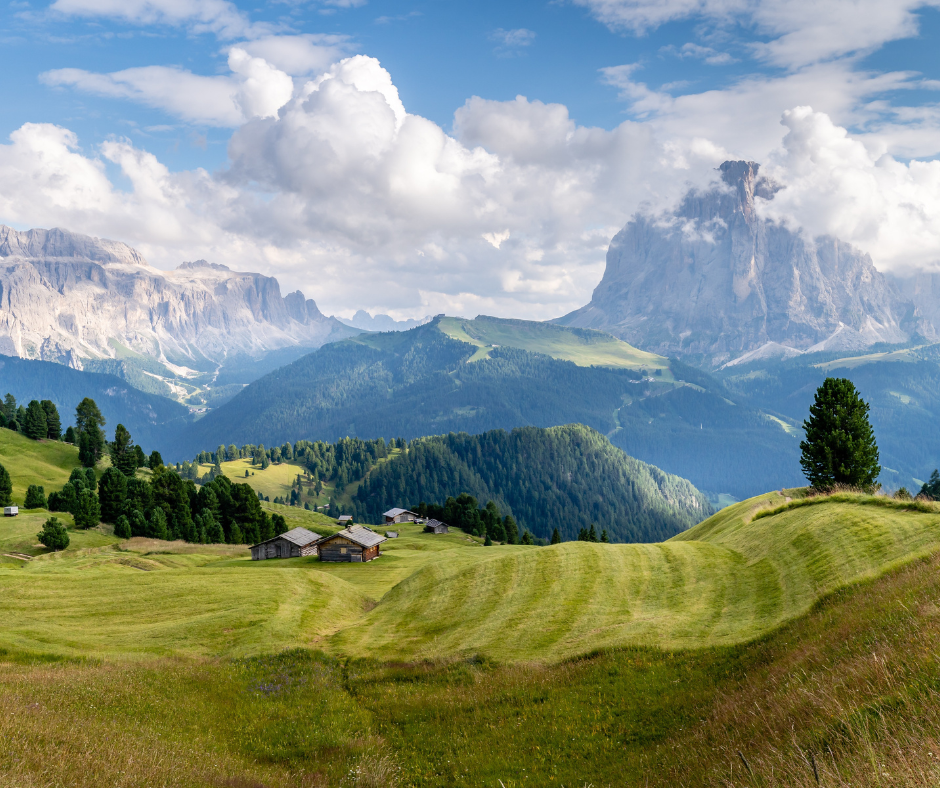 Italy & Germany by trainItaly and Germany are connected by direct trains over the Brenner Pass. Here is how the routes, times and tickets work, plus a slow-travel itinerary from Milan via Verona and Bolzano to Munich.
🗺 Where to base yourself
- Berlin has the largest international and freelance scene and the most coworking spaces. Kreuzberg and Neukölln (around Reuterkiez) are the busiest nomad areas, Friedrichshain suits nightlife and markets, and Prenzlauer Berg is calmer and greener.
- Hamburg is a port city with a strong media and startup scene. Sternschanze and St. Pauli are lively and central, while Ottensen in Altona is quieter, with the Elbe nearby.
- Munich is the most expensive base but has the Alps and lakes close by. Maxvorstadt is the university and museum quarter, Glockenbachviertel sits by the Isar, and Schwabing borders the English Garden.
- Köln is relaxed, well placed for trips to Belgium and the Netherlands, and cheaper than Munich. Ehrenfeld is the creative neighbourhood with warehouse clubs and coffee roasters, and the Belgian Quarter sits right next to Rudolfplatz.
- Leipzig is the budget pick: a fast-growing creative city with lower rents. Plagwitz along the Karl-Heine canal has converted factories and coworking spaces, and Südvorstadt (with Connewitz just south) has the bar and café strip along Karl-Liebknecht-Straße.
💶 How much does it cost?
| Per month (Nov 2026) | Berlin | Hamburg | Munich | Köln | Leipzig |
|---|---|---|---|---|---|
| Furnished flat, all-inclusive | €1,235-1,850 | €1,250-1,900 | €1,410-2,000 | €1,200-1,750 | €890-1,390 |
| Coworking (excl. VAT) | €125-275 | €145-245 | €249-320 | €325 | €130-180 |
| Local transport | €63 | €63 | €63 | €63 | €63 |
| Total before food | €1,400-2,200 | €1,450-2,200 | €1,700-2,400 | €1,600-2,150 | €1,100-1,650 |
Rents are the middle half of furnished, all-inclusive rentals booked on Wunderflats between June 2025 and May 2026 (25th to 75th percentile). Coworking prices are monthly plans from the spaces listed below. Transport is the Deutschlandticket. Food comes on top and depends heavily on how often you eat out.
Why short stays cost so much: flats rented only for temporary use are exempt from the rent cap (Mietpreisbremse) and several other tenant protections under §549(2) of the German Civil Code, and landlords can add a furnishing surcharge on top. In tight markets like Berlin, Munich and Hamburg, that makes a short-stay furnished flat far pricier than a long-term unfurnished lease in the same building. The federal government has proposed tighter rules for temporary and furnished rentals; for now, the exemption still applies.
If those numbers are above your budget, Europe under €1,500 a month: 10 cities checked has cheaper alternatives. Within Germany, only Leipzig comes close to that level.
 Europe under €1,500 a month: 10 cities checkedEurope on a budget still exists, just not where it used to. We checked 16 cities against €1,500 a month with 2026 data: here are the 10 that work, from Bansko to Palermo, with the conditions spelled out.
 Skip the hotspots: 9 cheaper European cities for digital nomadsLisbon or Barcelona too pricey for a short stay? These 9 European cities have coworking spaces, laptop-friendly cafés and lower prices.
🧑🏻💻 Where to work from
Coworking in Germany is not cheap, and many spaces only sell memberships or trial days, not day passes. All prices below were checked on each space's own website in November 2026 and exclude 19% VAT unless noted.
Berlin
- betahaus Kreuzberg: one of Berlin's longest-running coworking spaces, near Checkpoint Charlie. Day pass €35; the CLUB membership costs €125 a month (weekdays 9:00 to 16:30) and PRO €275 with 24/7 access.
- juggleHUB: Prenzlauer Berg coworking with an on-site café and flexible childcare. Drop-in €23 a day, full-time €159 a month (weekdays 8:00 to 18:00).
- Impact Hub Berlin: community coworking in north Neukölln. Day pass €28, unlimited weekday membership €199 a month.
Hamburg
- betahaus Hamburg (Schanze): coworking on Eifflerstraße in Sternschanze. Day ticket €20.17, CLUB €145 a month, PRO €245 a month.
Munich
- WERK1: startup hub in the Werksviertel by Ostbahnhof. Day pass €29, unlimited membership €249 a month; new members join after a mandatory tour.
- velvet space: small coworking in a Maxvorstadt courtyard near the English Garden. Day pass €29, hot desk €320 a month.
Köln
- CoWoki: city-centre coworking a short walk north of the Belgian Quarter. A day pass is €39, and an unlimited flex desk costs €325 a month.
- COLLECTION (formerly UBC): business centre on Rudolfplatz, right next to the Belgian Quarter, renting flexible coworking desks from one day to a month or longer. Check the website for current rates.
Leipzig
- Klinge22: creative coworking in a Plagwitz courtyard, booked by days per week rather than day passes. From €50 a month for one day a week; a flex desk for three days a week costs €130. Free trial day.
- Raumstation: small coworking in the Tapetenwerk between Plagwitz and Lindenau, with a roof terrace. Booking platforms list day passes from €20 and flex desks from €180 a month; confirm rates with the space.
👥 Finding community
Germany has no single nomad hub. Community happens through coworking spaces and their events (betahaus Kreuzberg runs a weekly breakfast, for example) and through city meetups. Nomad-style coliving is rare: most furnished "coliving" is student or expat housing with six-month minimums. One exception for founders is WERK1 Coliving in Munich, with furnished apartments for one to six months at €849 a month plus 7% VAT, all-inclusive, open to startup founders and teams after an application check.
 Coliving in Europe: the best spaces for digital nomadsEurope's best coliving spaces by region and season, from an Alpine citadel to small surf towns, with prices checked November 2026 and the Schengen 90/180 maths.
 Digital nomad events in Europe 2026/27Europe runs the biggest nomad festival on earth (Bansko) and a dense spring-to-autumn calendar of summits, island retreats and community weeks around it. The season is long, roughly April to December, and spread from the Bulgarian mountains to the Canary Islands, so the planning question is less "is there an event" and more "which three can I string together without crossing the continent twice."
🛜 Internet and SIM cards
Median fixed broadband in Germany is about 100 Mbps (Ookla Speedtest Global Index, May 2026), with big differences between fibre, cable and older DSL lines, so ask your landlord what the flat has. Telekom, Vodafone and O2 run the mobile networks. Prepaid SIM cards must be registered with your passport or ID card before they work, usually by video identification or in a shop. Coverage is good in cities, but gaps remain in some rural areas and on many train routes.
The simplest way to stay connected is a global eSIM from Pangia: one plan that covers Germany and whatever country comes after it, set up before you land, with no ID check in a shop.
🌤 When to go where
| Region | 🌞 Best time | 🌧 Harder months | Why |
|---|---|---|---|
| Berlin & Leipzig | May-Sep | Nov-Feb | Long summer evenings and open-air events; grey, dark winters |
| Hamburg | Jun-Aug | Nov-Feb | Mild summers; wind and rain much of the year |
| Köln & the Rhine | May-Sep | Nov-Feb | Warm summers; Carnival in February is a highlight or a reason to avoid |
| Munich & the Alps | Jun-Sep, Dec-Mar for skiing | Nov, Apr | Lakes and hiking in summer, snow in winter |
| Everywhere | Late Nov-Dec | None | Christmas markets in almost every town |
For the best markets, see The best Christmas markets in Europe for 2026.
🚌 Getting around
- Deutschlandticket: €63 a month since January 2026, sold only as a monthly-cancellable subscription. It covers local and regional buses, trams, U-Bahn, S-Bahn and regional trains nationwide, but not ICE, IC or EC trains (Deutsche Bahn).
- ICE and long-distance trains: fast and well connected, but often late. In 2025, 60.1% of DB long-distance trains arrived on time (less than six minutes late), and only 52.4% in September 2026, while 88.2% of regional trains ran on time that month (Deutsche Bahn). Plan buffer time for connections.
- City transport: buy your ticket before boarding; inspectors fine passengers without one. In cities, the Deutschlandticket usually pays for itself within a week or two.
- Cycling: all five bases have cycle lanes and bike sharing. Ride on cycle paths where they exist, use lights after dark and watch for turning cars at junctions.
- FlixBus: the cheapest way between cities, slower than the train.
🚧 Safety
Germany is generally safe, but official advice includes warnings. As of November 2026, the US rates Germany Level 2 (exercise increased caution) because of terrorism, and the UK Foreign Office warns that attacks could target public places such as markets. Australia advises visiting Christmas markets outside busy times and having an exit plan.
- Pickpocketing: organised groups work stations, public transport, tourist sights and Christmas markets (Government of Canada).
- Demonstrations: large protests are common in the big cities and usually peaceful; expect road closures and transport diversions, and follow police instructions.
- Emergency numbers: 112 for ambulance and fire, 110 for police.
🏥 Healthcare
- EU citizens can use their European Health Insurance Card (EHIC) for necessary treatment during a temporary stay.
- Residents must have health insurance: statutory insurance (gesetzliche Krankenversicherung) or, if eligible, private insurance. Proof of health insurance is part of every residence permit application.
- Visitors without an EHIC pay for treatment and claim it back from their insurance, so keep every invoice.
- Out-of-hours doctors: call 116 117 for the medical on-call service when your problem can't wait but isn't an emergency. 112 is for emergencies.
- Pharmacies (Apotheke) close on Sundays and at night, but one pharmacy in each area is always on emergency duty; the rota is posted on every pharmacy door.
🎖 Must see
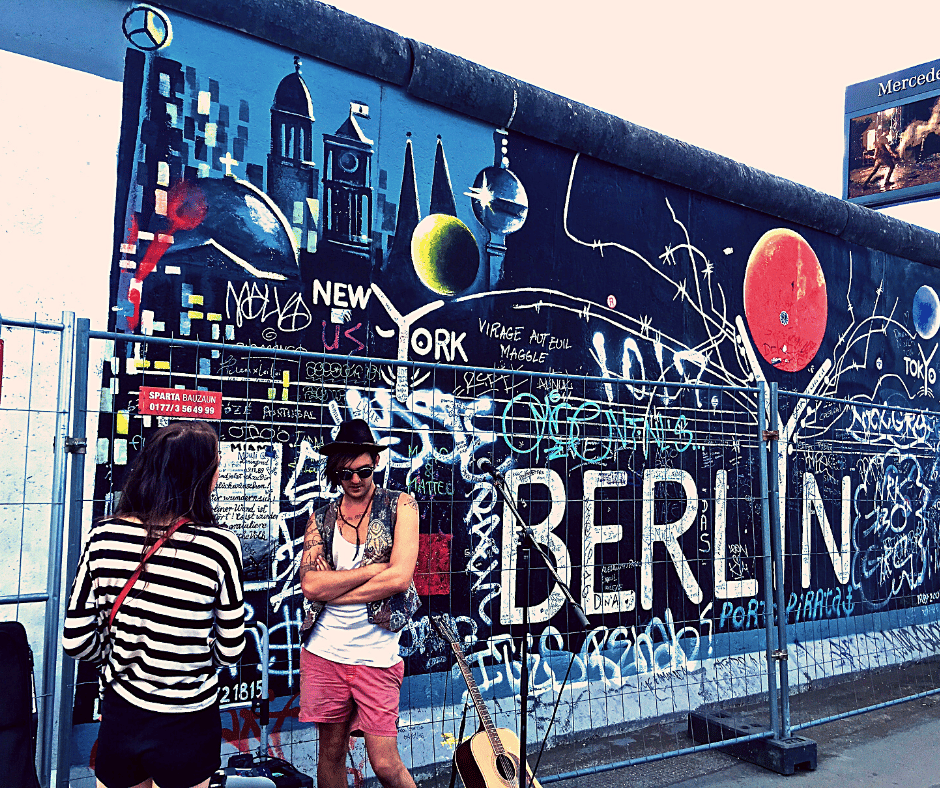
- Berlin: the Brandenburg Gate, the Berlin Wall Memorial on Bernauer Straße and the East Side Gallery.
- Hamburg harbour: walk from the Landungsbrücken piers to the Speicherstadt warehouses and the Elbphilharmonie; public HVV ferries double as harbour tours.
- Neuschwanstein Castle: King Ludwig II's 19th-century castle above Schwangau in the Allgäu.
- The Rhine valley: castles, vineyards and the Loreley rock in the UNESCO-listed Upper Middle Rhine Valley.
- Saxon Switzerland: sandstone towers and the Bastei bridge above the Elbe, reachable by S-Bahn from Dresden.
- Munich and the Alps: Marienplatz and the beer gardens, then a day trip to the Zugspitze, Germany's highest mountain at 2,962 m.
❓ Frequently asked questions
No. Non-EU visitors can stay up to 90 days in any 180 under Schengen rules. Longer stays need a residence permit, such as the permit for self-employment (§21 Residence Act) or the Opportunity Card for job seekers, each with its own requirements.
Not if you normally live abroad and stay three months or less. If you know from the start that you will stay longer than three months, you must register within two weeks of moving in.
Berlin has the biggest international scene and the most coworking choice. Leipzig is the budget option, Hamburg and Köln are good middle grounds, and Munich suits people who want the Alps and don't mind the highest rents.
About €1,400 to €2,200 for a furnished all-inclusive flat, coworking and public transport in November 2026, before food. Rent is the big item: furnished flats typically cost €1,235 to €1,850 a month. More detail in The real cost of living in Berlin.
Yes. Furnished flats in Leipzig typically cost €890 to €1,390 a month, about a quarter less than in Berlin, and coworking is cheaper too.
Less than before, but keep some. Most shops, supermarkets and transport apps take cards, while some bakeries, small cafés, bars and market stalls only take cash.
Traveling that area? Check out Germany's neighborhood.
 The Netherlands for nomads
 Austria for nomads
 Poland for nomadsFast internet, cheap trains and four very different cities. An honest 2026 guide to living in Poland as a nomad: costs, bases, coworking and the real visa situation.Italy & Germany by trainItaly and Germany are connected by direct trains over the Brenner Pass. Here is how the routes, times and tickets work, plus a slow-travel itinerary from Milan via Verona and Bolzano to Munich.
 Sweden for nomadsSweden is safe, English-speaking and fully digital, but it is expensive, dark in winter and has no nomad visa. Real 2026 costs for Stockholm, Gothenburg and Malmö, plus the new 160-day tax rule.
 France for nomadsFrance has no digital nomad visa and Paris is expensive, but seven bases from Lyon to Nice make a month here work. Costs, rules and coworking checked November 2026.