France for nomads
Updated:
 Sarah KuhlemannCommunity manager
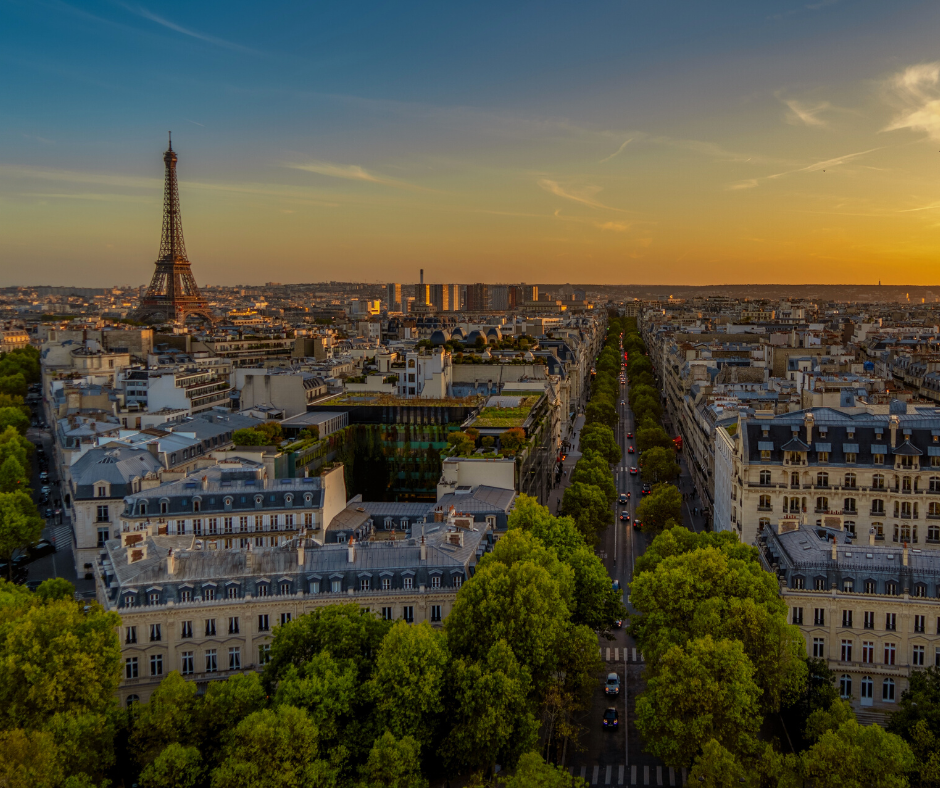
France gives nomads more range than almost any country in Europe: Paris for culture and connections, Lyon for food, Marseille and Montpellier for Mediterranean light, Bordeaux for wine country, Nice for mild winters and Grenoble for the Alps, all linked by some of the fastest trains on the continent. You can change your whole setting in three hours without leaving the country.
The trade-offs are just as real. Paris is one of Europe's most expensive cities for a one-month stay, the paperwork has a reputation for good reason, and outside Paris daily life runs in French. There is also no digital nomad visa, so non-EU nomads plan around the Schengen 90/180 rule or a long-stay visa with strict conditions. This guide covers both sides, with prices and rules checked in November 2026.
🌱 Health insurance for France
Genki TravelerA travel health insurance with worldwide cover. Monthly payment plans, and easy signup in less than 1 minute.Discover Genki Traveler🎯 France at a glance
| 🛂 Visa | No digital nomad visa. EU, EEA and Swiss citizens move freely; most other nationals get 90 days in any 180 in the Schengen Area |
| ⏳ Max stay | 90 days in any 180 without a long-stay visa. Longer stays need a long-stay visa such as the "visiteur" VLS-TS, which does not allow work in France |
| 💶 Monthly budget | About €2,300-3,300 in Paris and €1,300-2,700 in the other bases at short-stay prices (estimates, November 2026) |
| 🌤 Best time | April to June and September to October; the Riviera in winter, the Alps from December to April for skiing |
| 🏙 Top areas | Paris (10th/11th, Belleville, Batignolles), Lyon, Marseille, Bordeaux, Montpellier, Nice, Grenoble |
| 🛜 Internet | 95.3% of premises can connect to fiber (Arcep, June 2026), plus nationwide 4G and 5G in cities |
| 🛡 Safety | Generally safe. Terror alert at the intermediate "vigilance renforcée" stage (November 2026); pickpocketing is the everyday risk in Paris |
🇫🇷 Entry requirements and longer stays
Short stays
EU, EEA and Swiss citizens can live and work in France without a visa. Everyone else follows the Schengen 90/180 rule: up to 90 days in any rolling 180-day period across the whole Schengen Area, not per country. Some nationalities need a Schengen visa for that, others enter visa-free; the France-Visas visa assistant tells you which applies to your passport.
Since April 10, 2026, the EU's Entry/Exit System (EES) is fully operational: non-EU visitors on short stays have their entries and exits recorded digitally, with fingerprints and a facial image, instead of passport stamps, which makes overstays easy to detect (French Ministry of the Interior). ETIAS, the separate travel authorization for visa-exempt travelers, is not in operation yet; the EU says it will announce the start date several months in advance on travel-europe.europa.eu.
No digital nomad visa
France has no digital nomad visa. None of the long-stay categories listed on France-Visas, the official visa portal, is designed for remote work for foreign clients or employers. Anyone staying longer than 90 days needs a long-stay visa that matches their actual situation. The two routes nomads most often look at:
- Long-stay visitor visa (VLS-TS "visiteur"): for people who want to stay in France privately for more than three months. You must formally commit not to carry out any professional activity in France during your stay (France-Visas), show that you can live on your own resources and hold health insurance for the whole stay (prefecture conditions). The visa counts as a residence permit for up to one year and must be validated online on the ANEF portal within three months of arrival. Whether remote work for foreign clients is compatible with the no-work commitment is not settled by any official source, so ask the consulate before you apply.
- Talent Passport ("passeport talent"): a multi-year residence card for people who contribute to France's economy, for example qualified employees with a French employment contract, founders with "a real and serious business creation project in France", or innovative projects recognized by a public body (France-Visas). It allows work, but each category has its own conditions, and none of them fits a classic remote worker for foreign clients.
This section describes the official rules; it is not legal advice. Check the exact conditions for your nationality on France-Visas or with the French consulate before you travel.
Tax residence
French tax residence is not a simple 183-day count. Under article 4 B of the French tax code, you are tax resident in France if any one of these applies: your home ("foyer") or, without one, your main place of stay is in France; you carry out your main professional activity in France; or the centre of your economic interests is in France (impots.gouv.fr). The tax administration's guidance treats staying more than six months in a year as a general indicator of a main place of stay, not as the only test (BOFiP). If two countries claim you, the tax treaty between them decides. This is general information, not tax advice.
 Tax residency for digital nomads: the 183-day rule and its exceptionsStaying under 183 days doesn't make you tax-free. A calm, myth-free guide to tax residency for digital nomads: where the 183-day rule really comes from, how countries count days, the tests beyond day counts, and how seven popular countries decide.
✈️ How to get to France
By air, Paris has two international airports: Charles de Gaulle (CDG) for most long-haul and network flights and Orly (ORY), with many European and low-cost routes. Lyon (LYS), Marseille (MRS), Bordeaux (BOD) and Nice (NCE) all have direct European connections, which often saves a domestic transfer. From CDG and Orly, the airport ticket into Paris costs €14 (Île-de-France Mobilités, 2026 fares).
By train, Eurostar connects London St Pancras with Paris Gare du Nord in about two and a half hours. High-speed TGV and ICE trains link Paris and the east of France with Brussels, Frankfurt and Stuttgart, TGV Lyria runs to Geneva, Lausanne, Basel and Zurich, and TGV INOUI trains cross the Pyrenees to Barcelona. Trains to Italy run via the Alps to Turin and Milan. Timetables change with engineering works, so check every cross-border route on SNCF Connect before you book.
🗺 Where to base yourself
- Paris is the obvious first base and the most expensive one. For a working stay, look east of the center: the 10th and 11th arrondissements around Canal Saint-Martin and Oberkampf put you among cafés, bars and fast metro links, Belleville is hilly, multicultural and a little cheaper, and Batignolles in the 17th has a village feel with an organic market and green squares. All three work in English for daily life, though a few words of French go a long way.
- Lyon is France's food capital and the best-value big city on the list, two hours from Paris by TGV. Croix-Rousse, the hilltop former silk-weavers' district, has markets, cafés and a neighborhood feel. The cheaper-cities picks hold here too: the 3rd arrondissement around Les Halles Paul Bocuse and Part-Dieu station, the 5th (Vieux Lyon) for the historic center, and the residential 8th for lower rents.
- Marseille is gritty, sunny and much cheaper than the Riviera. Cours Julien is the creative quarter of street art, bars and vintage shops, Le Panier is the oldest neighborhood above the Vieux-Port, and Vauban is a quieter residential hillside below Notre-Dame de la Garde. The Calanques National Park starts at the edge of the city.
- Bordeaux combines elegant stone streets with an easy pace. Chartrons, the former wine merchants' quarter on the Garonne, has antiques, markets and cafés; Saint-Michel around the basilica is livelier, more multicultural and cheaper. The Atlantic beaches are about an hour away.
- Montpellier is a young, sunny university city with a car-free historic center. Stay in the Écusson to walk everywhere, or in calmer Beaux-Arts just north of it. The Mediterranean is a tram and bike ride away.
- Nice is the winter base: mild temperatures from November to March, the sea in front and the Alps behind. Vieux Nice (the old town) is scenic and busy, while Libération, around the city's biggest fruit and vegetable market, is more local. Summer is crowded and expensive.
- Grenoble is the Alpine option: a university and science city surrounded by mountains, about three hours from Paris by TGV, with ski resorts within reach in winter and hiking from spring to autumn. The compact city center around Place Notre-Dame and the residential Championnet quarter are good bases, and rents are among the lowest on this list.
💶 How much does it cost?
| Per month | Furnished studio, 1-month stay | Coliving | Coworking (unlimited, incl. VAT) | Realistic total |
|---|---|---|---|---|
| Paris | €1,300-2,000 | Few short-stay options | €275 (La Cordée) | €2,300-3,300 |
| Lyon | €850-1,300 | Few short-stay options | €210-239 | €1,600-2,300 |
| Marseille | €750-1,200 | From €720 (Babel, 7+ months) | €239 | €1,500-2,200 |
| Bordeaux | €800-1,250 | Outsite, Babel from €1,070 | €239 | €1,550-2,300 |
| Montpellier | €700-1,100 | From €730 (Babel, 7+ months) | €239 | €1,400-2,000 |
| Nice | €900-1,500 (more in summer) | Few short-stay options | €438 (Les Satellites) | €1,800-2,700 |
| Grenoble | €650-1,000 | From €590 (Babel, 7+ months) | €239 | €1,300-1,900 |
Rental figures are estimates for a furnished studio booked for a single month in November 2026, based on furnished-rental averages and listing prices; one-month stays cost noticeably more than the long-lease averages in rental reports. Totals add food (€450-700), local transport and a coworking membership. Coliving rates are the operators' own "from" prices for stays of seven months or more, and shorter stays cost more. In Paris, the Navigo monthly pass for all public transport costs €90.80 (RATP, 2026).
Renting for a month: what the rules mean for you
- Bail mobilité: a furnished lease of 1 to 10 months that cannot be renewed and for which the landlord may not ask a deposit. Only tenants who are, at the start of the lease, in professional training, higher education, an apprenticeship, an internship, civic service, a professional transfer or a temporary work assignment qualify, and they must prove it with a document (service-public.fr). A remote worker passing through usually does not fit these categories. A 2025 law will allow stays from one week to 18 months in dedicated "employment residences" once its implementing decree is published.
- Holiday lets in Paris: since January 1, 2025, a Paris main residence can be rented out as short-term furnished tourist accommodation for at most 90 days a year, down from 120, and every listing needs a registration number (Ville de Paris). In practice, this keeps the supply of monthly flats tight and pushes prices up, so book well ahead, check that a listing shows its registration number, and consider the outer arrondissements.
Looking for something cheaper? No French base gets under €1,500 a month at realistic short-stay prices, and Paris is far above it. Grenoble and Montpellier come closest. For ten European cities that do stay under that line, see:
 Europe under €1,500 a month: 10 cities checkedEurope on a budget still exists, just not where it used to. We checked 16 cities against €1,500 a month with 2026 data: here are the 10 that work, from Bansko to Palermo, with the conditions spelled out.
🧑🏻💻 Where to work from
French operators often show prices excluding VAT (HT); the standard 20% VAT is added on top. The figures below are from each operator's own website in November 2026.
Paris
- Hubsy: Coworking cafés in Arts & Métiers, République (10th), Saint-Lazare and La Défense, open seven days a week. No booking needed: you pay €6.50 for the first hour and €28 for a full day (5 hours or more), with specialty coffee, snacks and wifi included. Week and month packages start at €120.
- La Cordée Paris Gare de Lyon: A community-focused coworking near Gare de Lyon. Unlimited access costs €229 excluding VAT a month without commitment, or €35 a month plus €4.25 an hour for occasional use. The membership also works in La Cordée's spaces in Lyon, Annecy, Nantes and Rennes, and the first day is a free trial.
Lyon
- Le Simone: An arty coworking café near Perrache station, from €25.20 a day or €210 a month.
- La Cordée: Five spaces across Lyon and Villeurbanne, including Terreaux, Part-Dieu and Jean Macé. Unlimited access costs €199 excluding VAT a month without commitment.
Marseille
- Now Marseille: A large coworking on the Vieux-Port with a rooftop. Unlimited access is €199 excluding VAT a month without commitment, or €49 for 12 hours a month; €249 adds access to all 15 Now centers in France.
- The Babel Community Vieux-Port: Coworking in a coliving building one minute from the port, with day passes from €30 and open-space desks from €199 a month (both excluding VAT).
Bordeaux
- Now Bordeaux: 3,600 m² in Hangar 15 on the Quai des Chartrons, with a terrace over the Garonne and a gym. €199 excluding VAT a month for unlimited access, and a free trial day.
- The Babel Community Bordeaux: Day passes from €20 and open-space desks from €199 a month (excluding VAT).
Montpellier
- The Babel Community Montpellier: A café coworking from €9 a day with breakfast, coffee and fruit included, and open-space desks from €199 a month (excluding VAT), a 15-minute walk from Place de la Comédie.
Nice
- Les Satellites: Nice's community coworking, with new-member lunches, mentoring and weekly events. A day pass costs €36 including VAT (book by email), one day a week €126 a month and every day €438 a month, both including VAT.
Grenoble
- Now Grenoble: A new coworking with mountain views on Place Nelson Mandela, €199 excluding VAT a month for unlimited access.
- The Babel Community Grenoble: Below the Bastille, with day passes from €18 and open-space desks from €199 a month (excluding VAT).
👥 Finding community
France has no single nomad hub, so community comes through coworking spaces, coliving and events. The easiest entry points:
- Coliving: The Babel Community runs furnished studios with shared workspaces, gyms and weekly events in Marseille, Montpellier, Bordeaux and Grenoble; monthly rates start at €590 to €1,070 including VAT for stays of seven months or more, with flexible contracts from one month at higher prices. In Bordeaux, Outsite has eight ensuite rooms, a rooftop terrace and a workspace near the Capucins market. For the Alps, Cloud Citadel in Briançon is covered in the coliving guide below.
- Coworking communities: Les Satellites in Nice and La Cordée in Paris and Lyon are built around their members, with shared lunches, events and onboarding for newcomers.
- Meetups: Meetup has active language-exchange, tech and expat groups in every city on this list.
 Coliving in Europe: the best spaces for digital nomadsEurope's best coliving spaces by region and season, from an Alpine citadel to small surf towns, with prices checked November 2026 and the Schengen 90/180 maths.
 Digital nomad events in Europe 2026/27Europe runs the biggest nomad festival on earth (Bansko) and a dense spring-to-autumn calendar of summits, island retreats and community weeks around it. The season is long, roughly April to December, and spread from the Bulgarian mountains to the Canary Islands, so the planning question is less "is there an event" and more "which three can I string together without crossing the continent twice."
🛜 Internet and SIM cards
France has some of the best fixed internet in Europe: at the end of June 2026, 95.3% of premises could connect to fiber, and fiber made up more than eight in ten internet subscriptions (Arcep). Furnished rentals and coworking spaces in the bases on this list almost always have fiber, but ask for a speed test before you book.
The four mobile networks are Orange, SFR, Bouygues Telecom and Free. Prepaid SIMs are sold in operator shops and some newsagents, and you need an identity document to activate one, so carry your passport.
The simplest way to stay connected is a global eSIM from Pangia: one plan that covers France and whatever country comes after it, so you can set it up before you land and skip the SIM shop entirely. For a longer stay with lots of calls to French numbers, a local plan from one of the four operators can make sense on top.
🌤 When to go where
| Region | 🌞 Best time | 🌧 Avoid | Why |
|---|---|---|---|
| Paris | Apr-Jun, Sep-Oct | Aug | Mild spring and autumn. In August many locals leave, and some small shops and restaurants close for the summer break |
| Lyon | Apr-Jun, Sep-Oct | Jul-Aug | Pleasant shoulder seasons, hot summers in the Rhône valley |
| Marseille & Montpellier | Apr-Jun, Sep-Nov | Jul-Aug | Warm and sunny most of the year; summer brings heat waves and crowds |
| Bordeaux | May-Oct | Nov-Feb | Sunny summers, gray and wet winters on the Atlantic side |
| Nice & the Riviera | Oct-May | Jul-Aug | Mild winters make it the best cold-season base; summer is packed and pricey |
| Grenoble & the Alps | Dec-Apr (ski), Jun-Sep (hiking) | Nov | Two seasons: ski resorts in winter, trails in summer. November is the quiet gap between them |
🚌 Getting around France
- High-speed trains: TGV INOUI is the main high-speed service, and Ouigo is SNCF's low-cost version with cheaper fares and paid extras like luggage. From Paris, Lyon is about 2 hours away, Bordeaux about 2 hours, Marseille, Montpellier and Grenoble about 3 hours, and Nice about 5 hours 40 minutes. Book early on SNCF Connect, since prices rise as trains fill.
- Rail cards: the Carte Avantage costs €49 a year and gives 30% off TGV INOUI and Intercités tickets for adults, with versions for ages 12-27, 27-59 and 60+ (SNCF Connect). It pays for itself after a few long trips.
- Regional trains: TER trains connect smaller towns, beaches and mountain valleys, with fares set by each region.
- City transport: in Paris, a single metro, train or RER ticket costs €2.55 and the Navigo monthly pass €90.80 for the whole Île-de-France region (Île-de-France Mobilités). Tickets work on your phone through the Île-de-France Mobilités and Bonjour RATP apps. Lyon, Marseille, Bordeaux, Montpellier, Nice and Grenoble all have metro or tram networks; check each operator's site for passes and payment options.
- Ridesharing: BlaBlaCar is widely used for car shares between cities and also sells long-distance bus tickets.
- Cycling: all the bases on this list have bike-share schemes and growing cycle-lane networks, and Paris, Bordeaux and Grenoble are especially easy to cycle.
- Strikes: transport strikes are announced in advance. Check the traffic information on SNCF Connect and your city operator's app before travel days, and keep a backup option such as BlaBlaCar for important trips.
🚧 Safety
France is generally safe for nomads, and the main risks are practical rather than dramatic:
- Pickpocketing is the everyday risk in Paris, especially on the metro, at major sights and in train stations, and on busy trains. Keep your phone and wallet in a closed front pocket or bag.
- Terror alert level: under the 2026 Vigipirate plan, France uses three alert stages: "vigilance", "vigilance renforcée" and "alerte attentat". Since June 22, 2026, the whole country has been at the intermediate stage, vigilance renforcée (French Ministry of the Interior, checked November 2026). Expect bag checks at museums, stations and events.
- Demonstrations and strikes are common, especially in Paris. Most are peaceful, but avoid gatherings and follow local news on days of announced protests.
- Summer heat and wildfires: heat waves have become regular in summer, and wildfires affect the south, including the forests and Calanques around Marseille, which can close to visitors on high-risk days. Follow local alerts and drink more water than you think you need.
🏥 Healthcare
France has a high standard of healthcare. A visit to a GP in "secteur 1" (doctors who charge the standard rate) costs €30 (service-public.fr); "secteur 2" doctors may charge more. Pharmacies are everywhere, marked with a green cross, and a rotating "pharmacie de garde" covers nights and Sundays.
- EU citizens on short stays can use their European Health Insurance Card (EHIC) for necessary care at the same rates as people insured in France, and claim refunds through the local health insurance office (CPAM). See ameli.fr.
- Residents who live in France in a stable way can join the national health insurance system (PUMa) through their CPAM, usually after three months of residence. Short-term visitors are not covered.
- Visitors without an EHIC pay the full cost of care themselves, which makes travel health insurance essential: a GP visit is affordable, but emergency and hospital care is not.
- Emergency numbers: 15 for the SAMU (medical emergencies) and 112, the European emergency number, which works from any phone.
🎖 Must see
- Paris highlights: the Louvre, Musée d'Orsay, Montmartre, the Seine quays and the Eiffel Tower. Book museum tickets online to skip the queues.
- Mont-Saint-Michel: the tidal island abbey on the Normandy coast, a UNESCO World Heritage site. Go early in the morning or stay overnight nearby to avoid the crowds.
- The Loire castles: Chambord, Chenonceau and dozens of other châteaux along the Loire Valley, an easy trip from Paris by train.
- Provence and the Calanques: lavender fields in early summer, hill villages, and the turquoise coves of the Calanques National Park right next to Marseille. Some coves have visitor quotas in summer.
- The Alps: Chamonix and the Aiguille du Midi cable car facing Mont Blanc, ski resorts in winter and lakes like Annecy in summer.
- The Dordogne: medieval towns such as Sarlat-la-Canéda, prehistoric caves and castles above the river.
❓ Frequently asked questions
No. France has no visa for remote work. Non-EU nomads can stay up to 90 days in any 180 under the Schengen rules, and longer stays need a long-stay visa that fits their situation, such as the visitor visa, which comes with a commitment not to work in France. Check France-Visas for the current conditions.
It depends on what you want. Paris has the most going on but costs the most. Lyon is the best all-rounder for food and value, Marseille and Montpellier offer Mediterranean sun for less, Nice is the best winter base, and Grenoble is the cheapest option with the Alps on the doorstep.
Plan on about €2,300 to €3,300 for a month in Paris at short-stay prices in 2026. A furnished studio for one month typically costs €1,300 to €2,000, plus food, a €90.80 Navigo pass and coworking.
Yes, but supply is tight. The bail mobilité (1 to 10 months) is only open to tenants in specific situations such as training, studies, internships or temporary work assignments. Most nomads book monthly stays on rental platforms or in coliving. In Paris, a main residence can only be rented as a holiday let for 90 days a year, so check that listings show a registration number.
Compared with most of Europe, yes. No French base gets under €1,500 a month at realistic short-stay prices. Grenoble and Montpellier are the cheapest bases on this list at about €1,300 to €2,000 a month.
Not entirely. Overseas regions such as Réunion, Guadeloupe and Martinique are part of France and the EU, but they are outside the Schengen Area and have their own entry rules. Check France-Visas for the specific region before you travel.
Traveling that area? Check out France's neighborhood.
 Spain for nomadsSpain is five nomad countries in one. Barcelona, Madrid, Valencia, Málaga, Seville and San Sebastián compared, with realistic 2026 short-stay costs, how the digital nomad visa works, and where the communities really are.
 North Italy for nomads
 Germany for nomadsGermany has no digital nomad visa, strict address registration and expensive short-stay flats. Here is how nomads live in Berlin, Hamburg, Munich, Köln and Leipzig in 2026, with real costs and verified coworking spaces.
 Skip the hotspots: 9 cheaper European cities for digital nomadsLisbon or Barcelona too pricey for a short stay? These 9 European cities have coworking spaces, laptop-friendly cafés and lower prices.