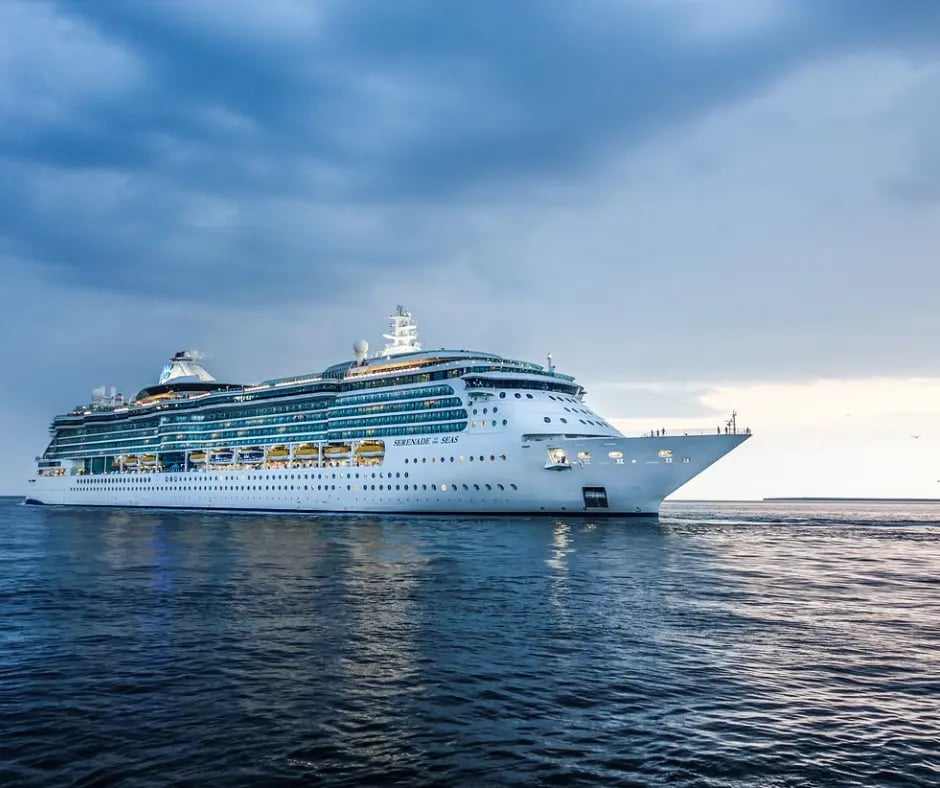
Popular ferry connections in Southern Europe

Updated:
 Sarah KuhlemannCommunity manager
Ferries are one of the most relaxed ways to move around Southern Europe. They link Italy with Albania, Greece, Croatia, Malta and Spain, connect France with Sardinia and the Balearics, and hop across the narrow strait between the Greek islands and Türkiye. You travel with more luggage than a budget airline allows, often overnight, and arrive in the middle of a port city rather than at an airport an hour outside town.
This guide covers the most popular international ferry routes in Southern Europe for 2026: who operates them, how long they take, what they cost, and when they run. One honest note up front: most ferries sell Wi-Fi packages, but at sea the connection is slow and patchy, so plan for offline work rather than video calls.
🌱 Travel health insurance for Europe
Genki TravelerA travel health insurance with worldwide cover. Monthly payment plans, and easy signup in less than 1 minute.Check prices🎯 Ferry routes at a glance
| Route | Operators | Time | Price (seat, one way) | Season |
|---|---|---|---|---|
| Bari – Durrës | Adria Ferries, GNV, Ventouris | 8–10 h | From about €40 | Year-round |
| Corfu – Sarandë | Finikas Lines, Ionian Seaways, Albania Luxury Ferries | 30 min–1 h | About €20–40 | Year-round |
| Bari – Dubrovnik | Jadrolinija | About 8 h | Varies by season | Late March to October |
| Ancona – Patras | ANEK-Superfast, Minoan Lines | 22–25 h | From about €100 | Year-round |
| Genoa – Barcelona | GNV | 17–25 h | From about €70 | Year-round |
| Civitavecchia – Barcelona | Grimaldi Lines | About 20 h | Varies | Year-round |
| Toulon – Porto Torres | Corsica Ferries | About 10.5 h | Varies | Seasonal |
| Toulon – Menorca / Mallorca | Corsica Ferries | 13–17 h | About €20–80 to Menorca | Summer |
| Pozzallo – Valletta | Virtu Ferries | 1 h 45 | From about €70 | Year-round |
| Rhodes – Marmaris | Yeşil Marmaris, Sea Dreams, Tilos Travel | 50 min–1 h | About €45–60 | Mainly March to November |
| Bodrum – Kos | Several operators | 20–30 min | About €25–80 | Year-round |
Prices are the cheapest seat or deck fares found for 2026 sailings during research in autumn 2026. They rise in July and August, and a cabin on an overnight crossing costs considerably more. Every route runs in both directions.
🇦🇱 Albania: from Italy and Greece
Bari – Durrës
- Operators: Adria Ferries, GNV, Ventouris Ferries
- Duration: 8 to 10 hours. Daytime sailings are the fastest, overnight crossings usually leave Bari around 22:00 and arrive in the morning.
- Price: from about €40 for a seat.
- Good to know: the busiest route between Italy and Albania, with several sailings a day. Durrës is about 40 minutes from Tirana.
Corfu – Sarandë
- Operators: Finikas Lines, Ionian Seaways, Albania Luxury Ferries
- Duration: 30 to 45 minutes by fast boat, about an hour by conventional ferry.
- Price: about €20 to €40 one way.
- Good to know: the easiest way into southern Albania, with many daily departures in summer. Fast boats are cancelled in strong wind, so leave some slack if you have a flight to catch from Corfu.
🇭🇷 Croatia: from Italy
Bari – Dubrovnik
- Operator: Jadrolinija
- Duration: about 8 hours, as a daytime crossing.
- Price: varies by date and season, so check the current fares on Jadrolinija.
- Good to know: seasonal, running from late March to October, with the most sailings in summer. Ferries arrive at Gruž port, a short bus ride from Dubrovnik's old town.
🇬🇷 Greece: from Italy
Ancona – Patras
- Operators: ANEK-Superfast, Minoan Lines
- Duration: 22 to 25 hours, usually with a stop in Igoumenitsa.
- Price: from about €100 for deck passage.
- Good to know: almost daily, and a genuine mini cruise across the Adriatic. If you want a shorter crossing, ferries from Bari and Brindisi reach Igoumenitsa and Patras in less time.
🇪🇸 Spain: from Italy and France
Genoa – Barcelona
- Operator: GNV
- Duration: 17 to 25 hours, depending on the sailing.
- Price: from about €70.
- Good to know: up to five sailings a week depending on the season.
Civitavecchia – Barcelona
- Operator: Grimaldi Lines
- Duration: about 20 hours.
- Good to know: Civitavecchia is Rome's port, about an hour from the city by train, which makes this the easiest sea route from central Italy to Spain.
Toulon – Menorca and Mallorca
- Operator: Corsica Ferries
- Duration: 13 to 14 hours to Ciutadella on Menorca, 13.5 to 17 hours to Alcúdia on Mallorca.
- Price: about €20 to €80 for a seat to Menorca.
- Good to know: summer only, usually once or twice a week, so plan around the timetable.
🇮🇹 Sardinia: from France
Toulon – Porto Torres
- Operator: Corsica Ferries
- Duration: about 10.5 hours.
- Good to know: a seasonal route with a couple of sailings a week. Corsica Ferries also links Toulon with several Corsican ports if you want to break up the trip.
🇲🇹 Malta: from Sicily
Pozzallo – Valletta
- Operator: Virtu Ferries
- Duration: 1 hour 45 minutes by fast catamaran.
- Price: from about €70.
- Good to know: the only regular ferry to Malta for foot passengers, with several sailings a day in summer. Pozzallo is in the south-east of Sicily, so allow time to get there.
🇹🇷 Türkiye: from the Greek islands
Rhodes – Marmaris
- Operators: Yeşil Marmaris Lines, Sea Dreams, Tilos Travel
- Duration: 50 minutes to an hour.
- Price: about €45 to €60 one way.
- Good to know: passenger-only catamarans, daily in summer and on selected days in winter.
Bodrum – Kos
- Operators: several local operators, including Bodrum Express
- Duration: 20 to 30 minutes.
- Price: about €25 to €80.
- Good to know: the shortest and most frequent crossing between Greece and Türkiye. From Kos, Greek ferries continue to Rhodes and the other Dodecanese islands.
💡 Tips for traveling and working by ferry
- Wi-Fi at sea: most larger ferries sell Wi-Fi packages, but the connection comes via satellite and is slow and unreliable. Download what you need before boarding and save calls for when you are back in port. Near the coast, your mobile data often works better.
- Seat, deck or cabin: on crossings of 10 hours or more, a cabin turns a travel day into a night's sleep and a quiet place to work. Deck passage is the cheapest option, but you sleep wherever you find space.
- Book direct or compare: operator websites often have the cheapest fares and early-booking discounts. Comparison sites like Ferryhopper or Direct Ferries are useful for checking which operators run on which days.
- Check-in: foot passengers usually need to check in one to two hours before departure on international routes. Bari, Ancona and Genoa have large ports, so allow time to find the right terminal.
- Borders and passports: Albania and Türkiye are outside Schengen, so routes to and from them involve full passport controls. Since the EU's Entry/Exit System started, non-EU travelers have their fingerprints and photo taken when entering Schengen, which can add time at the port.
- Seasons: many routes run more often in summer, and some, like the Balearic crossings from Toulon, only run in summer. Fast boats on short routes are the first to be cancelled in bad weather.
- Crossing an ocean instead: repositioning cruises are the long-distance version, with Starlink Wi-Fi on board. See working remotely on a cruise ship.
❓ Frequently asked questions
Among the busiest international routes are Bari to Durrës (Italy to Albania), Corfu to Sarandë (Greece to Albania), Ancona to Patras (Italy to Greece), Genoa to Barcelona (Italy to Spain) and Bodrum to Kos (Türkiye to Greece).
Most larger ferries offer paid Wi-Fi, but it runs via satellite and is slow and patchy. It is fine for messages and email, not for video calls. Mobile data often works better near the coast.
Yes. ANEK-Superfast and Minoan Lines sail from Ancona to Igoumenitsa and Patras almost daily, and shorter routes run from Bari and Brindisi. Ancona to Patras takes 22 to 25 hours.
Bodrum to Kos, at 20 to 30 minutes, followed by Corfu to Sarandë (30 minutes to an hour) and Rhodes to Marmaris (about 50 minutes).
For routes to and from Albania and Türkiye, yes, as they are outside Schengen. Within Schengen, for example Italy to Greece or Spain, EU citizens can usually travel with a national ID card, but operators still check ID at boarding.
Not always. A deck seat on a long crossing can match a budget flight, but cabins cost more. Ferries win on luggage, on arriving in the city center, and on short hops like Corfu to Sarandë, where there is no flight at all.
🎯 Conclusion
Southern Europe's ferry network turns the Mediterranean into a set of easy links rather than a barrier: Albania from Italy or Corfu, Greece from the Adriatic ports, Malta from Sicily, Spain from Genoa or Rome, and Türkiye from the Greek islands. Pick short crossings for quick hops, book a cabin for the long ones, and keep your work offline while you are at sea.