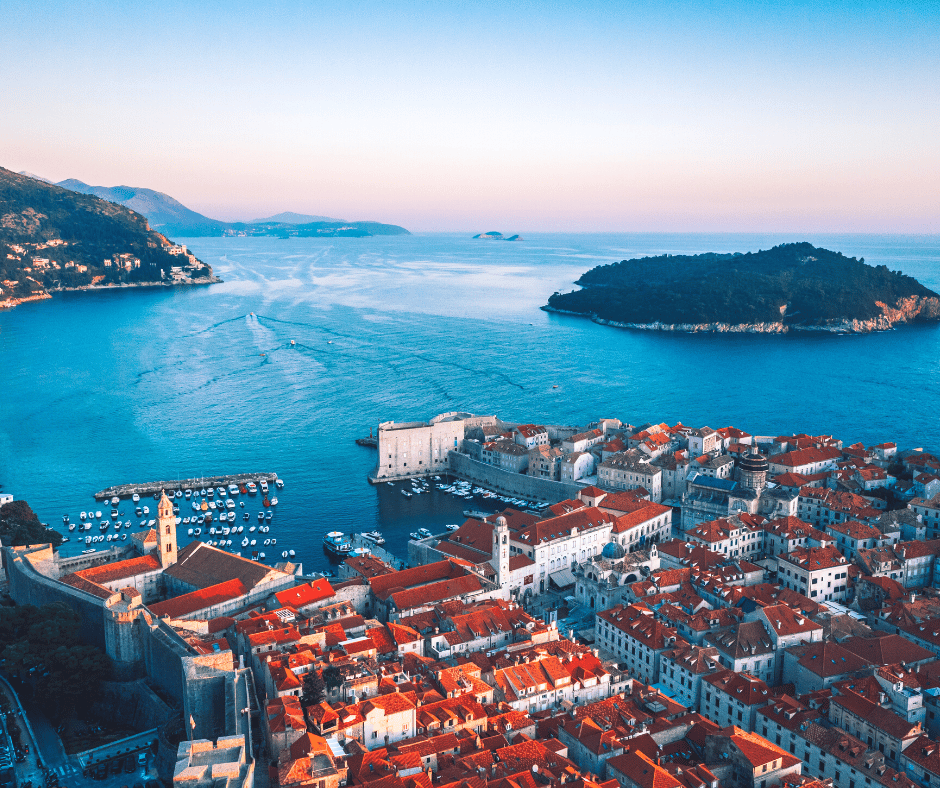
Sweden for nomads
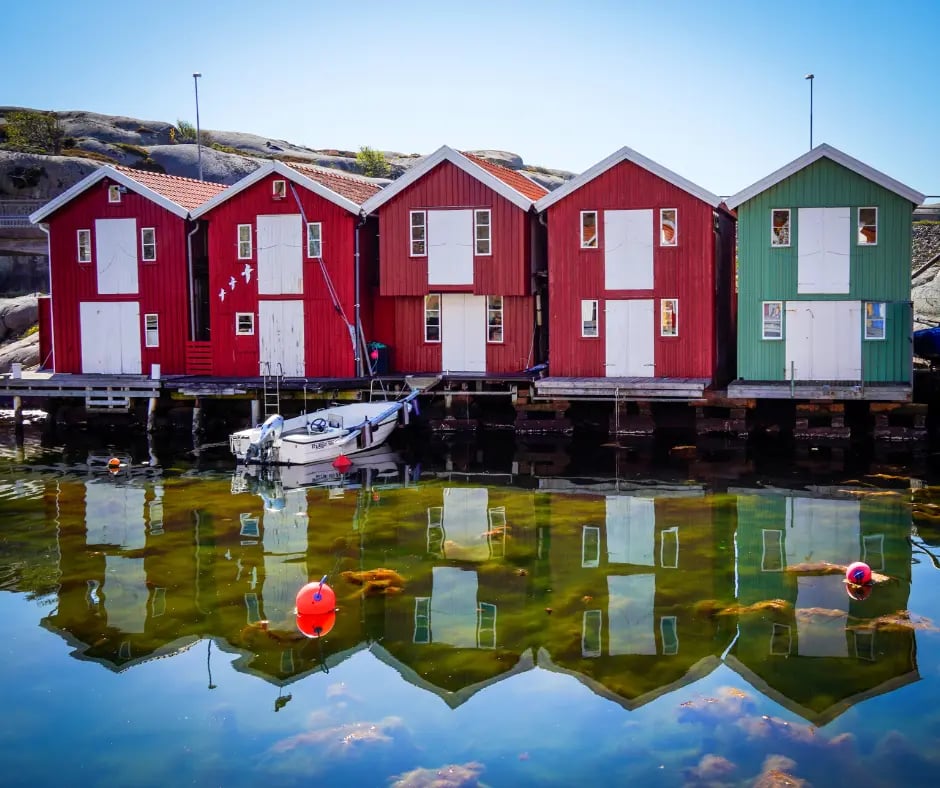
Updated:
 Sarah KuhlemannCommunity manager
Sweden is one of the easiest countries in Europe to live and work in remotely. It is safe and almost everyone speaks English. Daily life runs on apps and card payments, and forests, lakes and archipelagos start at the edge of every city. In summer, the evenings barely get dark.
The trade-offs are just as real. Sweden is expensive, and winter days are short and dark. Much of daily life expects a Swedish ID and BankID, which short-stay visitors can't get. Furnished housing in Stockholm is scarce, and there is no digital nomad visa. This guide covers what a month really costs, how long you can stay and where to base yourself.
🌱 Health insurance for Sweden
Genki TravelerA travel health insurance with worldwide cover. Monthly payment plans, and easy signup in less than 1 minute.Discover Genki Traveler🎯 Sweden at a glance
| 🛂 Visa | EU and EEA: free movement. Non-EU: 90 days in any 180 (Schengen). No digital nomad visa |
| ⏳ Max stay | 90 days in 180 visa-free. Self-employed non-EU visitors need a visitor's residence permit for longer stays |
| 💶 Monthly budget | €1,250 in Gothenburg to €3,100 in Stockholm for a short stay (November 2026) |
| 🌤 Best time | May to September. September to March in Lapland for the northern lights |
| 🏝 Top areas | Södermalm, Vasastan (Stockholm), Linnéstaden, Haga (Gothenburg), Möllevången (Malmö) |
| 🛜 Internet | Fiber in the cities, 4G and 5G networks, EU roaming rules apply |
| 🛡 Safety | Canada: high degree of caution for terrorism (August 2026). Terrorism threat level 3 of 5 |
🇸🇪 Entry requirements for Sweden
- EU and EEA citizens: free movement with an ID card or passport. To stay longer than 3 months, you need a right of residence: you work, are self-employed, study, or can support yourself. There is no permit to apply for. Nordic citizens can live and work in Sweden freely.
- Non-EU citizens: Sweden is in Schengen. Visa-free nationalities get 90 days in any 180-day period, counted across all Schengen countries.
- EES: the EU's Entry/Exit System registers non-EU visitors with fingerprints and a facial image at the border. Overstays are flagged automatically.
- ETIAS: not open for applications yet, according to Canada's travel advice (August 2026).
There is no digital nomad visa
The Swedish Migration Agency lists no nomad or remote-work permit. It does address the self-employed directly: if you have your own business and will do temporary remote work in Sweden, you do not need a work permit. Visits longer than 90 days require a visitor's residence permit, and payment for the work goes to your business in your home country. The agency does not address employees of foreign companies working remotely. This is general information, not legal advice.
Personal identity number vs coordination number
- Personal identity number (personnummer): issued when you are registered in the Population Register, which normally happens if you will sleep in Sweden for at least twelve months. Banks, BankID, rental contracts and many services are built around it.
- Coordination number (samordningsnummer): you can apply yourself if you will stay less than a year and can show you need one. You must visit a service centre in person for an identity check, and it can take up to 6 weeks for your case to be assigned.
- Why it matters: BankID requires a Swedish personal identity number. Freja+ also accepts a confirmed coordination number. On a short stay, expect to manage without BankID.
Tax: six months now, 160 days from 2027
Until December 31, 2026, the Swedish Tax Agency counts you as staying regularly in Sweden if you are there for six consecutive months or more. Short trips, such as visits home, do not shorten the stay. A regular stay makes you fully tax liable.
On November 25, 2026, the Riksdag passed a new definition, which takes effect on January 1, 2027. A permanent stay is now more than 160 days in a calendar year, or more than 120 days if the previous year also exceeded 120. Only days that include your overnight rest in Sweden count. Living in Sweden, or keeping essential ties to it, are separate tests.
This is general information, not tax advice. The guide to tax residency and the 183-day rule explains why day counts are only part of the picture.
✈️ How to get to Sweden
- Stockholm Arlanda (ARN): the main gateway.
- Gothenburg Landvetter (GOT): serves the west coast.
- Malmö (MMX) and Copenhagen (CPH): Malmö's airport is small, so most Malmö arrivals use Copenhagen, which is one stop away by Øresund train.
By train: the Øresund train links Copenhagen and Malmö across the bridge. The RDC EuroNight runs three times a week overnight from Berlin and Hamburg to Stockholm via Copenhagen, with sleeper, couchette and seated cars.
By ferry: routes connect Sweden with Finland and Estonia (to Stockholm), Germany (to Gothenburg and Trelleborg) and Poland (to Ystad and Nynäshamn).
🗺 Where to base yourself
- Stockholm has the biggest international scene and the highest prices. Södermalm is the creative island, with cafés, vintage shops and two of the coworking spaces below. Vasastan is residential and central, around Odenplan. Kungsholmen is quieter, with lakeside walks.
- Gothenburg is relaxed and cheaper, with an archipelago reached by city ferry. Linnéstaden is the café district next to Slottsskogen park. Majorna is creative and laid-back. Haga has historic wooden houses and is busier with visitors.
- Malmö is compact and multicultural, and Copenhagen is a short train ride away. Möllevången is lively and the best value. Västra Hamnen is the modern waterfront, with sea baths.
- Uppsala is a university city a short train ride north of Stockholm. It suits a calmer base with day trips into the capital.
- Swedish Lapland is a trip rather than a base. According to Visit Sweden, the best time for the northern lights is early September to late March, when the nights are longest and darkest. Kiruna and Abisko are the gateways.
💶 How much does it cost?
| Per month | Furnished studio or room | Coliving | Coworking | Food | Transport | Realistic total |
|---|---|---|---|---|---|---|
| Stockholm (Södermalm, Vasastan) | €1,160–1,780 | €860–1,250 | €0–420 | €450–650 | €94 | €1,500–3,100 |
| Gothenburg (Linnéstaden, Majorna) | €890–1,330 | €680–715 | €0–260 | €400–600 | €79 | €1,250–2,500 |
| Malmö (Möllevången) | €800–1,250 | – | €0–260 | €400–600 | ~€60 | €1,350–2,400 |
These are realistic short-stay figures for a furnished place booked for one to three months, dated November 2026 at €1 = 11.24 SEK (Riksbank, November 25, 2026). The totals add €100 to €200 for phone, gym and everything else, and the €0 coworking floor assumes you work from libraries.
The rent ranges are estimates. They start from Qasa's median second-hand rents for the first half of 2026 and add a premium for furnished short stays. Qasa reported 303 to 330 SEK per square meter in Stockholm (highest in the inner city), 205 to 227 SEK in Gothenburg and 185 to 203 SEK in Malmö.
Why short stays rely on sublets. Most regular rental flats are first-hand contracts handed out through municipal queues. In October 2026, the average wait in Stockholm's queue was 8.9 years. Visitors therefore rent second-hand: a sublet from a tenant or owner, usually through platforms such as Qasa or Blocket Bostad. Expect a deposit, insist on a written contract, and never pay before you have seen both the contract and the flat.
Coliving is the practical shortcut. Colive Lab on Södermalm costs 9,680 to 13,180 SEK a month, and Colive Caseus in Gothenburg costs 7,595 to 8,030 SEK. Both include furniture, wifi, electricity and weekly cleaning, with no deposit and a two-month notice period. K9 Coliving in Östermalm charges 6,560 SEK for a bunk up to 13,989 SEK for a single room, and suits people who plan to stay longer.
Sweden sits above a €1,500 monthly budget for most short stays. For cheaper bases, see the 10 cities in the guide below.
 Europe under €1,500 a month: 10 cities checkedEurope on a budget still exists, just not where it used to. We checked 16 cities against €1,500 a month with 2026 data: here are the 10 that work, from Bansko to Palermo, with the conditions spelled out.
🧑🏻💻 Where to work from
Stockholm
- Helio: several locations, including Hornstull and Slussen on Södermalm. The Open membership starts at 3,350 SEK a month (3,650 SEK at Hornstull), and you can ask for a free trial day.
- Knackeriet: now at Mariatorget on Södermalm. Flex costs 4,700 SEK + VAT a month, and companies outside the EU pay no Swedish VAT. Entry is through a membership chat, there is a 3-month notice period, and the community runs weekly homemade fika.
- Day passes: Regus hot desks start from 150 SEK a day.
- Libraries: Stockholm's city libraries offer free seating and wifi.
Gothenburg
- Factory Workspace: a small creative space near Odinsplatsen. A day costs 300 SEK, a week 1,390 SEK, and Flex 2,890 SEK a month + VAT.
- Mindpark Järntorget: day passes from 250 SEK and Flex from 2,950 SEK a month + VAT.
Malmö
- Mindpark Malmö City: a three-minute walk from the central station, with the same prices as in Gothenburg.
- Cafés: fika culture makes long café sessions normal, but cafés are better for focused work than for calls.
👥 Finding community
- Coworking rituals: Knackeriet's weekly fika and Mindpark's community events are the easiest ways in.
- Coliving: Colive and K9 both build in shared dinners and events.
- Meetup has active expat and tech groups in all three cities.
 Coliving in Europe: the best spaces for digital nomadsEurope's best coliving spaces by region and season, from an Alpine citadel to small surf towns, with prices checked November 2026 and the Schengen 90/180 maths.
 Digital nomad events in Europe 2026/27Europe runs the biggest nomad festival on earth (Bansko) and a dense spring-to-autumn calendar of summits, island retreats and community weeks around it. The season is long, roughly April to December, and spread from the Bulgarian mountains to the Canary Islands, so the planning question is less "is there an event" and more "which three can I string together without crossing the continent twice."
🛜 Internet and SIM cards
Fiber is standard in Swedish cities, and Telia, Tele2, Telenor and Tre run the mobile networks. EU roaming rules apply, so an EU SIM works without extra charges. Prepaid SIMs must be registered to a named user under Swedish law, so check your operator's ID options before you buy.
The simplest option is a global eSIM from Pangia: one plan that covers Sweden and whatever country comes next, set up before you land.
BankID and Swish. Most Swedes pay friends and small shops with Swish, an app linked to a Swedish bank account and BankID. Without them, international cards and Apple or Google Pay work almost everywhere, including contactless public transport. Grocery stores and pharmacies must also accept cash under a law passed in 2026.
🌤 When to go where
| J | F | M | A | M | J | J | A | S | O | N | D | |
|---|---|---|---|---|---|---|---|---|---|---|---|---|
| Stockholm, Gothenburg, Malmö | 🌧 | 🌧 | 🌧 | ⛅ | ☀️ | ☀️ | ☀️ | ☀️ | ⛅ | 🌧 | 🌧 | ⛅ |
| Swedish Lapland | ☀️ | ☀️ | ☀️ | ⛅ | 🌧 | ☀️ | ☀️ | ⛅ | ☀️ | ☀️ | ☀️ | ☀️ |
☀️ best · ⛅ mixed · 🌧 dark or wet
Summer (June to August) is peak season, with long light evenings, archipelago swimming and festivals. Winter brings very short days in the south and polar night in the far north, and many people find the darkness harder than the cold. December is marked as mixed in the cities because the darkness comes with Lucia on December 13 and the Christmas markets covered in the guide to Europe's best Christmas markets. In Lapland, the best months are September to March for the northern lights and early summer for the midnight sun.
🚌 Getting around
- City transport: a 30-day ticket costs 1,060 SEK at full price in Stockholm (SL) after the government-funded half-price offer ends on December 2, 2026, and 890 SEK for one zone in Gothenburg (Västtrafik). In Malmö, check the current price in the Skånetrafiken app. All three systems sell tickets in their apps.
- Trains: SJ connects Stockholm, Gothenburg, Malmö and Uppsala, and night trains run from Stockholm to Swedish Lapland.
- Cycling: cities have good bike lanes and bike-share schemes.
- Domestic flights: the fast way to Kiruna.
🚧 Safety
Everyday life in Sweden is safe for visitors. The terrorism threat level was lowered from 4 to 3 (elevated) in May 2025 and has stayed there, according to the Swedish Security Service. Canada's advice rates Sweden "high degree of caution" because of terrorism (August 11, 2026). It also notes that gang-related violence occurs mainly in Stockholm, Gothenburg and Malmö, and has not typically happened in areas frequented by tourists.
- Petty crime: pickpocketing happens in busy tourist spots and on public transport.
- Outdoors: the Right of Public Access lets you hike, pick berries and pitch a tent in nature, as long as you respect landowners and wildlife. Winter hikes in the north need proper gear and a weather check.
- Emergencies: dial 112.
🏥 Healthcare
EU and EEA visitors with an EHIC pay the same patient fees as residents for necessary care. According to 1177, most people from outside the EU, EEA or Switzerland pay the full cost of healthcare in Sweden themselves, apart from a few agreement countries such as Australia.
1177 is also the national healthcare advice line: call 1177 (+46 771-11 77 00 from a foreign number) to speak to a nurse in English. For emergencies, dial 112. Pharmacies are called Apotek, and tap water is safe to drink.
🎖 Must see
- Stockholm: Gamla stan, the medieval old town, and the archipelago, starting from Vaxholm by boat.
- Gothenburg's southern archipelago: a car-free island hop by city ferry.
- Kiruna and Abisko: the northern lights, including the Aurora Sky Station above Abisko.
- The High Coast: a UNESCO site, with hikes in Skuleskogen National Park.
- Gotland and Visby: a medieval walled town and UNESCO site.
- Kungsleden: the long-distance trail, whose northern end starts in Abisko.
❓ Frequently asked questions
No. Non-EU visitors get 90 days in any 180 under Schengen. The Migration Agency says self-employed people doing temporary remote work for their own business do not need a work permit, but stays over 90 days need a visitor's residence permit.
Yes, for a short stay. Cards and Apple or Google Pay work almost everywhere. BankID requires a Swedish personal identity number, which generally needs a stay of at least a year.
About €1,500 to €3,100 for a short stay, including housing, coworking, food and transport (November 2026). Rent decides most of the budget.
Early September to late March, in Swedish Lapland around Kiruna and Abisko.
Until the end of 2026, a stay of six consecutive months makes you fully tax liable. From January 2027, more than 160 nights in a calendar year does, or more than 120 nights two years in a row. This is general information, not tax advice.
Stockholm for the most choice and community. Gothenburg for a relaxed, cheaper base. Malmö for the lowest costs, with Copenhagen next door.
Traveling that area? Check out Sweden's neighborhood.
 Denmark for nomadsDenmark is bike-first, safe and runs on English, but it is one of Europe's priciest bases and has no nomad visa. Real 2026 costs for Copenhagen, Aarhus and Odense, plus where to live and work.
 Germany for nomadsGermany has no digital nomad visa, strict address registration and expensive short-stay flats. Here is how nomads live in Berlin, Hamburg, Munich, Köln and Leipzig in 2026, with real costs and verified coworking spaces.
 Estonia for nomadsThe EU's digital state: everything works online, English works everywhere in Tallinn, and the nomad visa has a higher income bar than most expect. Where to base yourself in Estonia in 2026, what it costs, and the e-Residency confusion cleared up.
 Lithuania for nomadsA tech-forward Baltic capital with gigabit internet, low costs for the EU, a beautiful UNESCO old town and almost no crowds. Lithuania is one of Europe's quiet nomad bargains, if you are an EU citizen. Here is the honest 2026 guide.