Poland for nomads
Updated:
 Sarah KuhlemannCommunity manager
Poland is one of the best-value bases in the EU for remote work. You get fast and cheap internet, big-city culture in Kraków, Warsaw, Gdańsk and Wrocław, and a fast intercity rail network that links them every hour or two. Costs sit well below Western Europe: a realistic month runs from about €1,150 in Wrocław to €2,250 in Warsaw.
The honest side: winters are cold, grey and short on daylight. English is common among younger people in the cities but much less so outside them. And there is no digital nomad visa. EU citizens can simply move here. Everyone else gets 90 days in the Schengen Area unless they qualify for a national visa or residence permit.
🌱 Health insurance for Poland
Genki TravelerA travel health insurance with worldwide cover. Monthly payment plans, and easy signup in less than 1 minute.Discover Genki Traveler🎯 Poland at a glance
| 🛂 Visa | EU/EEA/Swiss: free movement. Most other passports: 90 days in any 180 in the Schengen Area |
| ⏳ Max stay | Unlimited for EU citizens (register after 3 months). 90/180 days for visa-free non-EU visitors |
| 💶 Monthly budget | €1,150 in Wrocław to €2,250 in Warsaw for a solo nomad |
| 🌤 Best time | May to September. December to February is cold and dark |
| 🏙 Top areas | Kazimierz (Kraków), Śródmieście and Mokotów (Warsaw), Wrzeszcz and Sopot (Tricity), Nadodrze (Wrocław) |
| 🛜 Internet | ~220 Mbps median fixed broadband, ~120 Mbps mobile |
| 🛡 Safety | US advisory Level 1 (exercise normal precautions) |
🇵🇱 Entry requirements for Poland
EU, EEA and Swiss citizens can stay up to three months with just a valid ID or passport. If you stay longer, you must register your residence in person at the voivodeship office (urząd wojewódzki) for where you live. The deadline is the day after your first three months end. Registration is free, and you need to meet one of the conditions for a longer stay, such as working, being self-employed or having sufficient resources (gov.pl). This is separate from Polish address registration (zameldowanie).
Non-EU visitors from visa-exempt countries can stay up to 90 days in any 180-day period across the Schengen Area. Since 10 April 2026, the EU's Entry/Exit System (EES) registers your fingerprints and a facial image at the external border instead of stamping your passport. ETIAS, the pre-travel authorization for visa-exempt travelers, is not yet in operation. Check the official Travel to Europe site before you go.
Poland has no digital nomad visa. The Office for Foreigners' application system lists 17 purposes of stay for a temporary residence permit, and none of them covers remote work for a foreign employer or foreign clients (mos.cudzoziemcy.gov.pl). Two longer-stay routes do exist:
- A national D visa allows stays of more than 90 days, up to one year (gov.pl).
- Temporary residence permits, issued by the voivode, cover purposes such as employment, running a business in Poland, studies and "other circumstances" (Office for Foreigners).
Each route has its own requirements. Check them with the consulate or voivodeship office for your case.
Tax: under Polish law, you become a tax resident if your centre of personal or economic interests is in Poland, or if you spend more than 183 days in Poland in a tax year. Tax residents must declare their worldwide income in Poland, subject to double tax treaties (podatki.gov.pl). This is general information, not tax advice. The day count is rarely the only test:
 Tax residency for digital nomads: the 183-day rule and its exceptionsStaying under 183 days doesn't make you tax-free. A calm, myth-free guide to tax residency for digital nomads: where the 183-day rule really comes from, how countries count days, the tests beyond day counts, and how seven popular countries decide.
✈️ How to get to Poland
By air, the main airports are:
- Warsaw Chopin (WAW), plus Warsaw Modlin (WMI), which mainly serves budget flights
- Kraków (KRK)
- Gdańsk (GDN)
- Wrocław (WRO)
LOT is the national carrier. Ryanair and Wizz Air cover most budget routes across Europe.
By train, PKP Intercity's 2025/26 timetable runs:
- Warsaw to Berlin via Poznań every two hours
- Kraków to Vienna every four hours
- Trains to Prague every four hours from Kraków, Warsaw and the Tricity
A new timetable starts in mid-December 2026, so check intercity.pl before booking.
🗺 Where to base yourself
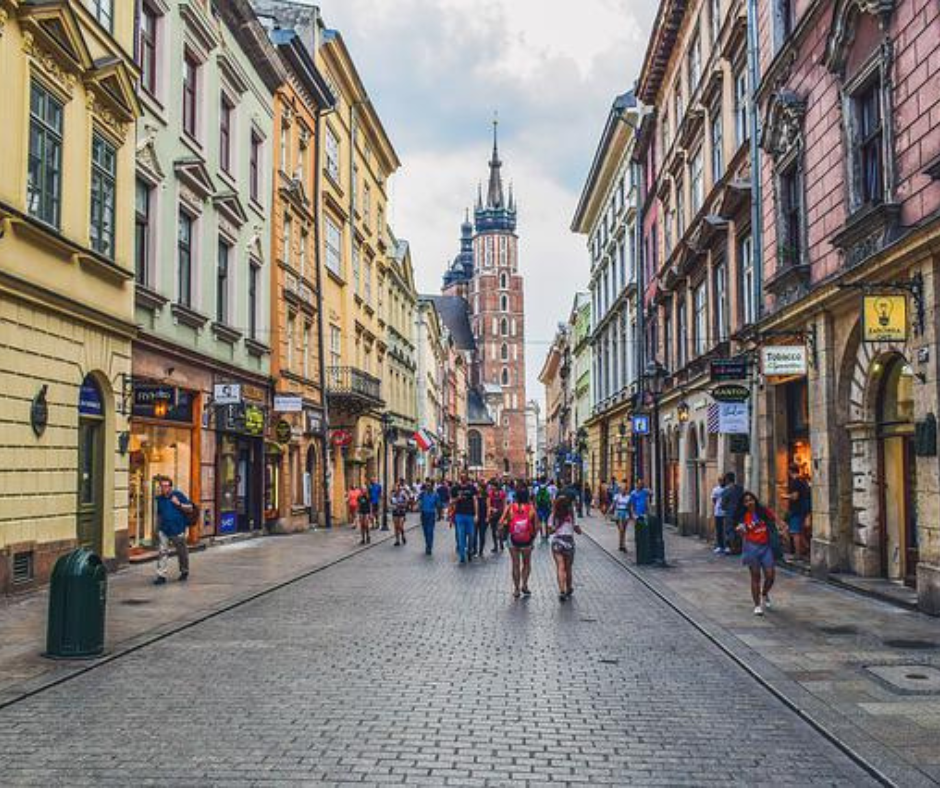
- Kraków is Poland's most popular nomad base: compact, walkable, historic and the most international.
- Kazimierz, the former Jewish quarter, is the heart of the café and coworking scene.
- Stare Miasto (Old Town), around the Main Market Square, suits a first or short stay but is the busiest and priciest.
- Podgórze and Zabłocie, across the Vistula, are quieter, with converted factories and newer flats.
- Grzegórzki, next to Kazimierz, has slightly lower rents and its own train stop.
- Warsaw is the capital and business hub. It is bigger, more modern and more expensive, with the strongest tech and startup scene.
- Śródmieście puts you in the center with the best transport links.
- Mokotów is green and residential with good metro access.
- Wola is the high-rise business district, full of coworking spaces.
- Praga-Północ, across the river, is the cheaper, artsy option.
- The Tricity (Gdańsk, Sopot, Gdynia) is the Baltic coast option, linked end to end by the SKM commuter train. It is lively in summer and very quiet in winter.
- Główne Miasto (Main Town) is Gdańsk's restored historic center: beautiful but touristy.
- Wrzeszcz is the more affordable, livable Gdańsk district.
- Sopot is the beach resort.
- Gdynia is calmer and less touristy.
- Wrocław is the best-value big city: a riverside old town spread over islands and bridges, a large student population, and prices below Kraków.
- Stare Miasto (Old Town) puts you around the Rynek market square.
- Nadodrze is the creative, cheaper district north of the Oder.
- Ołbin is residential, close to both.
💶 How much does it cost?
| Per month | Wrocław | Tricity (Gdańsk) | Kraków | Warsaw |
|---|---|---|---|---|
| Furnished room or 1BR (1–3 months) | €650–1,000 | €700–1,100 (summer higher) | €750–1,100 | €900–1,400 |
| Coworking | €100–200 | €100–200 | €135–240 | €140–250 |
| Food | €350–500 | €350–500 | €350–500 | €400–550 |
| Transport | €25–40 | €25–40 | €25–40 | €25–40 |
| Realistic total | €1,150–1,750 | €1,200–1,850 | €1,250–1,900 | €1,500–2,250 |
Prices are converted at €1 ≈ 4.40 PLN (NBP, November 2026). Short-term furnished rentals are where the budget goes. Kraków and Gdańsk climb in summer, and Warsaw stays expensive all year. Polish trains and city transport are cheap by EU standards, so you can save by basing yourself in Wrocław or Wrzeszcz rather than the old towns.
 Europe under €1,500 a month: 10 cities checkedEurope on a budget still exists, just not where it used to. We checked 16 cities against €1,500 a month with 2026 data: here are the 10 that work, from Bansko to Palermo, with the conditions spelled out.
🧑🏻💻 Where to work from
Kraków
- Yolk: a coworking space and community hub over three floors in central Kraków (Józefa Sarego 5, between Kazimierz and the Old Town). Hot desks start at 93 PLN (about €21) a day and dedicated desks at 975 PLN (about €222) a month, with 24/7 access. More than 65% of members come from abroad, which makes it the easiest place to network in English.
- Kalafiornia: a smaller, homier space at Sarego 18 with monitors at every desk and 24/7 access. Day passes cost 95 PLN, a 10-day monthly pack 600 PLN (about €136) and a dedicated desk 1,045 PLN (about €238), all including VAT.
Warsaw
- Noa Cowork: a community-focused space in Mokotów (Jana Czeczota 31) with weekly Thursday breakfasts and a free trial day. Coworking Max costs 600 PLN net a month (about €136 before VAT), and a day costs 80 PLN net.
- Spaces and Regus run several centers in Śródmieście, Mokotów and Wola for professional infrastructure on flexible plans.
Tricity
- Good Space: a small, friendly coworking space with two Gdańsk locations, Matejki 9 and Grunwaldzka 26, near Wrzeszcz. Prices are on request.
- Leśna Hub: a coworking space in a modern tech hub building next to the forest in Sopot, close to the SKM Sopot Wyścigi station. Desks start at 2 PLN an hour.
Wrocław
- Concordia Design: coworking on Wyspa Słodowa, an island in the city center, with 24/7 access, fiber internet, a community manager and a rooftop terrace.
- Regus has three coworking centers in the city, with day passes and monthly hot-desk plans.
👥 Finding community
Kraków has the most visible international scene. Yolk hosts events, and the Krakow Newcomers Welcome Club meets there regularly. Warsaw's community is bigger but more spread out and professional, built around tech meetups and coworking events. Meetup covers all four cities year-round.
Outside the city centers, learning a few phrases of Polish goes a long way. For the general how-to, see the guide to making friends as a nomad.
 Coliving in Europe: the best spaces for digital nomadsEurope's best coliving spaces by region and season, from an Alpine citadel to small surf towns, with prices checked November 2026 and the Schengen 90/180 maths.
 Digital nomad events in Europe 2026/27Europe runs the biggest nomad festival on earth (Bansko) and a dense spring-to-autumn calendar of summits, island retreats and community weeks around it. The season is long, roughly April to December, and spread from the Bulgarian mountains to the Canary Islands, so the planning question is less "is there an event" and more "which three can I string together without crossing the continent twice."
🛜 Internet and SIM cards
Poland's internet is fast:
- Fixed broadband: median download around 220 Mbps.
- Mobile: median around 120 Mbps (Ookla Speedtest Global Index, 2026).
- Operators: Orange, Play, Plus and T-Mobile all run 5G networks in the big cities.
If you already have an EU SIM, EU roaming rules let you use it at domestic rates. A Polish prepaid SIM must be registered to you before it works, with your name and passport details (UKE). Operators let you do this in-store or online.
🌤 When to go where
| J | F | M | A | M | J | J | A | S | O | N | D | |
|---|---|---|---|---|---|---|---|---|---|---|---|---|
| Kraków, Warsaw, Wrocław | ❄️ | ❄️ | ⛅ | ⛅ | ☀️ | ☀️ | ☀️ | ☀️ | ☀️ | ⛅ | 🌧 | ❄️ |
| Tricity (Baltic coast) | ❄️ | ❄️ | ⛅ | ⛅ | ⛅ | ☀️ | ☀️ | ☀️ | ⛅ | 🌧 | 🌧 | ❄️ |
| Tatras (Zakopane) | ⛷ | ⛷ | ⛷ | ⛅ | ⛅ | ☀️ | ☀️ | ☀️ | ☀️ | ⛅ | 🌧 | ⛷ |
☀️ best · ⛅ mixed · 🌧 wet · ❄️ cold & dark · ⛷ ski season
May to September is the easy window. The cities are warm, outdoor life is everywhere, and the Baltic coast peaks in July and August, with prices to match. Winter brings sub-zero days, short daylight and smog in the south. It is also the cheapest time for rent and the ski season in the Tatras.
🚌 Getting around
- Intercity trains: PKP Intercity is the backbone of Polish travel.
- Kraków, Warsaw and the Tricity are linked every hour.
- Warsaw to Wrocław runs every two hours.
- The fastest Warsaw to Kraków Pendolino takes under 2.5 hours.
- Warsaw to Gdańsk takes under 3 hours.
- Booking early unlocks the cheapest fares (intercity.pl).
- City transport: trams and buses run in all four cities, plus a metro in Warsaw and the SKM commuter train along the Tricity. Tickets work by app (Jakdojade covers most cities) or at machines, and you have to validate them on board.
- Ride-hailing: Uber, Bolt and FreeNow are cheap and widely used in the big cities.
- Mountains: a direct Pendolino now runs from Gdynia to Zakopane via Warsaw and Kraków.
🚧 Safety
Poland is rated Level 1 (exercise normal precautions) by the US State Department, the lowest level (travel.state.gov). The main issue for visitors is petty theft: pickpocketing in tourist areas, train stations and on crowded trams. Drinking alcohol in public places is generally not allowed outside licensed areas, and police can fine you. The emergency number is 112.
🏥 Healthcare
Private healthcare in the big cities is modern, good value and English-friendly, with chains such as Lux Med and Medicover. EU citizens can use the public system (NFZ) with an EHIC for necessary care during a temporary stay. Everyone else should arrive insured. A D visa application requires travel health insurance.
Air quality is Poland's main health issue. Coal and wood heating cause heavy winter smog, especially in the south. Check live readings on the official air-quality portal of the Chief Inspectorate of Environmental Protection (GIOŚ) on bad days.
🎖 Must see
- Wawel Royal Castle and Kraków Old Town: the historic heart of Poland and a UNESCO site.
- Wieliczka Salt Mine: centuries of tunnels, chapels and salt sculptures just outside Kraków.
- Auschwitz-Birkenau Memorial: the essential, sobering visit. Book entry in advance on the memorial's official site.
- Gdańsk Main Town and Malbork Castle: the restored Hanseatic center, plus the world's largest brick castle, a short train ride away.
- Wrocław Old Town: the Rynek, the islands and hundreds of bronze dwarf statues.
- The Tatras: hiking in summer, skiing in winter, from Zakopane.
❓ Frequently asked questions
No. EU, EEA and Swiss citizens can live and work in Poland freely, registering after three months. Most other visitors get 90 days in any 180 in the Schengen Area. Longer stays need a national D visa or a temporary residence permit for a specific purpose, and none of these is a remote-work category.
Kraków for the biggest international community and a walkable old town. Warsaw for the tech scene and big-city energy. The Tricity for the coast in summer. Wrocław for the best value.
Plan on about €1,150 to €1,750 a month in Wrocław, €1,250 to €1,900 in Kraków, and €1,500 to €2,250 in Warsaw for a short-term furnished rental, coworking, food and transport.
Only if you are fine with cold, short days. Rents drop and the cities stay lively, but southern cities can see heavy smog. May to September is the easier window.
Under Polish law, you do if your centre of personal or economic interests is in Poland or you spend more than 183 days there in a tax year. Residents declare worldwide income. Double tax treaties can change the outcome, so get advice for your situation.
Yes. Median fixed broadband is around 220 Mbps, and 5G covers the big cities.
Traveling that area? Check out Poland's neighborhood.
 Germany for nomadsGermany has no digital nomad visa, strict address registration and expensive short-stay flats. Here is how nomads live in Berlin, Hamburg, Munich, Köln and Leipzig in 2026, with real costs and verified coworking spaces.
 Czech Republic for nomads
 Lithuania for nomadsA tech-forward Baltic capital with gigabit internet, low costs for the EU, a beautiful UNESCO old town and almost no crowds. Lithuania is one of Europe's quiet nomad bargains, if you are an EU citizen. Here is the honest 2026 guide.
 Central Europe by trainPrague, Vienna, Ljubljana and Split by train: three capitals and the Adriatic coast, with every leg, fare and coworking space checked for 2026.