Working remotely on a cruise ship: Wi-Fi, costs & tips
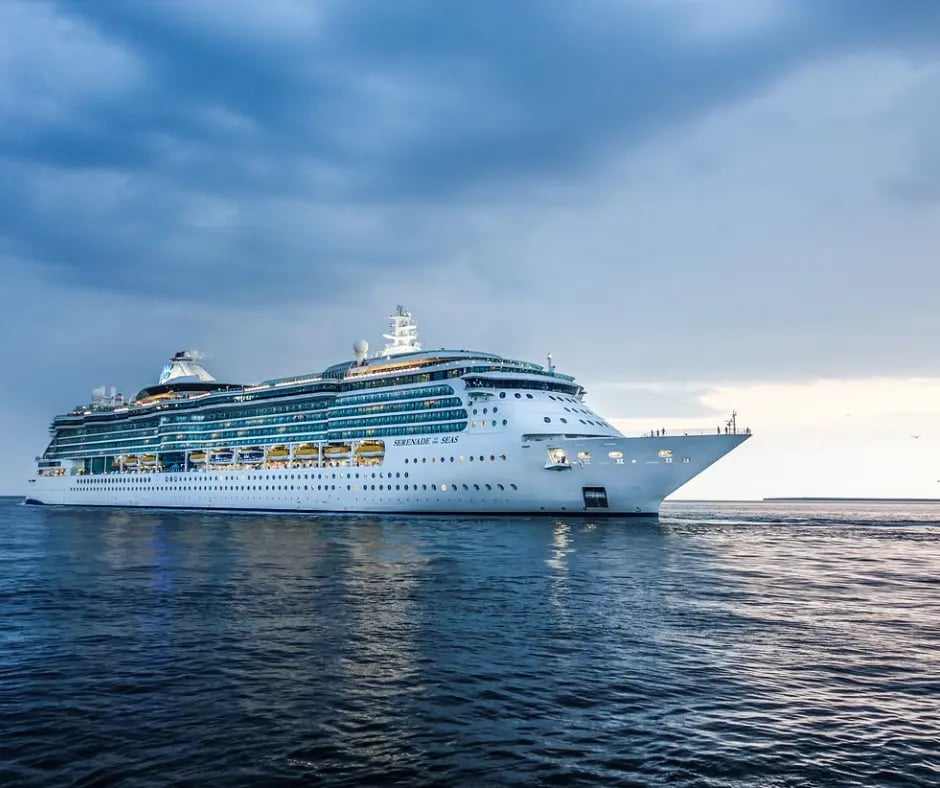
Updated:
 Sarah KuhlemannCommunity manager
Yes, you can work remotely from a cruise ship. The major cruise lines have moved their fleets to Starlink, and on a sea day the paid premium packages handle email, Slack and video calls. A two-week ocean crossing can double as transport and accommodation, with meals included.
The limits are real, though. Good Wi-Fi costs extra, often per device and per day, and the basic tiers usually block video calls. Port days eat into working hours, transatlantic crossings change the clock by an hour on several nights, and your desk is a small cabin table. This guide covers what works, what it costs and what to sort out before you board, with prices checked in November 2026.
🌱 Health insurance for cruises
Genki TravelerA travel health insurance with worldwide cover. Monthly payment plans, and easy signup in less than 1 minute.Discover Genki Traveler🛜 Internet at sea
Cruise lines sell Wi-Fi in tiers: a cheaper one for messaging and browsing, and a premium one for video calls and streaming. Most lines don't publish one fixed price. Your actual rate appears in the line's app or online cruise planner once you've booked, and it varies by ship and sailing. Most lines charge in US dollars; the euro figures below use €1 ≈ $1.10 (November 2026).
| Cruise line | Packages | Video calls | Included in | Typical price per day* |
|---|---|---|---|---|
| Celebrity | Basic, Premium (Starlink) | Premium only | Basic in All Included fares. Upgrade to Premium about €9 a day | ~€18 Basic, ~€23-32 Premium |
| Royal Caribbean | VOOM Surf, VOOM Surf + Stream | Surf + Stream | Not in standard fares | ~€16-20 per device |
| Norwegian (NCL) | Wi-Fi packages | Premium tier | Can be part of the Free at Sea offer | ~€27 per device |
| Princess | MedallionNet tiers | Higher tier | Princess Plus and Premier fares | ~€18-30 |
| MSC | Browse, Browse & Stream | Browse & Stream | Some fare bundles | Varies, check the MSC app |
| Virgin Voyages | Basic tier, Premium upgrades | Premium | Basic tier in every fare | ~€27 for Premium |
| Carnival | Social, Value, Premium | Premium | Social plan with some promotional fares | Varies, check the Carnival app |
*Typical pre-cruise prices for one device, from independent price trackers (2026), not official list prices. Check your sailing in the cruise line's app.
- Buy before you board. Cruise lines regularly charge less for Wi-Fi bought in advance than onboard. Celebrity, for example, sells its Basic package only before the cruise or as part of All Included.
- Know the difference between sea days and port days. On sea days the ship's Starlink connection is all you have. In port, your phone's roaming or a local eSIM is often faster and cheaper, and a phone hotspot covers a few hours of work.
- One device or two? Most packages cover one device at a time. If you work on a laptop and stay reachable by phone, price in a second device or log out and switch.
- Test early. Run a speed test and a short video call on the first sea day, while there's still time to upgrade.
🚢 Repositioning cruises as transport
A repositioning cruise is a one-way sailing that moves a ship between seasons, for example from the Caribbean to the Mediterranean for summer. Because the route is one way and includes long runs of sea days, these sailings are among the cheapest per night of any cruise.
- Spring (March to May): ships cross from Florida and the Caribbean to Europe. Typical first European stops include Madeira, Las Palmas in the Canary Islands or Málaga, ending in Barcelona, Rome or Southampton.
- Autumn (October to November): the same ships head back to the Caribbean and Florida, a classic way to reach winter bases without a long-haul flight.
- Other routes: ships move between Asia and Australia in spring and autumn, and between Alaska and the US West Coast or Asia at the start and end of the Alaska season.
A transatlantic crossing usually takes 12 to 16 nights, with five to eight sea days in a row. Prices change daily, but inside cabins on mainstream lines often start around €45 to €110 per person per night, based on two sharing (estimate from booking sites and independent trackers, November 2026). Solo travelers often pay close to the price of two, unless the ship has solo cabins.
To find them, filter for "transatlantic" or "repositioning" on the cruise lines' own sites, or browse the repositioning sections of large cruise booking sites, then compare against the line's own price. From your arrival port, the Spain & Portugal by train guide and the ferry connections in Southern Europe take you onward.
🧑🏻💻 Working on board
- Choose the cabin as your office. An inside cabin is cheapest and darkest, fine for focused work but not for long days. A balcony cabin costs more but gives you daylight and fresh air between calls. Check the deck plan for a desk or vanity table, and avoid cabins under the pool deck or next to venues with late-night music.
- Find a second workspace. Libraries, card rooms, quiet lounges and cafés outside meal times are usually calm on sea days. Signal is often strongest in public areas, so test a few spots on day one.
- Plan for the clock. On a transatlantic crossing the ship moves the clock by an hour on several nights, usually around midnight: going east toward Europe your days get shorter, going west they get longer. If your team is on a fixed time zone, set meetings in that zone and let your calendar do the conversion. The jet lag guide helps you adjust.
- Keep a sea-day routine. Work the morning while the ship is quiet, take the gym or a deck walk at lunch, and block calls for times when you know you're at sea, not arriving in port.
🏥 Health at sea
Cruise ships have a medical centre with doctors and nurses for first aid and stabilization, but it isn't a hospital. According to the UK's National Travel Health Network and Centre, treatment and medication aboard are not free and are not included in cruise packages, and comprehensive travel insurance is essential for all cruise passengers. Serious cases are transferred ashore at the next port or evacuated, and evacuation by air ambulance can be very costly.
Seasickness affects up to a quarter of passengers, including people who don't usually get motion sickness. Ask a pharmacist about anti-sickness medication before you travel, and book a cabin low and in the middle of the ship, where the motion is gentlest.
What Genki covers at sea, as the help centre describes it:
- Genki Traveler: medical treatment is covered regardless of location, onboard or on land. Emergency medical transport is covered when the ship is near the coast or docked and standard emergency services can be used. Search and rescue operations are not covered. Details: Sailing, cruises & search and rescue with Genki Traveler.
- Genki Native: medical treatment while sailing or on a cruise is covered worldwide, onboard or on land, and medically necessary ambulance transport, including by water or air, is covered. Search and rescue operations are not covered, and specific conditions apply in the USA. Details: Sailing, cruises & search and rescue with Genki Native.
For the bigger picture, see the digital nomad health insurance guide, Genki Traveler vs Genki Native and how region of cover works.
🛂 Entry rules and paperwork
A cruise doesn't replace a visa: at every port you go ashore, the country's normal entry rules apply to your passport. This section is general information; always check the official sources for your nationality and itinerary.
- Passport and visas: cruise lines expect you to arrange the visas you need for every port before boarding, and they can refuse boarding if you don't have them. Carry your passport, plus a copy of its photo page when you go ashore.
- Schengen: days you spend in Schengen ports count toward the 90 days in any 180-day period. Since April 2026, the EU's Entry/Exit System registers non-EU travelers' entries and exits at external borders, including sea ports. ETIAS, the planned travel authorization, isn't running yet and has no confirmed start date (November 2026). Check the EU's official travel page before a Europe itinerary.
- USA: travelers under the Visa Waiver Program need an approved ESTA to arrive at a US port by ship, just as they would by air.
- Living at sea long-term: months aboard can affect where you count as tax resident. The 183-day rule guide explains the basics.
💶 What it costs
An example 14-night transatlantic crossing for one person sharing an inside cabin, against flying and staying 14 nights in Europe (estimates, November 2026, €1 ≈ $1.10):
| Item | Repositioning cruise | Flight + 14 nights ashore |
|---|---|---|
| Transport | Included in fare | €275-550 one-way flight |
| Fare or accommodation | €900-1,550 | €900-1,900 (14 nights at €65-135) |
| Food | Included (specialty dining extra) | €275-450 |
| Wi-Fi | €320-445 (14 days of premium Wi-Fi) | Usually included |
| Gratuities | €235-255 | None |
| Extras (coffee, drinks, laundry) | €135-365 | €90-275 |
| Realistic total | €1,590-2,615 | €1,540-3,175 |
Solo travelers who pay a single supplement can see the cruise fare almost double, and a cruise only wins if you'd travel that way anyway: the arrival port and date are fixed. For other ways to stretch a budget, see the 15 money-saving tips for nomads.
Gratuities: most lines add a daily crew gratuity to your onboard account, charged in US dollars on most lines. Royal Caribbean adds $18.50 (about €17) per guest per day in standard cabins and $21 (about €19) in suites, and its policy states that gratuities can be adjusted or removed at Guest Relations. Typical 2026 rates elsewhere for standard cabins: Celebrity about €18, Carnival about €15.50, Princess about €16.50, NCL about €18 and Virgin Voyages about €18 to €20. Rules on adjusting them differ by line, so check yours.
🏠 Living aboard long-term
Living on a ship full-time is still a niche, and 2026 showed how fragile it is. Villa Vie Residences, the best-known residential cruise for remote workers, suspended its ship Odyssey in late October 2026, citing fuel costs, and disembarked residents in Cambodia; the lender has since taken over the ship. Other announced residential ships, such as Storylines' MV Narrative, have still not been delivered. The World, a private residence ship that has sailed for decades, is the exception, at a price far beyond nomad budgets.
The more reliable way to stay at sea for months is to string together regular sailings: back-to-back cruises on the same ship, or a long voyage. Celebrity, for example, sailed a 110-night itinerary on Celebrity Solstice from September 2026.
For a shorter dose with community, Nomad Cruise runs conference cruises for remote workers, usually across the Atlantic, with talks, workshops and networking on board. The current dates are in the nomad events & festivals guide.
💡 Practical tips
- Choose your cabin for the motion. Cabins on lower decks and in the middle of the ship move least. Avoid the very front and back if you're prone to seasickness.
- Bring your daily essentials. Sunscreen, toiletries, snacks, medication and chargers cost far more on board. Check your cruise line's carry-on rules for drinks, as they differ by line.
- Use the free gym and walk. Gyms, running tracks and stairs are included, and taking the stairs instead of the elevators adds steps all day. More ideas: how to stay fit as a digital nomad.
- Plan port days yourself. In many ports you can walk or take public transport into town instead of booking an excursion. Be back before the all-aboard time: the ship won't wait for independent travelers.
- Track your spending in the app. Coffee, drinks and Wi-Fi go straight onto your onboard account, and the app shows the running total.
- Ask for a shared table. On lines with assigned or social dining, Guest Relations can seat you with other guests, an easy way to meet people on a long crossing.
❓ Frequently asked questions
Yes, on sea days. The major cruise lines now use Starlink, and their premium Wi-Fi packages support email, messaging and video calls. Plan around port days and clock changes, and test your setup on the first day.
On the premium tier, usually yes. Basic tiers often block video calls and streaming, so check the package description before you buy. Speeds vary by ship and by spot on board.
Typically about €16 to €32 per device per day for packages that support video calls, bought before the cruise (2026). Some fares include a basic tier, such as Virgin Voyages and Celebrity's All Included fares.
A one-way sailing that moves a ship between seasonal regions, such as from the Caribbean to Europe in spring and back in autumn. With many sea days and one-way routes, they are among the cheapest cruises per night and work well as slow transport.
It depends on the policy. Genki Traveler and Genki Native cover medical treatment on board and on land, but search and rescue operations are excluded. The help centre articles for each product explain the details.
A few residential ships have tried, but the best-known one for remote workers, Villa Vie's Odyssey, stopped operating in October 2026. Back-to-back cruises and long voyages are the more reliable way to spend months at sea.
Related topics
 Spain & Portugal by trainThere is no direct train between Madrid and Lisbon, so crossing the Iberian border overland means a bus, a river ferry and a time zone change. I did the whole trip from Barcelona to Porto myself. Here is every leg, what it costs in 2026, and where to work along the way.
 Popular ferry connections in Southern EuropeFrom Bari to Durrës, Corfu to Sarandë and Genoa to Barcelona: the ferry routes that link Southern Europe, with current operators, crossing times and prices, plus tips for working on board.
 9 warm winter bases for digital nomadsTrade snow for sunscreen: 9 warm bases where winter is the best season, compared on weather, coworking, short-stay costs and community. Plus one famous place to skip.