Japan digital nomad visa: requirements and how to apply

Updated:
 Sarah KuhlemannCommunity manager
Yes, Japan has a digital nomad visa. Since April 2024, remote workers from 51 eligible countries and regions can live in Japan for up to 6 months, as long as they earn at least ¥10,000,000 a year (about €56,500 or US$63,000) from employers and clients outside Japan.
Officially, it is a Designated Activities status, and it is also searched as Japan's remote work visa. It ended decades in which Japan kept tourism and work strictly separate. It is short, it is selective, and for those who qualify it is the only fully legal way to base yourself in Japan as a working nomad.
It is also a visa that saw real changes in 2026. Japan revised its visa fees for the first time since 1978, raising them roughly fivefold, effective for applications from July 1, 2026. This guide covers the current rules from the official sources: who qualifies, what documents actually count, what it costs now, what happens when the 6 months end, and the tax line that matters on a stay this long.
Updated November 3, 2026: rules re-checked against the official MOFA and Immigration Services Agency pages. New section on renewal and coming back. Corrected: the eligible list now has 51 countries and regions, the insurance wording now includes the death requirement, and the application route reflects the official guidance on the Certificate of Eligibility. Euro and US dollar amounts use the ECB reference rates of November 11, 2026 (about ¥177 per €1 and ¥159 per US$1).
🌱 Health insurance for Japan's digital nomad visa
How to choose your health insurance?
Choose Genki Traveler if you have access to a national health care system in your home country or another country, or if you have other comprehensive health insurance. It covers medical treatment for accidents and illnesses up to a combined overall limit of €1,000,000, hospitalization, emergency transport, and repatriation of mortal remains to your home country, which covers both parts of Japan's requirement for a stay of up to 6 months. Ask for a confirmation of coverage that states the amounts.
Choose Genki Native if you have no access to a national health care system in your home country. In other words, if you have no other health insurance, then get comprehensive cover.
🇯🇵 What is the Japan digital nomad visa?
The visa is officially a Designated Activities status for digital nomads, created in April 2024 under Japan's Immigration Control and Refugee Recognition Act. It allows foreign nationals to stay in Japan for up to 6 months while working remotely for employers or clients located outside of Japan. Work for Japanese companies or Japanese clients is not permitted in any form.
Two things make the Japanese program unusual. First, the stay is firm. The official rule states that no extension will be granted, so 6 months means 6 months. Second, the bar is high. The income requirement of ¥10,000,000 per year (about €56,500) filters for established professionals rather than budget travelers.
🛂 Do you even need the visa?
For short visits, maybe not. Nationals of visa-exempt countries can enter Japan for up to 90 days as temporary visitors. But there is an important catch that many nomads miss. Japan's short-term stay officially covers tourism, business meetings, and visits that do not include remunerative activities. Unlike Colombia, Japan has never officially blessed remote work on a tourist entry.
So the honest framing is this. The digital nomad visa is not just about staying longer than 90 days. It is the only status that explicitly permits remote work from Japan. If you plan to open your laptop for more than answering a few emails, this visa is the clean legal answer.
⭐️ Key benefits of the Japanese digital nomad visa
📌 At a glance: visa facts
| Feature | Details |
|---|---|
| Validity | Up to 6 months, no extension granted |
| Income requirement | ¥10,000,000 per year (about €56,500 or US$63,000, roughly US$5,200 a month) |
| Visa fee | ¥15,000 single entry (about €85), ¥30,000 multiple entry (about €170), for applications from July 1, 2026 |
| Health insurance | Required, covering death, injury, and illness, with at least ¥10,000,000 for medical treatment |
| Eligible nationalities | 51 countries and regions (official list linked below) |
| Family inclusion | Spouse and children, each with their own application |
| Work rights | Remote work for foreign employers and clients only |
| Renewal | None. Apply again from abroad after 6 months outside Japan |
| Residence card | Not issued for this status |
| Where to apply | Japanese embassy or consulate abroad |
👩🏽💻 Japan digital nomad visa requirements
To qualify for Japan's digital nomad visa, you must:
- Hold a passport from one of the 51 eligible countries and regions on the official Immigration Services Agency list (including the US, the UK, most EU states, Australia, Canada, and Singapore)
- Work remotely for employers or clients outside Japan, with no work for Japanese entities
- Earn at least ¥10,000,000 per year (about €56,500), regardless of whether it comes from salary, freelancing, or your own company. If you are self-employed, the Immigration Services Agency's Q&A (answer 9, Japanese) counts your profit after necessary business expenses, not the contract amount
- Hold health insurance meeting the requirement described above
- Apply from outside Japan at an embassy or consulate
Family can come too. Your spouse and children can apply for the accompanying version of the same status. Officially, there is no published age limit for children, and family members can even be covered under the main applicant's insurance policy if the coverage extends to them.
✏️ How to apply for the Japan digital nomad visa
Before you apply: preparation checklist
- A valid passport
- A completed visa application form with a photo
- The official planned activities form describing what you will do in Japan and for how long (a Word template from the Immigration Services Agency, linked in the resources below)
- Proof of annual income of ¥10,000,000 or more. Officially accepted documents are a tax payment certificate, an income certificate, an employment contract, or a client contract that clearly states the contract period and amount
- A copy of your insurance certificate and policy terms showing the required coverage
- For family members, proof of the relationship such as a marriage or birth certificate, plus a copy of the main applicant's passport
Detailed application walkthrough
- Check that your nationality is on the official eligible list (linked in resources). If it is not, there is currently no equivalent route.
- Prepare your documents. The income proof deserves the most care. Contracts must clearly show duration and amounts, and the total must comfortably clear ¥10,000,000 at current exchange rates.
- Apply directly to the Japanese embassy or consulate responsible for your area. This is the standard route. There is no sponsor and no requirement to involve anyone in Japan.
- Don't wait for a COE. A Certificate of Eligibility (COE) exists in the rules, but the Immigration Services Agency notes that for this status there is usually no one in Japan who can apply for it on your behalf, so applicants abroad apply for the visa directly at the embassy or consulate.
- Pay the visa fee when the visa is issued. ¥15,000 for single entry or ¥30,000 for multiple entry (about €85 and €170) for applications from July 1, 2026, unless your nationality is fee-exempt.
- Receive your visa and enter Japan. Nomad applications usually take around 2 months (see processing times below), so apply well before your intended travel date.
Common application mistakes and how to avoid them
- Income that only just clears the bar. Reviewers look at the documents as a whole, and an income that rounds to ¥10,000,000 only at a favorable exchange rate invites rejection.
- The wrong income documents. Bank statements alone are not on the official list. Bring tax certificates, income certificates, or contracts with stated amounts.
- Insurance certificates without the numbers. The document must show medical treatment coverage of at least ¥10,000,000 and cover for death. Ask your insurer for a visa letter if the certificate is vague.
- Assuming you can switch from a tourist stay. You apply from outside Japan. There is no changing into this status mid-trip.
- Forgetting the planned activities form. It is an official template, not a free-text letter.
⏳ How long does processing take?
Realistically, it takes 2 to 3 months, and it depends heavily on the embassy. Japan's official standard of about 5 working days only applies once a decision can be made locally, and nomad applications are usually referred to Japan for review. The gap between missions is real: the Consulate-General in Sydney states through its official visa agency that nomad applications take more than two months, while quoting 1 to 2 weeks for ordinary visas. So check with the embassy where you will actually apply.
The Consulate-General in Los Angeles gives a similar picture: nomad applications are referred to the head office in Japan and can take up to 2 months. A Certificate of Eligibility won't shorten this for most nomads, since the official guidance sends applicants abroad straight to the embassy. Either way, apply 2 to 3 months before your intended arrival, and submit a complete file. Requests for missing documents are the most common cause of blown timelines.
💴 Japan digital nomad visa cost breakdown
- Visa fee: ¥15,000 single entry (about €85) or ¥30,000 multiple entry (about €170), for applications from July 1, 2026. This was Japan's first fee revision since 1978, and it is roughly five times the old price. Some nationalities are fee exempt, so check with your embassy.
- Translations: documents not in Japanese or English need translation, typically €20 to €90 depending on volume
- Family members: each pays their own visa fee
Even after the increase, the total cost stays modest by digital nomad visa standards. The real entry barrier is the income requirement, not the fees.
🔁 Renewal and coming back after 6 months
The Japan digital nomad visa cannot be renewed or extended. The Immigration Services Agency's official Q&A says the maximum stay is 6 months and that renewing the period of stay is not permitted. That is the fact to plan everything else around.
What the end of the 6 months looks like
Your period of stay is set when you enter Japan and ends on a fixed date. When it ends, you leave. There is no renewal to file at an immigration office and no extension for this status. Short trips abroad don't reset the date either: if you leave and return before it, you come back on the same status with the same end date, using a re-entry permit or special re-entry permit as the official Q&A describes.
Can you get the visa again?
Yes, but not straight away. The official position of the Immigration Services Agency is that once 6 months have passed after leaving Japan, you can come back on the digital nomad status again. The agency's outline of the status puts the same limit another way: time on it must not exceed 6 months within a year. In practice, that means a new application from abroad, with fresh income and insurance documents, after at least 6 months outside Japan.
Consulates don't all word this the same way. The Consulate-General in Chicago, for example, tells applicants the visa can be used for 6 months in a given year. Read literally, the two versions can give different answers, for example for someone who leaves in October and wants to come back in January. If your plans depend on the exact date you can return, ask the embassy or consulate where you will apply, and get the answer in writing.
The official pages describe no shorter process for returning applicants, so prepare the second application as carefully as the first.
What the 6-month cap means for tax
The Immigration Services Agency notes that tax treaties usually keep your remote income untaxed in Japan only while you stay 183 days or less in the tax year or in any 12-month period (the exact test depends on your country's treaty), so a full 6-month stay already sits right at that line, and the guide to tax residency and the 183-day rule explains how the days are actually counted.
Want to stay longer than 6 months?
Then you need a different status, not a second nomad visa. The realistic longer routes are a student visa for language school or university, the Business Manager status for running your own company in Japan, and the Highly Skilled Professional status, a points-based route for qualified professionals. Each has its own requirements and its own application, none of them is a quick switch, and the Japan for nomads guide maps the bigger picture of living there.
📚 Tax implications for digital nomads in Japan
- Tax residency: staying less than 183 days in a calendar year generally keeps you a non-resident, taxed only on Japan-sourced income. Since your remote income comes from abroad, most nomads on this visa pay no Japanese income tax.
- Mind the math: a full 6-month stay sits right at the edge of 183 days. If you arrive early in the year and stay the full period, count your days carefully.
- Tax treaties: Japan has agreements with more than 60 countries that prevent the same income being taxed twice.
🏦 Banking and financial logistics
Here is a practical quirk of this visa. Because the stay is 6 months, no residence card is issued, and without one, traditional Japanese banks will not open an account for you. Plan to run your finances through what you already have:
- Multi-currency accounts such as Wise or Revolut for holding and spending yen
- International credit and debit cards, which are accepted widely in cities
- Cash from ATMs at convenience stores like 7 Eleven and Lawson, which accept foreign cards around the clock
🏡 Living in Japan as a digital nomad
Cost of living
Estimated monthly budget for a solo nomad: rent ¥100,000 to ¥150,000 (about €565 to €850), food ¥30,000 to ¥50,000 (about €170 to €285), coworking ¥15,000 to ¥30,000 (about €85 to €170), local transport ¥10,000 to ¥15,000 (about €55 to €85). A comfortable setup is realistic from roughly €1,000 to €1,600 per month depending on the city.
Where to base yourself
| City | Highlights | Cost | Internet | Community |
|---|---|---|---|---|
| Tokyo | World class everything, biggest nomad scene | High | Very fast | Very strong |
| Osaka | Food capital, friendly, cheaper than Tokyo | Medium | Very fast | Strong |
| Kyoto | Temples, culture, quieter pace | Medium | Fast | Moderate |
| Fukuoka | Compact coastal city, startup energy | Medium | Fast | Growing |
| Sapporo | Four seasons, outdoor life, space | Medium | Fast | Emerging |
Remote work infrastructure
- Internet: fiber connections of 100 Mbps to 1 Gbps are standard in cities.
- Coworking: strong scenes in Tokyo, Osaka, and Fukuoka, from global chains to local hubs.
- Mobile data: carriers and budget operators offer generous data plans from around ¥2,000 to ¥4,000 per month (about €11 to €23).
 Digital nomad events Japan editionJapan has quietly become one of the best countries for nomad events, from Colive Fukuoka to island workations and mountain summits. Here are the gatherings worth planning your Japan stay around, with dates, prices, and formats.
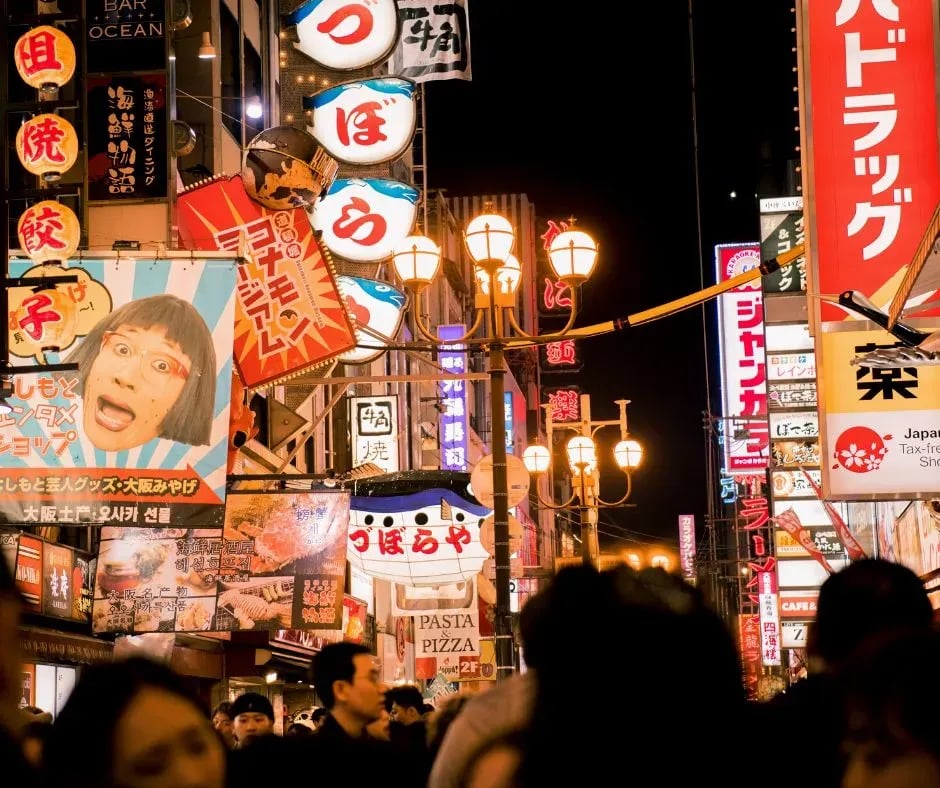 Japan for nomadsA six-month nomad visa, the fastest trains and internet on earth, and a yen so weak that Tokyo is suddenly affordable. Japan finally opened its doors to remote workers, and this is how to make the most of it in 2026.
🏥 Healthcare for digital nomads in Japan
Japanese healthcare is excellent, but as a digital nomad visa holder you are not eligible for National Health Insurance. You rely entirely on your private policy, which is exactly why the government made insurance a visa requirement. Without coverage, even a routine clinic visit is paid in full upfront, and a hospital stay becomes very expensive very quickly.
Major cities have hospitals and clinics with English-speaking staff or interpreter services. For emergencies, dial 119 for an ambulance. Keep your insurance certificate accessible, since hospitals will ask how you intend to pay.
🌏 Japan vs. other digital nomad visa programs
| Country | Financial requirement | Duration | Special feature |
|---|---|---|---|
| Japan | ¥10M per year income (about €56,500 / US$63,000) | 6 months, no extension | High earner focus, explicit legality |
| Thailand (DTV) | 500,000 THB in funds (about €12,500) | 5 years, 180 days per entry | Funds based, soft power category |
| Colombia | About €1,300 per month income | Up to 2 years | Lowest threshold, cheap fees |
| Spain | €2,849 gross per month (200% of minimum wage) | 3-year permit (or 1-year visa first), renewable to 5 | EU access, permanent residency at 5 years |
Japan asks for the highest income of the group and offers the shortest stay. What it offers in return is Japan itself, plus the certainty of a program with crystal clear official rules. If the income bar rules it out, the digital nomad visa overview lists programs with far lower thresholds.
 Countries with nomad visasWhich countries offer digital nomad visas, what do they cost, and which one fits your income and plans? Here are the programs worth knowing, with requirements, fees, and insurance rules verified against official sources.
❓Frequently asked questions
Yes. Since April 2024, Japan has offered a digital nomad visa, officially a Designated Activities status. It lets remote workers from 51 eligible countries and regions stay up to 6 months while working for employers and clients outside Japan. It cannot be extended.
At least ¥10,000,000 a year (about €56,500 or US$63,000), from salary, freelancing or your own company. For the self-employed, the Immigration Services Agency counts profit after necessary business expenses. Accepted proof is a tax payment certificate, an income certificate, or an employment or client contract that states the period and amount.
No. The visa is valid for up to 6 months and cannot be renewed or extended in Japan. According to the Immigration Services Agency, you can get the same status again once 6 months have passed since you left Japan, with a new application from abroad. Some consulates word the waiting rule differently, so confirm the date with the embassy where you will apply.
No. You must apply for the Digital Nomad (“Designated Activities”) visa at a Japanese embassy or consulate in your home country or country of legal residence. You cannot change status to this visa while already in Japan on a tourist or other short-term entry.
Yes. Your spouse and children can apply for the accompanying digital nomad status. They need proof of the relationship (such as a marriage or birth certificate), a copy of your passport, and insurance that meets the same requirement. They cannot work in Japan.
No. All work under this visa must be performed for overseas employers or clients; you may not provide services to Japan-based companies or bill Japanese entities.
Yes. According to the Immigration Services Agency, you can leave temporarily with a re-entry permit or special re-entry permit and keep your status, as long as you return before your period of stay ends. The end date stays the same.
The new work must still be for employers or clients outside Japan. The Immigration Services Agency says you cannot start a job or contract with a Japanese company or individual during your stay, including with someone you meet in Japan.
🚀 Resources and tools
- Official visa page: MOFA, Designated Activities (Digital Nomad)
- Official Q&A (renewal, re-entry, tax, insurance): Immigration Services Agency (PDF)
- Official eligible countries list: Immigration Services Agency (PDF)
- Official planned activities form: Immigration Services Agency (Word)
- Official visa fees: MOFA visa fees page
- Community: Digital Nomads Japan Facebook Group
- Language: Irodori: Japanese for Life in Japan (free, Japan Foundation), Italki
🎯 Conclusion
Japan's digital nomad visa is the most selective of the major programs, and the most honest. The rules are published, the income bar is unambiguous, and the 6-month limit is exactly what it says. For established remote professionals, it removes every doubt about working legally from one of the most rewarding countries a nomad can live in.
Prepare the required income documents, get an insurance certificate that states the numbers clearly, apply 2 to 3 months in advance, and Japan is yours for half a year.
Countries with nomad visasWhich countries offer digital nomad visas, what do they cost, and which one fits your income and plans? Here are the programs worth knowing, with requirements, fees, and insurance rules verified against official sources. The easiest digital nomad visas and long-stay routes (2026)The easiest digital nomad visas aren't always called visas. Eight low-effort routes ranked by income bar, fees and paperwork, from Georgia's visa-free year to Ecuador's $320 visa, checked November 2026.
 Upcoming nomad events & festivals in 2026-2027Compare upcoming digital nomad events and festivals for 2026/27, with dates, prices, locations, and what to expect at each.
 Bali digital nomad visa (E33G): requirements and 2026 rulesThe Bali digital nomad visa is Indonesia's E33G. Who it fits, what it costs, the tax catch, and why working remotely on a tourist visa is not an option in 2026.