Panama for nomads
Updated:
 Sarah KuhlemannCommunity manager
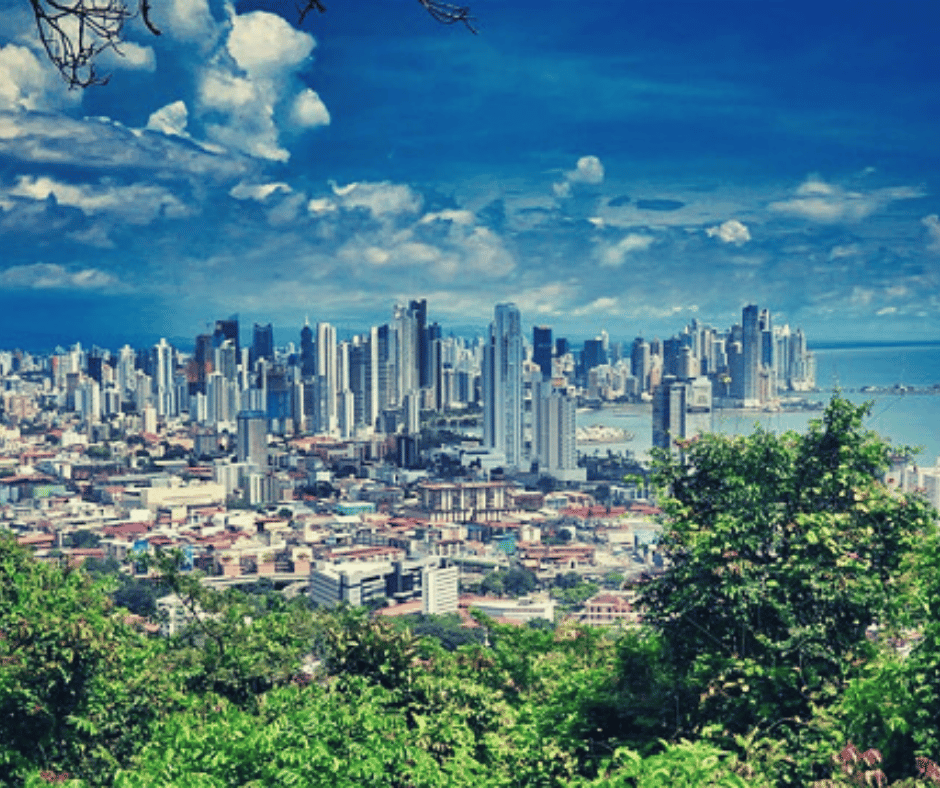
Panama is the Central American country that works like a hub. The capital has a skyline of glass towers, a dollar economy, the Copa Airlines hub at Tocumen and a metro that connects the airport to the city. A short domestic flight or a long bus ride away, you can trade it for cloud forest coffee farms in Boquete, Caribbean islands in Bocas del Toro or surf beaches on the Azuero peninsula.
For digital nomads, Panama is convenient rather than cheap. Prices are in US dollars, Panama City costs more than most of Latin America, and outside the capital the coworking scene thins out quickly. In return, you get easy entry for many passports, a dedicated remote worker visa, fast fixed internet in the city and modern private hospitals in the capital. This guide covers both sides.
🌱 Health insurance for Panama
Genki TravelerA travel health insurance with worldwide cover. Monthly payment plans, and easy signup in less than 1 minute.Discover Genki Traveler🎯 Panama at a glance
| 🛂 Visa | Visa-free for many passports. Remote worker visa for stays of 9 to 18 months |
| ⏳ Max stay | Up to 180 days for US and Canadian citizens, up to 90 days (3 months) for German and UK citizens |
| 💶 Monthly budget | €1,650 to €2,550 in Panama City, €1,050 to €2,150 outside the capital (short stay) |
| 🌤 Best time | January to April on the Pacific side and in the highlands. Bocas del Toro has no reliable dry season |
| 🏝 Top areas | Casco Viejo, San Francisco, El Cangrejo and Obarrio (Panama City), Boquete, Bocas del Toro, Pedasí and Playa Venao |
| 🛜 Internet | Fast fixed broadband in the city, around 43 to 46 Mbps median on mobile (Ookla, second half of 2025) |
| 🛡 Safety | US advisory Level 2 (increased caution). Do not travel to parts of the Darién |
🇵🇦 Entry requirements for Panama
Visiting visa-free. How long you can stay depends on your passport. US citizens can stay up to 180 days without a visa, according to the US State Department, and Canada gives the same figure. The UK Foreign Office lists up to 3 months for British citizens, and the German Foreign Office lists up to 90 days for German citizens, adding that border officers occasionally limit a stay to 15 days. Check the stamp in your passport on arrival.
What border officers can ask for. A return or onward ticket, a passport valid for at least 3 months on arrival (the UK advises 6 months beyond your departure date), your accommodation address and proof of funds. Panama's Servicio Nacional de Migración sets the legal minimum at 500 balboas (US$500, about €455), but the UK and German foreign offices both advise carrying US$1,000 (about €910) in cash or showing a credit card, so plan for the higher figure. You cannot extend a tourist stay by leaving briefly and coming back: Canada's advice asks for at least 30 days outside Panama before you return as a tourist.
Forms. There is no health or Covid form anymore. Since March 2025, the customs declaration is only needed if you carry more than 10,000 balboas in cash or goods, and it is filed online at the National Customs Authority. Travelers arriving from a country with yellow fever risk need a vaccination certificate.
Remote worker visa. Panama's digital nomad visa is officially the Short-Stay Visa as a Remote Worker (Visa de Corta Estancia como Trabajador Remoto), created by Executive Decree 198 of 2021. The official requirements from the Servicio Nacional de Migración:
- Who qualifies: remote employees of a foreign company and self-employed workers whose work has effect abroad. You sign a sworn declaration not to accept work from people or companies in Panama.
- Income: at least US$36,000 a year (about €32,760) from foreign sources. Employees need an employer letter showing at least US$3,000 a month (about €2,730).
- Duration: 9 months, extendable once for another 9 months, so up to 18 months in total.
- Costs: US$250 (about €227) to the Servicio Nacional de Migración plus US$50 (about €45) for the visa card, before lawyer and document costs.
- Health insurance: required, valid in Panama and covering your whole stay.
- Documents: criminal record certificate and health certificate, proof that your income comes from abroad, a company certificate or, for freelancers, a notarized declaration about your clients. Foreign documents need an apostille.
- Process: filed in Panama at the Servicio Nacional de Migración through a lawyer with a notarized power of attorney. There is no consular application route.
Panama's visa is not yet part of the countries with nomad visas comparison. For a neighbour with a fully online process and a lower bar on documents, see the Costa Rica digital nomad visa.
✈️ How to get to Panama
- Tocumen International Airport (PTY): Panama's main gateway and the hub of Copa Airlines, with direct flights to much of the Americas and several European cities. Since March 2023, a branch of Metro Line 2 stops at the airport, at the regular Line 2 fare of US$0.50. For taxis, the German Foreign Office advises the registered taxi stand inside the terminal or an app-booked ride, not a taxi flagged down outside.
- Overland from Costa Rica: the main crossings are Paso Canoas on the Pan-American Highway and Sixaola–Guabito on the Caribbean side, the usual route to Bocas del Toro. Make sure you get both the Costa Rican exit stamp and the Panamanian entry stamp: the German Foreign Office warns of fines, detention and deportation without the entry stamp. The UK notes that an onward ticket is checked especially at land crossings.
- From Colombia: fly. No road crosses the Darién Gap, the paved Pan-American Highway ends well before the Colombian border, and the jungle region along the border is a no-go zone (see safety below).
🗺 Where to base yourself
- Panama City is the practical base: the most furnished apartments, the coworking spaces, the hospitals and the flights. Casco Viejo is the restored old town on the water, with cafés, rooftop bars and the most atmosphere, but also nightlife noise and neighbouring districts with a high robbery risk (El Chorrillo and Santa Ana, per the German Foreign Office), so stay on the main streets after dark. San Francisco is a residential district full of restaurants and mid-rise apartments, a short ride from the coastal Cinta Costera. El Cangrejo around Vía Argentina is walkable, has its own Line 1 metro station and is one of the better-value central areas. Obarrio, around Calle 50, is the banking district where most coworking spaces sit, with high-rise apartments and quiet evenings.
- Boquete is a mountain town in Chiriquí at the foot of Volcán Barú, known for coffee farms, hiking and a cooler climate than the coast. It has a large, mostly retired expat community. Stay in Bajo Boquete if you have no car, everything else is walkable from there. Alto Boquete and the hills around Jaramillo are quieter but mean taxis or a rental car. The nearest airport is in David, the provincial capital.
- Bocas del Toro is the Caribbean archipelago near the Costa Rican border. Bocas Town on Isla Colón has the shops, restaurants and most accommodation. Isla Carenero and Old Bank on Bastimentos are a short water taxi away and much quieter. It draws a younger, more social crowd than the other bases, but internet and power are less reliable than in the city, so test both before you commit to a month.
- Pedasí and Playa Venao are on the Azuero peninsula, five hours by road from Panama City. Pedasí is a small town with a plaza, banks and restaurants. Playa Venao, about half an hour away, is a surf bay with a handful of hotels and beach bars. Note the strong earthquake of 9 October 2026: Panama's tourism authority reported two badly damaged hotels in Playa Venao, while the rest of the area's businesses kept operating, and a damaged bridge over the Oria river cut road access for a time. Confirm road access and that your accommodation has been inspected before booking.
💶 How much does it cost?
| Per month | Panama City (San Francisco, El Cangrejo) | Boquete | Bocas del Toro (Isla Colón) |
|---|---|---|---|
| Furnished studio or 1BR, monthly booking | €1,000-1,550 ($1,100-1,700) | €640-1,000 ($700-1,100) | €730-1,275 ($800-1,400) |
| Coworking | €180-255 ($199-279) | Limited, mostly home or café | Limited, mostly home or café |
| Food | €365-545 ($400-600) | €320-455 ($350-500) | €365-545 ($400-600) |
| Transport | €45-90 ($50-100) | €35-75 ($40-80) | €55-110 ($60-120, water taxis) |
| Utilities, SIM and extras | €45-90 ($50-100) | €45-90 ($50-100) | €45-90 ($50-100) |
| Realistic total | €1,650-2,550 | €1,050-1,650 | €1,200-2,000 |
Pedasí and Playa Venao land at roughly €1,150 to €2,150 a month, with rent similar to Boquete but a scooter or rental car on top, since there is little public transport between the town and the beaches. Rents are short-stay figures for furnished monthly bookings, not the lower prices on 12-month leases: long-term rent for a one-bedroom in central Panama City averages around US$1,000 a month (Wise cost of living data). Coworking prices are the range of flexible desks in Panama City compiled by workin.space from operator listings in November 2026. Air conditioning drives electricity bills up wherever your rent excludes utilities. Conversions at €1 = US$1.0989 (ECB, 17 November 2026).
Panama City sits clearly above a €1,500 month. For cities where that budget still works, see Latin America for less than €1,500.
 Latin America for less than €1,500Latin America is no longer uniformly cheap. Ten cities checked against a €1,500 monthly budget with fresh 2026 data: six still fit comfortably, two need conditions, and two former favorites outgrew it.
🧑🏻💻 Where to work from
Panama City
- Spaces Plaza 2000: coworking on Calle 50 at the edge of Obarrio and Marbella, part of the Spaces network with 12 centres in Panama. Day passes start at US$29 (about €26), bookable online, and access plans let you use any Spaces or Regus centre in the city.
- Regus: the sister network has 9 coworking locations across Obarrio, Punta Pacífica and Costa del Este, with hourly and day bookings in the same app.
Boquete, Bocas del Toro and the Azuero coast
Outside the capital, Panama has no established coworking scene that can be verified on operators' own sites. Most remote workers here work from their accommodation or cafés. Ask your host for a recent speed test before you book, check whether there is backup power, and keep a local SIM with a data plan as a hotspot backup.
👥 Finding community
Panama's nomad scene is smaller than Medellín's or Mexico City's, and it is spread across very different places: business-focused professionals in the capital, retirees in Boquete, surfers and backpackers in Bocas and Venao.
- InterNations runs regular expat events in Panama City and is the easiest way into the capital's international crowd.
- Nomads.com Panama chat: a channel for nomads in the country, useful for quick questions and ad hoc meetups.
- Boquete Connection Club on Meetup organises community and wellness events in Boquete. In the highlands, town Facebook groups such as the Boquete Community Group are the main noticeboard for housing and events.
- Spaces and Regus centres host member events in Panama City, and coworking is where you are most likely to meet other remote workers in the capital.
🛜 Internet and SIM cards
Fixed internet in Panama City is fast, and apartments in the central districts usually have fiber. Mobile data is slower: Ookla's Panama Speedtest Connectivity Report for the second half of 2025 measured median mobile downloads of about 46 Mbps on +Móvil and 43 Mbps on Tigo, as reported by DPL News. Those two are the country's only mobile operators. Coverage and speed drop on the islands and in the highlands, and power cuts happen, so plan a backup for important calls.
The simplest way to stay connected is a global eSIM from Pangia: one plan that covers Panama and whatever country comes next, set up before you land. For longer stays, a prepaid SIM from +Móvil or Tigo adds a local number. Bring your passport, because new prepaid lines are registered to your ID.
🌤 When to go where
| Region | 🌞 Best time | 🌧 Wettest | Why |
|---|---|---|---|
| Panama City | Jan-Apr | Sep-Nov | Pacific dry season. December is the transition month |
| Boquete | Jan-Apr | Sep-Nov | Dry and windy in the highland summer, cooler than the coast all year |
| Pedasí & Playa Venao | Jan-Apr | Sep-Nov | Same Pacific pattern as Panama City |
| Bocas del Toro | No clear season | Dec | Caribbean side: rain spread across the year, December is one of the rainy months |
Panama has two climates. The Pacific side, including Panama City, Boquete and Azuero, has a dry season from about December to April, while on the Caribbean side December is climatologically a rainy month, according to Panama's meteorological institute IMHPA. September is one of the rainiest months on the Pacific side. In early February 2026, the Guna General Congress suspended boat transport and tourism in Guna Yala for several days because of strong winds and high seas, so keep buffer days around a San Blas trip. The German Foreign Office notes that the May to November storm season can bring heavy rain, landslides and floods that disrupt travel.
🚌 Getting around
- Metro de Panamá: Line 1 runs north-south through the centre (Albrook to Villa Zaíta) for US$0.35 a ride, and Line 2 runs east towards Nuevo Tocumen, with a branch to the airport, for US$0.50. You can pay with a contactless Visa or Mastercard at the gates, no transit card needed. Line 3, a monorail to Panamá Oeste, is still being tested and is not expected to open before 2028.
- Ride-hailing: apps such as Uber are the easiest way around the city and, per the German Foreign Office, safer than street taxis. Never share a taxi with passengers you do not know.
- City buses: MiBus covers Panama City with the same card system as the metro.
- Long-distance buses: the Gran Terminal at Albrook has buses to David (for Boquete), to Las Tablas and Chitré (for Pedasí) and towards the Costa Rican border. Roadblocks during protests can close the Pan-American Highway for hours or days.
- Domestic flights: Air Panama flies from Albrook airport to Bocas del Toro, David, Chitré and Changuinola, and Copa flies between Tocumen and David. The flight to Bocas takes about an hour, compared with a long bus ride plus a ferry.
🚧 Safety
Panama is rated Level 2, exercise increased caution, by the US State Department, with Level 4, do not travel, for parts of the Darién. The main points from the US, UK and German foreign offices:
- Darién: do not travel to the east and south of Darién province beyond Yaviza, especially near the Colombian border. Criminal groups and armed drug gangs operate there, and checkpoints decide who passes.
- Colón: Panama's second city has a high robbery rate. The German Foreign Office advises visiting only on organised trips or with a local guide, not exploring the city and port alone.
- Panama City: the German Foreign Office lists San Miguelito, Tocumen, Juan Díaz, 24 de Diciembre, El Chorrillo, Santa Ana, Curundú, Calidonia and Pacora as high-risk areas for robbery, and advises against walking around at night. Thefts and armed robberies have also increased in Bocas del Toro and El Valle de Antón.
- Protests: demonstrations and roadblocks happen, especially on the Pan-American Highway. Keep water and food in the car on long drives and avoid confrontations at blockades.
- Earthquakes: Panama sits in a seismic zone, as the October 2026 earthquake on the Azuero peninsula showed. Learn the basic earthquake drill.
- Local rules: drinking alcohol in public is prohibited and can lead to arrest, and you must carry ID at all times.
🏥 Healthcare
Private healthcare in Panama City is of a high standard. The UK Foreign Office's list of medical facilities includes Hospital Punta Pacífica (Pacífica Salud), Hospital Nacional and Clínica Hospital San Fernando, all private and used to foreign patients. Outside the capital, standards drop noticeably, and serious cases are usually transferred to Panama City. Treatment generally has to be paid on the spot, in cash or by card, so keep your insurance details at hand.
Dengue occurs throughout the country, so use repellent during the day. The German Foreign Office also reports malaria cases in Panama City's Ancón district in autumn 2026, the first in a city long considered malaria-free. It advises drinking bottled or filtered water rather than tap water.
🎖 Must see
- Miraflores Locks Visitor Center: watch ships pass through the Panama Canal, 20 minutes from the centre. Non-residents aged 13 and over pay B/.17.22 (about €16) and children aged 6 to 12 pay B/.7.22, according to the Panama Canal Authority's tariff.
- Agua Clara Visitor Center: the viewpoint over the newer, larger locks on the Atlantic side near Colón, for B/.10 (about €9) for non-resident adults. Go on an organised trip or by car, given the safety advice for Colón city.
- Casco Viejo: the colonial old town, part of a UNESCO World Heritage site together with the ruins of Panamá Viejo, with plazas, churches, rooftop bars and views of the skyline.
- Cerro Ancón: a forested hill in the middle of the city, with a short paved walk to the top and views over the canal entrance and the skyline. Go in the morning.
- Guna Yala (San Blas): the autonomous territory of the Guna people, with hundreds of islands off the Caribbean coast. Bring your original passport, as you pass a checkpoint on the way in, and cash: foreign visitors pay a 20 balboa (about €18) entry fee, according to coverage of a tourism authority inspection. The territory follows Guna law and traditional authorities, and boat owners need a permit from the Guna General Congress before entering its waters.
- Isla Bastimentos National Marine Park: mangroves, reefs and the Cayos Zapatilla islands, a day trip by boat from Bocas Town.
❓ Frequently asked questions
Yes. The Short-Stay Visa as a Remote Worker runs for 9 months and can be extended once for another 9. You need at least US$36,000 a year (about €32,760) in foreign income and health insurance valid in Panama. The application is filed in Panama through a lawyer, and government fees are US$250 plus US$50 for the visa card.
It depends on your passport: up to 180 days for US and Canadian citizens, up to 3 months for British and up to 90 days for German citizens. Carry an onward ticket and proof of about US$1,000 in funds, and check the entry stamp before you leave the counter.
For Latin America, yes. Plan for €1,650 to €2,550 a month in Panama City on a short stay, and roughly €1,050 to €2,150 in Boquete, Bocas del Toro or Pedasí, including a furnished flat, food and transport.
Panama City for coworking, hospitals and flights, with San Francisco, El Cangrejo and Obarrio as the most practical districts. Boquete for cooler mountain air, Bocas del Toro for a Caribbean island month, and Pedasí or Playa Venao for surf.
The US rates Panama Level 2 (increased caution). Avoid the Darién border region completely, visit Colón only on organised trips, use app-booked rides in Panama City and avoid walking in the high-risk districts at night.
In Panama City, yes: fixed fiber is fast and coworking spaces are easy to find. Mobile data averages around 43 to 46 Mbps. On the islands and in the mountains, test the connection before you book and keep a SIM as backup.
Traveling that area? Check out Panama's neighborhood.
Comparing Panama with the rest of the region? Latin America made easy puts 11 bases side by side on costs, visas and seasons.
 Latin America made easyWhere to start in Latin America as a remote worker: 11 bases compared on real monthly costs, the visa that works in each, internet, seasons, and two sample routes for your first three months.
 Costa Rica for nomadsPura vida, world-class surf, a rainforest full of wildlife, and one of Latin America's most established digital nomad visas. Costa Rica is the safe, easy, beautiful choice, if you can handle the prices. Here is the 2026 guide.
 Colombia for nomadsMedellín's eternal spring, Bogotá's culture, Cali's salsa, and one of the world's most accessible nomad visas. Here is how to live and work in Colombia in 2026, cities compared, real costs, and a straight answer on safety.