Argentina digital nomad visa: requirements and how to apply
Updated:
 Sarah KuhlemannCommunity manager
Argentina quietly launched a digital nomad visa in 2022, and for a remote worker who wants a legal year in Buenos Aires it is one of the simpler routes in the Americas: no fixed income floor, a cheap in-country filing, and no Argentine tax on foreign income for most stays.
It also has a hard limit that the visa-agency sites ranking for it tend to soften, because it is easier to sell an application than to explain a dead end. This visa maxes out at 360 days and leads nowhere: it does not convert to permanent residency and it does not count toward citizenship. If a long-term future in Argentina is the goal, a different visa is the smarter first move.
This guide covers the real rules for 2026, what it costs, how to apply, and, honestly, who it suits and who should skip it.
Rules, fees and exchange rates checked against official Argentine sources as of November 2026.
🌱 Health insurance for Argentina's digital nomad visa
Good to know: health insurance is not on the Migraciones document list for this visa, but since Decree 366/2025 every foreigner entering Argentina must declare on arrival that they have health insurance for the stay. Public hospitals now treat non-permanent residents for free only in emergencies, so private cover is what gives you access to care. Argentina's private healthcare is excellent and among the best in Latin America, but you need your own policy to use it.
How to choose your health insurance?
Choose Genki Native if you have no access to a national health care system in your home country. It is comprehensive cover built for people whose base has moved, which is what a year in Argentina means.
Choose Genki Traveler if you have access to a national health care system elsewhere, or already hold other comprehensive cover, and confirm it is valid in Argentina for the full stay.
🇦🇷 What is the Argentina digital nomad visa?
The official name is the Residencia Transitoria como Nómada Digital (Transitory Residence as a Digital Nomad), created by Disposición DNM 758/2022 under Article 24(h) of Argentina's Migration Law 25,871. It is a temporary residence for foreigners from visa-exempt countries who work remotely for clients or employers based outside Argentina.
The defining features:
- It grants 180 days, extendable once for another 180, for a maximum of 360 days (one year).
- It is a transitory residence, which is the key legal point: it does not lead to permanent residency or citizenship. Decree 366/2025 kept transitory residence as its own category and added a health insurance declaration for every foreigner entering Argentina.
- Your work and income must come from outside Argentina.
- Foreign-sourced income is not taxed in Argentina unless you become a tax resident (see the tax section below).
It exists because Argentina, and Buenos Aires especially, already had a large population of remote workers living on tourist stamps, and the government created a cleaner legal channel for them, without pretending it is a path to settling permanently.
🛂 Do you even need the visa?
Often, no, and it is worth saying so plainly before you spend on an application.
Most Western nationalities (US, UK, EU, Canada, Australia, New Zealand) enter Argentina visa-free for 90 days, extendable once by another 90 at a Migraciones office, for up to 180 days per entry. Many nomads simply do that, or reset with a ferry hop to Uruguay.
The digital nomad visa is worth it when you want a clean legal basis for a longer stay (up to a year), you want to sign a proper lease or set up local services more easily, and you want your remote-work status formally recognized. It is not worth it if you are staying only a few months, in which case the visa-free entry plus extension already covers you.
⭐️ Key benefits of the visa
📌 At a glance: visa facts
| Official name | Residencia Transitoria como Nómada Digital |
| Legal basis | Disposición DNM 758/2022 (Migration Law 25,871, Art. 24h) |
| Who it is for | Visa-exempt foreigners, remote work for foreign clients/employers |
| Income requirement | No official minimum; ~$2,000–2,500/month expected in practice |
| Duration | 180 days, extendable once (360 days max) |
| Renewal condition | Present in Argentina at least 50% of the initial 180 days |
| Government fee | ARS 32,000 (~$20), ARS 16,000 for Mercosur nationals |
| Extension fee | ARS 40,000 (~$25), ARS 20,000 for Mercosur nationals |
| Where to apply | In person with Migraciones inside Argentina (not via RaDEX) |
| Processing | No official timeline; applicants report 2 to 6 weeks |
| Health insurance | Not on the document list; declared on entry by all foreigners (Decree 366/2025) |
| Tax on foreign income | Not taxed until tax residency (12 months on temporary permits) |
| Leads to residency/citizenship? | No |
👩🏽💻 Who can apply?
Three conditions matter most:
- A visa-exempt nationality. The route is only for nationals of countries that already enter Argentina without a tourist visa (US, UK, EU, Canada, Australia, New Zealand, and many more). If your passport needs a tourist visa for Argentina, this is not open to you.
- Remote work for foreign clients or employers. Employees, freelancers, and business owners all qualify, as long as the income comes from outside Argentina. You cannot take Argentine clients or local employment on this visa.
- The documents (below), including an Argentine criminal record certificate.
Family: the Migraciones page for this visa has no route for dependents, so each family member needs their own status, such as their own tourist entry or their own nomad residence.
💶 The income requirement: nothing official
This is where the visa-agency sites mislead, and where the honest answer helps.
Argentina's government pages do not publish a minimum income figure for this visa. The law (Disposición 758/2022) requires proof of remote work, but sets no specific number. Sites that confidently state you need "$1,000" or "$1,500" or "$2,500" are quoting their own estimates, not an official floor.
In practice, applicants report being expected to show around $2,000 to $2,500 a month from foreign sources, evidenced through contracts, client or employer letters, and bank statements. Six months of consistent deposits is the safe baseline, because inconsistent income, big gaps, or only a month or two of activity is one of the most common reasons a file stalls.
So: there is no hard number to hit, which is genuinely flexible for freelancers with variable income, but you do need to demonstrate real, steady foreign earnings. Show more rather than less, and expect to supply extra proof if an officer asks.
✏️ Step-by-step application process
Before you apply: preparation checklist
- Valid passport (or listed Mercosur document).
- Signed application with your personal details and a description of the remote work you will do.
- A short CV covering your experience and education.
- Proof of remote activity: contracts, an employer or client endorsement, or income/fee receipts.
- At least one professional reference.
- Argentine criminal record certificate from the Registro Nacional de Reincidencia (over 16s).
- Proof of address in Argentina and proof of your regular entry.
- May be requested: bank statements showing consistent foreign income, and a criminal record certificate from abroad. Neither is on the official list, but Migraciones can ask for additional documents.
- The government fee: ARS 32,000 (ARS 16,000 for Mercosur nationals).
Foreign documents need an apostille (or Argentine consular legalization) and a Spanish translation by a sworn public translator, legalized by the Colegio de Traductores.
Detailed application walkthrough
- Confirm your nationality is visa-exempt and that all your income is from foreign clients or employers. If either fails, this is the wrong visa.
- Enter Argentina as a tourist. Migraciones only takes this application from people already inside the country; the current official page describes no route from abroad.
- Prepare and legalize the documents: apostilles and sworn translations take the longest, so start there.
- Request an in-person appointment: in Buenos Aires City by email to Migraciones (the address is on the official service page), elsewhere at the Migraciones office for your area. This application does not run through RaDEX.
- Pay the official fee of ARS 32,000 through the payment Migraciones generates, and nothing else. The official fee chart also lists ARS 100,000 for switching from tourist to "special reasons" transitory status; ask at your appointment whether it applies before paying.
- Wait for the decision. Migraciones publishes no processing time; applicants commonly report two to six weeks.
- File the extension (prórroga) before your first 180 days expire if you want the second 180: ARS 40,000, proof of income earned during the first period, and at least 50% of it spent physically in Argentina.
Common mistakes and honest warnings
- Believing a quoted income "minimum." There is no official floor; show real, consistent foreign income rather than chasing a number an agency invented.
- Treating it as a path to residency. It is a 360-day dead end. If you want to stay, plan the Rentista in parallel (below).
- Ignoring the 50% presence rule. Heavy travel during the first 180 days can disqualify your extension. Migraciones checks.
- Trying to apply from abroad. Agency sites still describe online and consulate routes. The current official page only describes an in-person filing inside Argentina.
- Serving Argentine clients. The work must be for counterparties abroad. Local income needs a different visa.
- Leaving apostilles and translations to the last minute. They routinely take longer than the visa decision itself.
⏳ How long does it take?
Migraciones publishes no official processing time, and applicants commonly report two to six weeks once the file is complete. As with every visa in this series, the real timeline is dominated by preparation, the apostilles, the sworn translations, and getting an in-person appointment, rather than by the processing. Budget one to two months from starting to approval, and remember you file from inside Argentina, so the clock on your tourist entry is running.
💶 Argentina digital nomad visa cost breakdown
- Residence fee: ARS 32,000 (about $20 at mid-November 2026 rates), ARS 16,000 for Mercosur nationals.
- Possible change-of-status fee: the official fee chart lists ARS 100,000 (about $63) for switching from tourist to "special reasons" transitory status. The nomad page does not say whether it applies on top, so confirm at your appointment.
- Extension (prórroga): ARS 40,000 (about $25), ARS 20,000 for Mercosur nationals.
- Apostille and sworn translations: varies by country, typically $100 to $300.
- Health insurance: for the full stay.
By the standards of the region the government fees are low, and the peso amounts have not changed since September even though the dollar value has. The fees are not the real barrier. The document logistics are.
📚 Tax implications
The headline is good: Argentina does not tax the foreign income of non-residents, and most people on this visa never become tax residents.
The nuance is the trigger, and it is not the 183-day rule other countries use. Under Argentina's income tax law, a foreigner becomes a tax resident in one of two ways: by getting permanent residence, or by staying 12 months in Argentina on temporary migration permits. Absences of up to 90 days do not break that 12-month count. Residency then applies from the first day of the following month, and residents are taxed on worldwide income. ARCA, the tax authority that replaced AFIP, sets this out on its residency page.
For this visa, that means: 360 days on its own sits just under 12 months, but time in Argentina before it, such as the tourist entry you file from, or a switch to another residence afterwards can push you over. Whether tourist days count in a borderline case is a question for an Argentine accountant. The six-month figure you may see elsewhere only decides who gets personal deductions, not who is a tax resident.
And, as always, your home country's obligations continue regardless. US citizens keep FEIE, FBAR and FATCA duties; the Argentine treatment does not touch them.
🏦 Banking and financial logistics
- The currency is the peso (ARS). Argentina lifted its main currency controls for individuals in April 2025, and the old gap between the official and "blue" dollar has largely closed: in mid-November 2026 the official rate sat around ARS 1,575 per dollar and the blue rate around ARS 1,605, a gap of about 2%. You no longer need the parallel market to get fair value.
- Cards now work normally for foreigners, and you can pay in pesos without hunting for a cueva. Still carry some cash for small vendors.
- Wise and Revolut are the standard tools for receiving foreign income; a local account is possible with the residence but not essential.
- Rents are often quoted in US dollars, especially furnished nomad rentals, so budget in dollars.
For the full money picture, including why Buenos Aires is no longer the bargain it was, see the Argentina for nomads guide.
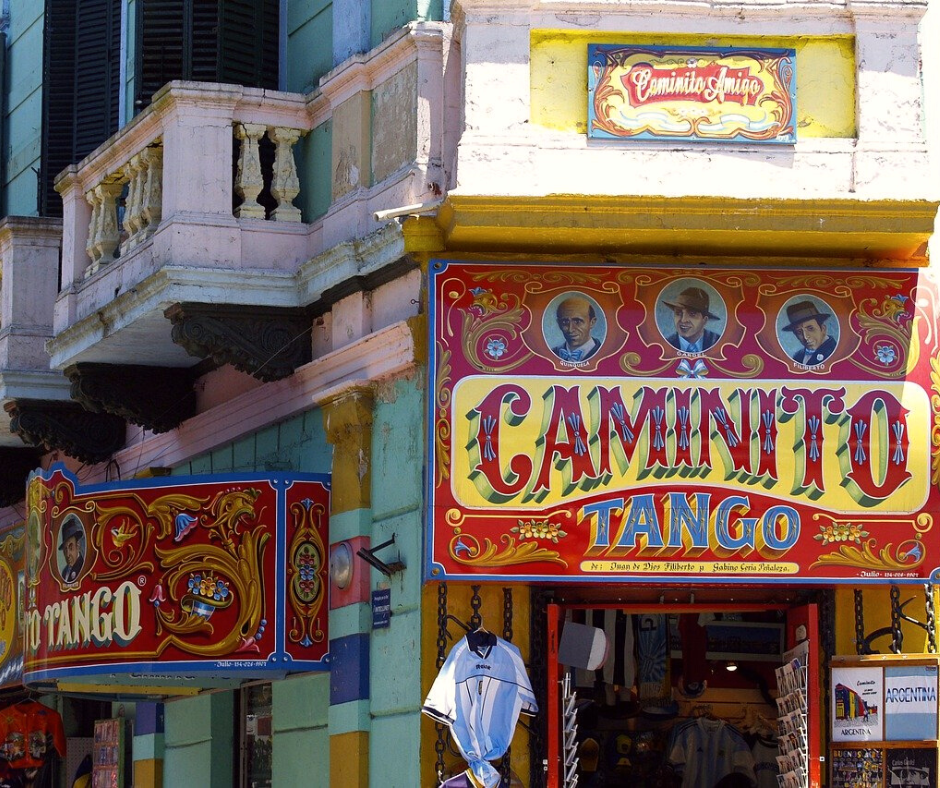 Argentina for nomadsBuenos Aires is the most European city in the Americas: café culture, midnight dinners, grand boulevards and the best steak and wine anywhere. The catch in 2026 is that the legendary blue-dollar bargain is gone. Here is the honest guide.
🏡 Living in Argentina as a digital nomad
Most nomads base in Buenos Aires (Palermo for the scene, Villa Crespo or San Telmo for value), with Córdoba, Mendoza and Bariloche as alternatives. The Argentina for nomads guide covers the cities, neighborhoods, costs and coworking in full.
One honest note carried from that guide: the blue-dollar bargain that made Argentina legendary among nomads is over. Buenos Aires is still cheaper than Western Europe or North America, but budget realistically at $1,500 to $2,200 a month rather than the near-free figures old blog posts promise.
🏥 Healthcare
Argentina has some of the best healthcare in Latin America, with excellent private hospitals in Buenos Aires (Hospital Alemán, Hospital Italiano) at low cost. Since Decree 366/2025, public hospitals treat non-permanent residents for free only in emergencies, so your own insurance is what gives you access to routine care. A private prepaga plan runs roughly $50 to $150 a month locally, or use comprehensive international cover. Genki Native suits a long Argentine base; Genki Traveler covers shorter stays. Emergency number: 911.
🌏 Argentina vs. other nomad visas
| Country | Income requirement | Duration | Leads to residency? |
|---|---|---|---|
| Argentina | None published (~$2,000–2,500 in practice) | 360 days max | No |
| Costa Rica digital nomad visa | $3,000/month | 1 year, renewable to 2 | No |
| Brazil | $1,500/month or $18,000 savings | 1 year, renewable to 2 | No |
| Colombia | COP 5.25M/month (3× minimum wage, ~$1,400–1,600) | Up to 2 years | No (visitor visa) |
Argentina's visa stands out for having no fixed income floor, which is genuinely friendlier to variable-income freelancers than the others. Where it falls short is the ceiling: 360 days, where the others run up to two years. None of the four leads to residency on its own, so Argentina is the choice for a flexible year, not a foothold for settling.
 The easiest digital nomad visas and long-stay routes (2026)The easiest digital nomad visas aren't always called visas. Eight low-effort routes ranked by income bar, fees and paperwork, from Georgia's visa-free year to Ecuador's $320 visa, checked November 2026.
🔁 What happens after 360 days? The Rentista route
This is the part to plan for, because the digital nomad visa simply ends.
When your 360 days are up, you leave or switch categories. For anyone who wants to stay, the Rentista (temporary residence for people living on passive income from abroad) is the usual next step. Migraciones asks for passive income of at least five times Argentina's minimum wage, which works out to ARS 1,994,000 a month in November 2026 (about $1,270). The minimum wage rises every month, so check the figure when you apply.
- It is a temporary residence. After three years of temporary residence (two for Mercosur nationals), you can apply for permanent residence, and since Decree 366/2025 you also need to show sufficient economic means.
- Citizenship is where older guides overpromise. Argentina's citizenship law asks for two years of residence, which is why it was long called one of the fastest routes in the world. Decree 366/2025 (29 May 2025) tightened that: the two years must be continuous and legal, with no departures from Argentina at all, and applications moved from federal judges to Migraciones.
- The courts have pushed back. On 30 June 2026 the National Electoral Chamber declared the decree null in one naturalization case, and a federal appeals court had already ruled against its citizenship articles in another. The government appealed, and the Supreme Court now has the case. Until it rules, who decides on citizenship, and whether a single trip abroad resets the clock, are open questions.
The honest picture as of November 2026: the Rentista is still the route toward a long-term future in Argentina, but nobody can promise a passport in two years. Plan in years, not months, and talk to an Argentine immigration lawyer before building a timeline around it. The nomad year counts toward none of it, so if Argentina might become home, starting on the Rentista directly can make more sense than spending a year on the nomad visa first.
❓ Frequently asked questions
There is no official published minimum. The law requires proof of remote work, but no fixed number. In practice, applicants report showing around $2,000 to $2,500 a month from foreign sources, with six months of consistent bank statements as the safe baseline.
180 days, extendable once for another 180, for a maximum of 360 days (one year). The extension requires you to have spent at least half of the first 180 days physically in Argentina.
No. It is a transitory residence that counts toward neither. The Rentista leads to permanent residence after three years, but the two-year citizenship rule has been contested in court since Decree 366/2025, so no timeline is guaranteed.
Not on foreign income unless you become a tax resident, which happens after 12 months in Argentina on temporary permits or when you get permanent residence. Home-country obligations continue regardless.
ARS 32,000 (about $20), filed in person in Argentina. Migraciones publishes no processing time; applicants commonly report two to six weeks. Preparation, apostilles and translations take longer than the decision.
Not for short stays: most Western nationals get 90 days visa-free, extendable to 180. The visa is for a longer legal year with a clean basis to rent and settle.
🚀 Resources and tools
- Official application: in person with Migraciones (Dirección Nacional de Migraciones), whose service page for the nomad residence lists the requirements and links the official fee chart.
- Legal basis: Disposición DNM 758/2022, under Migration Law 25,871.
- Criminal record: the Registro Nacional de Reincidencia for the Argentine certificate.
- Tax residency: ARCA's residency page for the 12-month rule.
- The country in depth: the Argentina for nomads guide for cities, costs and the money situation.
- The long game: research the Rentista, and check where the Supreme Court has landed on Decree 366/2025 before planning for citizenship.
🎯 Conclusion
Argentina's digital nomad visa is a good option for exactly one thing: a flexible, legal year in one of the world's great cities, with no rigid income bar and no local tax on your foreign earnings for most stays. For a year in Buenos Aires, it does the job cleanly and cheaply.
Just go in knowing its edges. There is no official income floor, so ignore the numbers the agency sites invent, but do show real, steady foreign income. And it is a 360-day dead end by design. If Argentina might become home, the Rentista is the route to look at, but go in knowing the citizenship rules are in front of the Supreme Court. Match the visa to your actual plan, and Argentina rewards you with a year you will not forget.
 Colombia digital nomad visa: requirements and how to applyColombia runs one of the most accessible nomad visas anywhere: 2 years of legal stay, an income bar around €1,300 a month, and €150 in fees. Here is who qualifies and how to apply, step by step.
 Ecuador digital nomad visa: requirements and how to applyEcuador's digital nomad visa is Latin America's quiet overachiever: 2 years of residency, renewable to 4, open to every nationality, just $320 in fees, and an income bar under $1,500 a month. Here's who qualifies, what it costs, and how to apply fully online.
 Costa Rica digital nomad visa: requirements and how to applyYes, Costa Rica has a digital nomad visa: one year, renewable to two, on $3,000 a month in foreign income and $190 in core fees. Here is the honest 2026 guide, including the two catches the relocation sites usually miss.The easiest digital nomad visas and long-stay routes (2026)The easiest digital nomad visas aren't always called visas. Eight low-effort routes ranked by income bar, fees and paperwork, from Georgia's visa-free year to Ecuador's $320 visa, checked November 2026.
 Honduras digital nomad visa: what actually exists in 2026Honduras doesn't have a digital nomad visa, despite the search volume implying otherwise. Here's what genuinely exists: a 90-day tourist entry (extendable), and two real residency routes, Rentista and Pensionado. Costs, requirements, and how to apply, fact-checked for 2026.