South Korea for nomads
Updated:
 Sarah KuhlemannCommunity manager
South Korea is fast in every sense. The trains run at 300 km/h, the internet is among the quickest on earth, and Seoul's café culture means there is a laptop-friendly table on almost every street. Crime is very low, public transport is excellent, and Busan and Jeju add sea air and slower days to the mix.
It is not a budget destination by Asian standards, especially in Seoul, and the country runs on Korean apps rather than Google. The nomad visa exists and is now permanent, but its income bar is among the highest in the world unless you are under 35 and live outside Greater Seoul. This guide covers what that means in practice, where to base yourself, and what a month really costs in 2026.
🌱 Health insurance for South Korea
Genki TravelerA travel health insurance with worldwide cover. Monthly payment plans, and easy signup in less than 1 minute.Discover Genki Traveler🎯 South Korea at a glance
| 🛂 Visa | 90 days visa-free for most Western passports. K-ETA (about €7) likely required again from January 1, 2027 |
| 🪪 Nomad visa | F-1-D workation visa: up to 3 years, income from about €35,400 a year (under 35, outside Greater Seoul) |
| ⏳ Max stay | 90 days visa-free, up to 3 years on the F-1-D |
| 💶 Monthly budget | About €1,000 to €2,300 for a one-month stay, Seoul at the top |
| 🌤 Best time | April to early June and September to November |
| 🧑🏻💻 Top areas | Seoul (Hongdae, Seongsu), Busan (Haeundae, Gwangalli), Jeju (Aewol) |
| 🛜 Internet | Around 250 Mbps median fixed broadband, mobile among the 6 fastest countries worldwide |
| 🛡 Safety | US advisory Level 1 (exercise normal precautions) |
| 💱 Currency | South Korean won (KRW). €1 is around ₩1,480 (November 2026) |
🇰🇷 Entry requirements for South Korea
- Visa-free stays: citizens of most Western countries, including the EU, UK, US, Canada and Australia, can stay up to 90 days without a visa for tourism or business (US State Department). Visa-free entry does not allow work for Korean companies.
- K-ETA: visa-free travelers normally need a Korea Electronic Travel Authorization before boarding, applied for only at k-eta.go.kr. It costs ₩10,000 (about €7), is valid for 3 years of multiple entries, and travelers under 18 or 65 and older are exempt (Korean Embassy). Nationals of many visa-free countries, including the US, UK, Canada, Australia, Japan, Germany, France and several other EU states, have been temporarily exempt since 2023. That exemption runs until December 31, 2026 (KST), according to the Ministry of Justice notice of December 2025 (Korean Embassy in Sweden). The official notice does not list the countries: to check your own nationality, start an application on the K-ETA site, which shows an exemption pop-up when you scan an exempt passport (K-ETA notice). As of November 19, 2026, no extension for 2027 has been announced. Unless Korea extends it again, a K-ETA is required for these nationalities from January 1, 2027, so check the K-ETA site before you book a trip starting in 2027.
- Arrival card: visitors without a K-ETA submit an arrival card. Fill it in for free at e-arrivalcard.go.kr within 3 days before arrival. Paper cards are still handed out at the airport. Holders of a valid K-ETA do not need an arrival card at all (Korean government 110 helpline).
- Passport: must be valid for your stay. Overstays can lead to fines, detention and exit bans.
💻 The workation visa (F-1-D)
South Korea's digital nomad visa, the F-1-D, ran as a pilot from January 2024 and became a permanent program on June 30, 2026 (Ministry of Justice). The key terms:
- Who: remote employees of a company outside Korea, aged 18 or older, with at least 1 year in the same field. Spouses and minor children can join. Working for Korean employers or clients is not allowed.
- Length: 1 year from the date of entry when you register as a foreigner, extendable 1 year at a time to a maximum of 3 years.
- Where to apply: at a Korean embassy or consulate abroad. If you are already in Korea on a tourist status (B-1, B-2 or C-3) and meet the requirements, you can switch to the F-1-D without leaving.
- Insurance: private health insurance with at least ₩100,000,000 (about €67,600) of cover for hospital treatment and repatriation.
- Documents: proof of employment and income, bank records, a criminal record certificate, and, for the lower income tiers, proof that you will live outside the capital area, such as a lease of at least one month.
| Income per year (2025 GNI basis) | Seoul, Incheon, Gyeonggi | Rest of Korea or population-decline areas |
|---|---|---|
| Age 18–34 | 1.5x GNI: ₩78.62M (about €53,100) | 1x GNI: ₩52.41M (about €35,400) |
| Age 35+ | 2x GNI: ₩104.83M (about €70,800) | 1.5x GNI: ₩78.62M (about €53,100) |
| With spouse or children | 2x GNI | 1.5x GNI |
The thresholds are tied to the Bank of Korea's per-capita GNI for the previous year, so they move every year. The full comparison with other countries is in the guide to countries with nomad visas.
✈️ How to get to South Korea
- By air: Incheon International Airport (ICN) is the main gateway, with direct flights from Europe, North America and all over Asia, and the AREX airport railway into Seoul. Gimpo (GMP) in Seoul handles domestic flights and short-haul routes to Japan, China and Taiwan. Gimhae (PUS) serves Busan and Jeju (CJU) has its own international airport.
- By ferry from Japan: Camellia Line's New Camellia sails between Fukuoka (Hakata) and Busan, about 6 hours by day toward Busan or overnight toward Japan. Overnight ferries also link Shimonoseki and Busan.
- No land route: the only land border is with North Korea and it is closed. Coming from China or Russia means flying or taking a ferry.
🗺 Where to base yourself
Seoul is where most nomads start, and it is enormous, so the neighborhood decides your daily life. Hongdae and Yeonnam-dong in Mapo-gu are the café and creative heart, with university energy, live music and direct trains to Incheon Airport. Seongsu-dong across the river is the city's design and pop-up district, full of converted factories and roasteries. Itaewon and Haebangchon are the most international corners, with the widest choice of foreign food and English spoken everywhere. Gangnam is business Seoul: polished, central for meetings, and the most expensive.
Busan, Korea's second city, is under 3 hours away by KTX and combines beaches, mountains and a lower cost of living. Haeundae is the beach base with high-rises, cafés and the city's nomad scene. Gwangalli next door is smaller and livelier, with the Gwangan Bridge lit up at night. Seomyeon is the central, practical choice where two subway lines meet. Busan is outside the capital area, which matters for the lower F-1-D income tiers.
Jeju is Korea's volcanic island, an hour's flight from Seoul. Jeju City is the practical base next to the airport, Aewol on the northwest coast has the island's café and sunset scene, and Seogwipo in the south is warmer and close to waterfalls and the coastal Olle trails. Distances are bigger than they look, and many residents rent a car.
💶 How much does it cost?
| Per month | Seoul | Busan | Jeju |
|---|---|---|---|
| Goshiwon room (shared bathroom or tiny private one) | €270–470 | €200–350 | n/a |
| Furnished studio or officetel (1 month) | €900–1,500 | €600–1,000 | €550–950 |
| Coworking | €135 | free–€135 | cafés |
| Food | €350–550 | €300–480 | €300–480 |
| Transport | €40–70 | €35–60 | €40–80 (bus), more with a car |
| SIM and data | €25–40 | €25–40 | €25–40 |
| Realistic total | €1,450–2,300 (€850–1,250 in a goshiwon) | €1,000–1,700 | €950–1,600 |
These are estimates for a single nomad staying one month in a furnished place, eating out most days. Short stays cost much more than local leases, because Korean leases usually require a large deposit and a long contract, so foreigners on a month-long stay pay a premium on short-term rental platforms. Goshiwon rooms are the budget exception: tiny, rented by the month and usually without a deposit. Conversions use the European Central Bank reference rate of ₩1,478 per euro on November 13, 2026.
Everyday prices are kinder than rents. As a rough guide, a meal in a local restaurant costs around €6 to €10, a coffee in an independent café €3 to €5, a subway ride in Seoul ₩1,550 (about €1), and convenience stores sell decent meals for a few euros. Cards, including foreign ones, are accepted almost everywhere.
Seoul sits above a €1,500 monthly budget for most short stays, while Busan and Jeju can fit. For cheaper bases, see 11 affordable countries for digital nomads and Asia under €1,500 a month.
 Asia made easyWhere to start in Asia as a remote worker: ten bases compared on real monthly costs, the visa that actually works in each, internet, seasons, and two sample routes for your first three months.
🧑🏻💻 Where to work from
Korea is a café-working country. Many cafés have power outlets at every seat and fast wifi, staying for hours is normal, and the polite rule is to order again every few hours. Study cafés (스터디카페), which charge by the hour for a silent desk, are a cheap alternative for focused work. For calls, a coworking space or a phone booth makes life easier.
Seoul
- Blue Pebbles: an independent coworking space in Mapo-gu near Hongdae and Hapjeong, with giga internet, a rooftop and garden, free coffee and snacks, monthly member events and a free trial day. A day pass costs ₩18,000 (about €12), 5 days ₩80,000 (about €54) and a month ₩200,000 (about €135) (prices, November 2026).
- Coworking chains: Korean operators such as FASTFIVE run hundreds of locations across Seoul, mainly sold as offices and lounge memberships for residents. Useful if you stay several months near a branch. Check terms on their Korean-language site.
Busan
- Busan Workation Center: the city's own workspace on the 24th floor of a hotel next to Busan Station, with around 50 workstations, phone and video booths and an event lounge, plus satellite centers around the city (Korea Times). Employees of overseas companies and digital nomads register in advance with a passport and proof of employment on the city's workation site, busaness.com (Busan Metropolitan City).
- Cafés: Haeundae, Gwangalli and the Jeonpo café street near Seomyeon are where most remote workers settle in.
Jeju
Jeju is café territory. Aewol's coastal road and Jeju City are lined with large, laptop-friendly cafés, and the internet is as fast as on the mainland. Check the opening hours, because many island cafés close early in the evening.
 Asia's best coworking spacesPlenty of coworking spaces claim to build community. Not all of them do. These places across Thailand, Vietnam, Bali, Sri Lanka, Cambodia and the Philippines where strangers actually become friends, all verified open in 2026.
👥 Finding community
- Digital Nomads Korea: a free community that runs regular meetups and events in Seoul, listed on Luma.
- Busan's workation program: the city runs a dedicated workation scheme with workspaces, networking events and, in recent years, a Global Workation event that brought around 150 overseas digital nomads to Busan for two-week stays (Busan Metropolitan City). Busan was named Korea's best workation model in 2026.
- Language exchanges: Seoul and Busan have frequent Korean–English exchange meetups, the easiest way to make local friends. Many are organized through Meetup and coworking spaces.
 Our favorite coliving spaces in AsiaFrom a jungle nomad village in India to Taipei share houses where half your housemates are local: Our favorite coliving spaces in Asia with real communities, verified with 2026 prices.
 Digital nomad events in Asia 2026/27Asia has quietly become the busiest continent on the nomad event calendar. Every gathering with confirmed 2026/27 dates, plus the weekly meetup scenes between the big events and the cultural dates (hello, Nyepi) to plan around.
🛜 Internet and SIM cards
Korea's internet is excellent. Ookla's Speedtest Global Index put the median fixed broadband download at 251 Mbps in August 2026, and Korean mobile networks rank among the 6 fastest in the world (Asia Economy). Free wifi is common in cafés, subway stations and public buildings, and 5G coverage in the cities is dense.
The three operators are SK Telecom, KT and LG U+. All sell prepaid tourist SIMs and eSIMs at Incheon and other airports, usually with unlimited data for set periods, against your passport. A Korean number helps with apps and verification texts, but many Korean services, such as some banking and delivery apps, also expect a resident registration number, which short-term visitors do not have.
If you prefer to land connected, a global eSIM from Pangia covers Korea and the next country on your route in one plan.
🌤 When to go where
| Region | 🌞 Best time | 🌧 Avoid | Why |
|---|---|---|---|
| Seoul | Apr–early Jun, Sep–Nov | Jul–Aug, Jan | Mild, clear spring and autumn. Hot, humid monsoon summer and freezing winters. Spring brings fine dust and yellow dust days |
| Busan | Apr–Jun, Sep–Nov | Jul–Aug | Milder winters than Seoul. Summer brings the monsoon and typhoon risk, along with crowded beaches |
| Jeju | Apr–Jun, Sep–Oct | Jul–Sep | Warmest part of Korea. Most exposed to typhoons in late summer, windy in winter |
The summer monsoon (jangma) brings heavy rain from roughly late June to late July, and the wider rainy season with possible flooding runs from June to August. Typhoons can arrive between May and November, most often in August and September (US State Department). In spring, fine dust and yellow dust from the Asian mainland regularly push air quality into unhealthy levels, so keep an eye on the air quality forecast and carry a mask on bad days.
🚌 Getting around
- T-money: the rechargeable transport card, sold in convenience stores and stations, works on subways, buses and many taxis nationwide.
- Climate Card (Seoul): Seoul's unlimited transit pass. Visitors can buy short-term passes of 1, 2, 3, 5 or 7 days for ₩5,000 to ₩20,000 (about €3.40 to €13.50), valid on Seoul's subway and city buses. The 30-day version was replaced by a resident-only scheme in September 2026.
- Subways: Seoul, Busan, Daegu, Gwangju and Daejeon have metro systems, all clean, fast and signposted in English.
- KTX and SRT: high-speed trains link Seoul with Busan in about 2.5 hours for around €37 to €40 one way. Book on the KORAIL or SRT apps, and well ahead for holidays like Chuseok and Lunar New Year. The Korea Rail Pass (KR Pass) for foreigners, with 2 to 5 days of unlimited KORAIL travel, is still sold and pays off mainly for several long day trips.
- Intercity buses: cheaper and slower than the train, with comfortable premium coaches on long routes.
- Taxis and Kakao T: taxis are metered and good value. The Kakao T app is the standard way to call one.
- Naver Map or KakaoMap: Google Maps does not offer full walking and driving directions in Korea, so locals and visitors use Naver Map or KakaoMap, both with English versions.
- Domestic flights: the easiest way to Jeju, with frequent flights from Seoul Gimpo and Busan.
🚧 Safety
- Low crime: South Korea is one of the safest countries for travelers. The US State Department rates it Level 1, exercise normal precautions, and describes violent and property crime as rare (US State Department). Its main warnings concern sexual assaults linked to dating apps and alcohol, where the low crime rate can create a false sense of security.
- North Korea: tensions on the peninsula remain, and North Korea regularly tests missiles. Daily life in the South is not affected, and the government runs civil defense drills throughout the year. Follow local news and any instructions during alerts.
- Demonstrations: protests are common in central Seoul, especially near City Hall. Foreigners are not allowed to take part in political activities under Korean immigration law.
- Drug laws: drug laws are very strict, and cannabis is illegal, including CBD products. Some medications, such as amphetamine-based ADHD drugs, need approval from the Ministry of Food and Drug Safety before you bring them in, and even food containing poppy seeds is banned (US State Department).
- Traffic: pedestrians should watch for scooters on sidewalks and drivers who do not stop at crosswalks.
- Emergency numbers: 112 for police, 119 for ambulance and fire.
🏥 Healthcare
Korean healthcare is among the most advanced in Asia, with modern hospitals, short waiting times for private clinics, and many English-speaking doctors in Seoul's international clinics. Visitors pay the full cost themselves, often upfront, and the US State Department notes an ongoing doctor shortage that has led major teaching hospitals to postpone surgeries and appointments. Smaller private hospitals are less affected.
Korea's National Health Insurance (NHIS) is not available to short-term visitors. Foreigners who register as residents and stay six months or longer generally have to join it as local subscribers, a rule in place since July 2019 (Korea JoongAng Daily). For the first months and for any stay as a visitor, private insurance is your only cover. The complete guide to digital nomad health insurance explains what to look for.
🎖 Must see
- Gyeongbokgung Palace, Seoul: the main palace of the Joseon dynasty, with changing-of-the-guard ceremonies. Entry costs ₩3,000 (about €2), and visitors wearing hanbok enter free. A price increase has been discussed but was put on hold in October 2026 (Korea Times).
- Bukchon Hanok Village, Seoul: lanes of traditional wooden houses between two palaces. People live here, so keep your voice down and respect the posted visiting hours.
- N Seoul Tower and Namsan: the city's classic viewpoint, by cable car or a walk up the hill.
- The DMZ: the border zone with North Korea, visited only on organized tours from Seoul.
- Gamcheon Culture Village and Haeundae, Busan: a colorful hillside village of murals and stairways, and Korea's best-known city beach.
- Gyeongju: the ancient Silla capital with royal tombs and Bulguksa Temple, under 30 minutes from Busan by KTX.
- Hallasan and Seongsan Ilchulbong, Jeju: South Korea's highest mountain and the volcanic sunrise peak, both part of Jeju's UNESCO-listed volcanic landscape. Summit trails on Hallasan require a reservation.
- Yongpyong Resort, Gangwon: a major ski resort and a venue of the 2018 Winter Olympics, for winter weekends from December to March.
❓ Frequently asked questions
Yes. The F-1-D workation visa became permanent on June 30, 2026. It is for remote employees of foreign companies, lasts up to 3 years, and requires an income of 1 to 2 times Korea's GNI per capita depending on age and region, from about €35,400 a year for under-35s living outside Greater Seoul to about €70,800 for over-35s in the capital area.
Nationals of many visa-free countries, including the US, UK, Canada, Australia, Japan, Germany, France and several other EU states, are exempt until December 31, 2026. Check your own nationality on k-eta.go.kr, which shows an exemption pop-up during the application. As of November 2026, no extension had been announced, so from January 1, 2027 they are expected to need a K-ETA again (₩10,000, valid 3 years). Other visa-free nationalities need one already. Apply only at k-eta.go.kr.
Up to 90 days visa-free for most Western passports. For longer stays, the F-1-D workation visa allows up to 3 years.
More than Southeast Asia. A one-month stay costs about €1,450 to €2,300 in Seoul and €1,000 to €1,700 in Busan or Jeju. Short-term rent is the biggest cost; a goshiwon room brings Seoul down to around €850 to €1,250.
Seoul for the biggest community, coworking and city life, Busan for beaches, lower costs and the city's workation program, Jeju for slow island living. Busan and Jeju also qualify for the lower F-1-D income tiers.
Yes, it is among the best in the world. The median fixed broadband speed is around 250 Mbps, mobile networks rank among the 6 fastest countries, and cafés almost always have fast wifi and power outlets.
Traveling that area? Check out South Korea's neighborhood.
 Japan for nomadsA six-month nomad visa, the fastest trains and internet on earth, and a yen so weak that Tokyo is suddenly affordable. Japan finally opened its doors to remote workers, and this is how to make the most of it in 2026.
 Taiwan for nomadsTaiwan is one of Asia's safest and best-connected bases, and its nomad visa is one of the easiest in the region to qualify for. Here is how the visa rules, real monthly costs and the best bases from Taipei to Kaohsiung look in 2026.
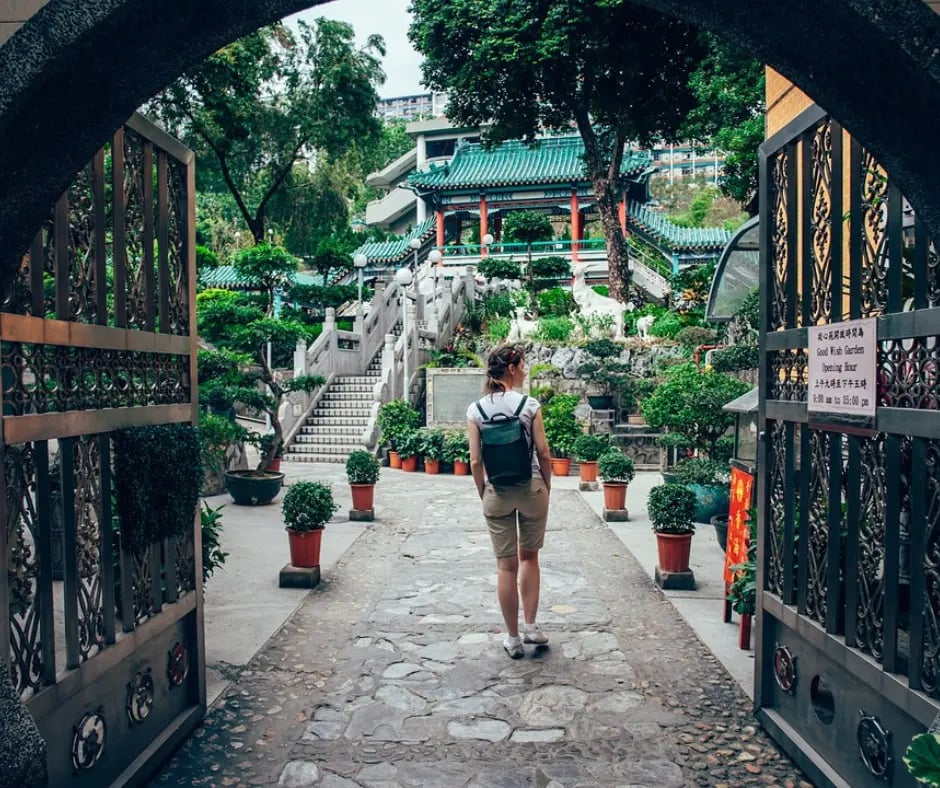 Hong Kong for nomadsOne of the world's most expensive cities and one of its most efficient. Hong Kong has no nomad visa, but visa-free stays of up to 90 days for most Western passports make it a strong short base and a gateway to the rest of Asia. Real 2026 costs, verified spaces and the rules to know.