Back pain as a digital nomad: how to prevent it on the road
Updated:
 Sarah KuhlemannCommunity manager
On the road, back pain usually comes from ordinary things: a week of emails at a café table, a travel day with a heavy backpack, and a rental mattress that sags in the middle. Most of it is fixable.
First, some reassurance. Most low back pain is non-specific, meaning there is no single identifiable cause, and the WHO puts that at about 90% of cases. According to the NHS, back pain usually improves within a few weeks, and the first thing it recommends is staying active.
This guide covers the parts of nomad life that load your back most, three simple exercises, the warning signs that need a doctor, and getting physiotherapy abroad.
This article is general information, not medical advice. If you are in pain, talk to a doctor or physiotherapist about your situation.
🌱 Travel health insurance for digital nomads
Genki TravelerA travel health insurance with worldwide cover. Monthly payment plans, and easy signup in less than 1 minute.Check prices💻 Set up your laptop workspace anywhere
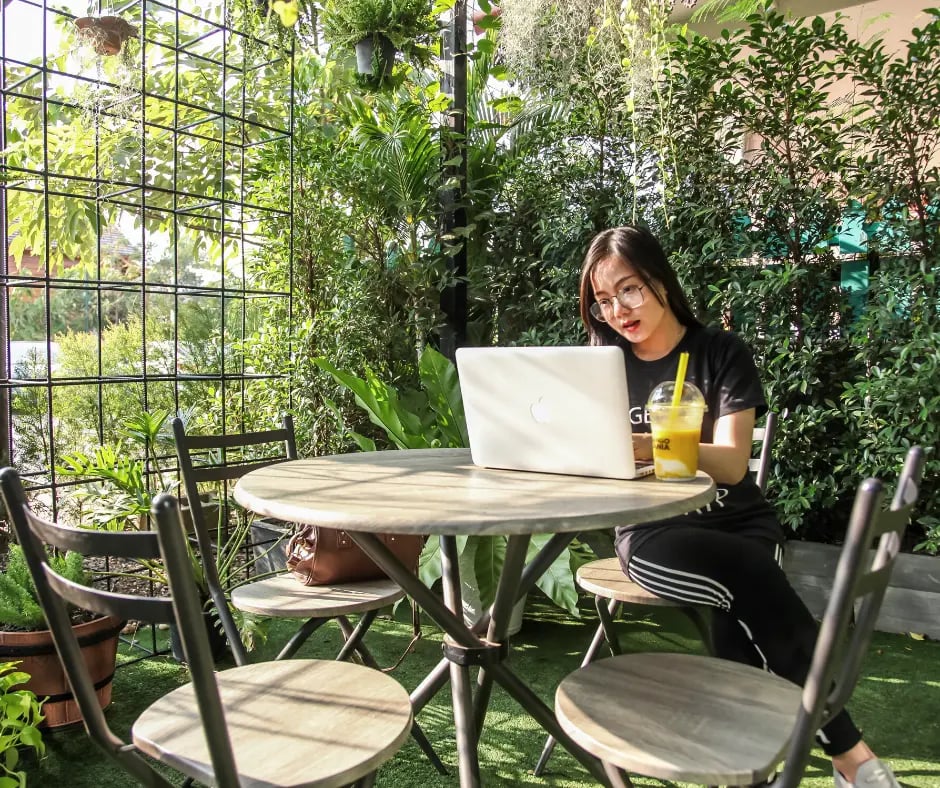
A laptop is a compromise by design: when the keyboard is right, you look down all day. Café tables, Airbnb kitchen tables and sofas make it worse.
- Raise the screen. A folding laptop stand puts the top of the screen at or slightly below eye level, so you are not looking down for hours.
- Add a keyboard and mouse. A stand only works with an external keyboard and mouse. Slim travel versions fit in any laptop bag.
- Check your arms and feet. Keep your shoulders relaxed, your forearms roughly level with the table, and your feet flat on the floor or on your bag.
- Support your lower back. If the chair has no proper backrest, put a small cushion or a rolled towel behind your lower back.
- In coworking spaces, pick the adjustable chair over the bar stool, even if the view is worse.
Ask before you book. A listing's "dedicated workspace" is often a dining table and a stool. For stays of a week or more, ask the host: Is there a real desk? Does the chair have a backrest? Can you send a photo?
🚶 Move every hour
No position is good if you hold it all day. The goal is not one perfect posture but changing position often.
Get up at least once an hour: refill your water, take calls standing or walking, and stretch your shoulders and hips.
Walk every day, and take the stairs. The NHS lists walking, swimming, yoga and pilates as activities that may help ease back pain. For more ideas, read the health benefits of walking and how to stay fit as a digital nomad.
🎒 Carry your luggage without hurting your back
- Pack lighter. Every kilogram you leave at home is one you never lift up hostel stairs.
- Fit your backpack properly. Use both shoulder straps, tighten the hip belt so your hips carry most of the weight, and keep heavy items close to your back.
- Use wheels for heavy gear like a monitor or camera equipment.
- Lift in two steps. For overhead bins, lift the bag onto the seat first, then into the bin. Keep it close, bend your knees, don't twist, and ask for help with anything heavy.
✈️ Survive long flights, buses and trains
- Book an aisle seat so you can stand up without climbing over anyone, and walk the aisle every hour or so on long flights.
- Bring lumbar support. A rolled-up sweater or a small travel pillow behind your lower back fills the gap most seats leave.
- Use every stop on long bus and train rides to get off and walk.
🛏️ Check the mattress and pillow in rentals
You cannot test a rental bed before you book, but you can check.
- Search the reviews for "mattress" before booking a longer stay.
- If the bed sags or you wake up stiffer every morning, ask the host for another room, a mattress topper or a different pillow.
⭐️ 3 easy exercises for your back
These classic exercises work the muscles around your lower back and hips, with no equipment needed.
- Bird dog: Get on your hands and knees, then extend your left arm and right leg. Hold for a few seconds, then switch sides.
- Glute bridge: Lie on your back with your knees bent and your feet flat on the floor. Lift your hips, hold for a few seconds, then lower back down.
- Superman: Lie on your stomach with your arms and legs extended. Lift your arms, chest and legs off the floor, then lower back down.
Start with 5 to 10 slow repetitions of each. Stop if your pain gets worse and see a doctor for advice, as the NHS recommends. If you want a gym or classes wherever you land, see the 8 fitness hubs for digital nomads.
🩺 When to see a doctor
See a doctor soon (NHS) if you have back pain and:
- a fever, or you feel hot, cold, shivery or generally unwell
- severe pain that started suddenly or is getting worse quickly
- weight loss you cannot explain
- pain that is worse at night or does not ease with rest
- pain that has not improved after about 6 weeks of looking after yourself (NHS inform), or keeps getting worse
🌍 Get help abroad
If the pain does not settle after a few weeks, the NHS lists physiotherapy and group exercise among the next treatments to consider. Ask your coworking space or a local expat group for a recommendation, and check the therapist is licensed in that country.
What Genki covers, according to the insurance conditions:
| Treatment | Genki Traveler | Genki Native Basic | Genki Native Premium |
|---|---|---|---|
| Physiotherapy | Up to 6 prescribed sessions per insurance case | Prescribed physical therapy starting within one month after a covered hospital stay, up to 20 days per insurance year | Same as Basic, up to 30 days per insurance year |
| Chiropractic, osteopathy, massage | Not covered | Not covered | Covered if prescribed or with prior approval, up to €500 per insurance year |
| Back pain you had before your start date | Not covered if you had symptoms, a diagnosis, advice or treatment for it in the year before your start date, or if it is a chronic condition you knew about before | Covered only if you disclosed it at signup and it was not excluded | Covered only if you disclosed it at signup and it was not excluded |
With Genki Traveler, physiotherapy needs a doctor's written prescription, you pay the first €50 per insurance case, and cover in your home country is limited. If your insurance starts while you are already abroad without other health cover, only medical emergencies are covered in the first 14 days.
The full wording is in the insurance conditions for Genki Traveler and Genki Native.
❓ Frequently asked questions
Usually there is no single cause, since most low back pain is non-specific. Common contributors on the road are laptop work on furniture that does not fit, heavy bags, long travel days and unfamiliar beds. The WHO lists low physical activity and high work stress among the risk factors.
If you work on a laptop most days, yes. With an external keyboard and mouse, it raises the screen without raising your hands.
At least once an hour. Changing position often matters more than finding one perfect posture.
No. The NHS advises staying active and not staying in bed for long periods.
It depends on the product. Genki Traveler covers up to 6 prescribed physiotherapy sessions per insurance case. Genki Native covers prescribed physical therapy after a covered hospital stay, and Native Premium adds chiropractic, osteopathy and massage up to €500 per insurance year. See the table above for the conditions.
Related topics.
 How to stay fit as a digital nomadThis article is for everyone who is not naturally excited about daily workouts. 10 realistic ways to stay fit on the road, from universal workouts and gym day passes to walking your sightseeing, plus what exercise actually does for your brain.
 8 fitness hubs for digital nomads: where to trainSome cities make you fitter just by living there. 8 hubs where world-class training, coworking, and nomad community sit on the same street, with verified prices, best months, and the events worth traveling for.
 Healthy food habits for digital nomadsNo kitchen, new cuisine every month, and restaurants for every meal. How to eat well on the road anyway: portable habits, science-backed swaps, and what food does to your mood.